Category: Philosophy

When the Light shines, darkness scatters

marchonwashington

“Darkness cannot drive out darkness; only light can do that. Hate cannot drive out hate; only love can do that.”

-Dr. Martin Luther King, Jr.

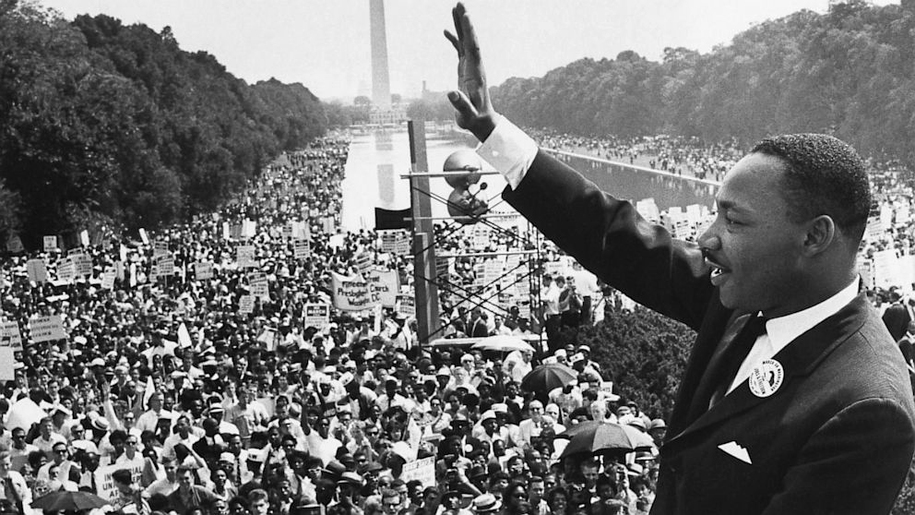
Few people positively impacted American culture more than Dr. Martin Luther King, Jr. His leadership in the Civil Rights Movement of the 1960s was propelled by his faith, and his understanding that America could not survive under the racial division, animosity and segregation that defined America in the first half of the 20th Century.

If the land of opportunity, the free nation he knew growing up was to survive the test of time, then the cancer of segregation had to be surgically removed. The danger of cancer treatment, however, is that it can often cause as much damage to the body as the cancer itself.

Dr. King understood this. He understood that for America to emerge from the Civil Rights Movement stronger, freer and more prosperous, the Civil Rights Movement had to not only secure freedom and opportunity to the African American community, but also had to foster reconciliation between African Americans and their white counterparts.

You see, one of the biggest hurdles to desegregation in the South was the fear held among many whites that, once equally protected under the law, African Americans would begin to enact Jim Crow style laws against them as a multi-century payback for the sins of the past.

During the 1960s, it was not uncommon to hear someone say, “The day is coming when a white man will be afraid to pump gas.”

And while there was a feudal societal structure in the South, Dr. King understood that the old Confederate caste system could be overturned if he assuaged the fears of middle-class, working voters.  Therefore, he reminded his followers, partners and supporters that “darkness cannot drive out darkness, only light can do that. Hate cannot drive out hate, only love can do that.”

Dr. King understood to change the South, he had to change its heart, and that required love.

In a speech given on the subject, Dr. King described the three Greek words used to describe love: eros, which is romantic love, phileo, which is brotherly affectionate love, and agape which describes the self-sacrificial love that regards the need and well-being of the other, rather than self.

This agape love is the love that propelled Christ to the cross to redeem us from sin. And it’s that agape love that Dr. King urged his followers to have toward those who opposed the Civil Rights Movement.

In a sermon entitled, “Love Your Enemies,” preached at Dexter Avenue Baptist Church in Montgomery, Ala., Dr. King taught how love has a redemptive quality to it. Hate destroys. Love redeems.

Even back in 1957, Dr. King had caught the vision of not only eliminating Jim Crow from American society, but seeing America redeemed to the free and open country envisioned in the writings of the Declaration of Independence and the U.S. Constitution. Dr. King did not want to, nor did he advocate, defeating any segment of society. Rather, he envisioned redeeming his adversaries over to his point of view, creating a stronger, unified, just and free United States of America.

Love redeems.

America has had a relapse. The cancer of racism and racial division has returned, and once again a generation has been called upon to treat and remove this cancer.

As we strive toward racial healing, reconciliation and unity, let’s not focus on the sins of the past, nor be distracted by the vitriolic voices that would divide us further. Let’s remember Dr. King’s vision of redeeming our adversaries, as well as each other, through love.

We can do this if we learn to love the sinner, while hating the sin and system he is in. If we speak the truth gently and faithfully, while rejecting responses of anger or violence, we will allow the evil of our day to be revealed for what it is, without clouding the picture with our own indiscretions.

Love your enemies, and do not evil thinking good will come. We’ve been here before, we’ve overcome this challenge before, and we can again. Redemption and reconciliation will come, if we do God’s will.

Blood, Sweat and Tears: The forgotten formula for long-term peace and prosperity in America

17504623_1425582290846774_1723984855442417737_oDuring a segment on my morning drive talk show on News/Talk 102.3 KXYL, Woody Tasch  of the Slow Money Institute and I discussed the perils of the modern American economy which emphasize short-term profit over a long-term vision of growth and development.

While I haven’t learned enough about the Slow Money Institute to offer any kind of endorsement, the premise of his organization falls right in line with a problem I have with the modern way of doing business in America.

Tasch’s organization raises money to offer no-interest loans to small family farms that serve local communities. His vision seeks to move America away from centrally planned agriculture to local farming by sparking a revival through financial aid.

The road will be long, and will require substantial investments of money, time and effort before any return is realized, let alone the realization of his dream. But Tasch realizes that, and forges ahead anyway.

And, without knowing his political or religious views, I wish him well, because I know that if America is truly to become great again, it will need a generation of Taschs to rise up and plant trees beneath whose shade they may never sit.

America overcame all odds to win World War II and become a world superpower. We enjoyed unprecedented prosperity in the 1950s, survived an economic recession in the 1970s, enjoyed more unparalleled prosperity in the 1980s and 1990s, and, thanks to technology, enjoy a convenient, peaceful and prosperous lifestyle never before experienced in the history of man.

This way of life was not won in a single stock market rally. It wasn’t won in a lottery, and while World War II propelled us to superpower status, our success in the 1950s had as much to do with the ground that had been tilled in the progressive era as it did with Eisenhower’s leadership in the war and as President.

The proverb, previously referenced, that a society becomes great when old men plant trees under whose shade they know they’ll never sit, was the basis for American culture for more than 300 years. The colonists knew they would never enjoy the blessings of the nation they worked to build, yet they worked to build it anyway.

The revolutionary war soldiers knew that the nation of which they dreamed, where all men are regarded as equal in the sight of God and the law, would never mature in their lifetime, yet they took to the battlefields anyway, losing life and limb at the hands of the British army.

The founding fathers knew that their effort to shape a free and prosperous nation wouldn’t be completed in their lifetimes, yet they worked to create that nation anyway.

Men built farms, businesses, communities, towns and cities, dreaming of the greatness those things would become long after they passed. Fathers left legacies and inheritances to their children. Factories were built. Companies started. New inventions sent to market. Through this great society that arose on the premise of planting trees for the next generation, we saw the industrial and technology revolutions arise, which not only lifted America out of poverty, but much of the world as well.

Today, we enjoy the shade of those trees planted by our forefathers. We stand on the shoulders of giants. However, we have become so accustomed to enjoying prosperity, we’ve forgotten how to build it for the future.

You will rarely find a CEO of a publicly traded company that looks beyond the next quarter’s earnings report. After all, that’s the benchmark by which his performance is measured. The board of directors want to see an increasing stock price, strong earnings reports, and good coverage in the media.

A temporary drop in stock price, earnings, or public perception can be the end of a CEO’s career, even if that temporary downturn could lead to a brighter long-term future for the company. Therefore, few look farther than 3-6 months out. There’s no reward for planting trees for the next generation. In fact, it can be penalized.

It’s not just Wall Street CEO’s. Politicians rarely look past the next election, therefore long-term solutions are never offered. The Interstate Highway system, Civil Rights legislation, Social Security, and Women’s Suffrage would never pass in today’s political climate. In times past, politicians would risk their political careers if they thought it would better the country long-term.

Consumers rarely look beyond the next iPhone, smart screen or automobile. What legacy are we building and leaving for the next generation? Where are the trees we are planting?

We need a new generation to rise up, and we don’t necessarily have to wait for that generation to be born or come of age. The Baby Boomers, Gen-X, Y, or the Millennials can do this. We need a generation to rise up and plant trees for tomorrow, trees under whose shade they may never sit.

The opportunities are there. Wall Street has sucked up the big money in most industries, leaving a vacuum on Main Street that can be filled by the right breed of entrepreneurs. We can build America into a great country. We can do what generations of great Americans did before us.

The question is, are we willing? Are we willing to begin a project that will not be completed in our lifetime? Are we willing to make the sacrifices to benefit the generations to come?

I hope I am.

Hypocrisy

Tim MurphyHypocrisy is defined as the practice of claiming to have moral standards or beliefs to which one’s own behavior does not conform; pretense. Basically, if you say you believe in something when you actually don’t, or claim to have moral standards that you have no intention of living up to, then you are guilty of hypocrisy.

The word itself comes from an ancient Greek word tied to acting, portraying a character, or a theatrical production.

So this word doesn’t so much apply to the Christian who stumbles in sin as much as it does to the public personality who lives double lives.

Several flagrant instances of hypocrisy surfaced in the news this week.

Japanese public television – CBS Radio News reported this morning that a reporter for the Japanese public television company died of a heart attack after logging 159 hours of overtime last month. The Japanese work week is 60 hours. So, this reporter was basically logging 100 hours of work each week.

After logging those hours, she died of a heart attack.

This atrocity happened while the public television station openly lobbied against a Japanese cultural problem where employees are literally working themselves to death. As they ran stories accosting companies for working their employees to death, they themselves worked their reporter to death.

Their practice didn’t match their public image. They were guilty of the very practice they disparaged.

Congressman Tim Murphy – A Republican from Pennsylvania, Congressman Murphy served on the pro-life caucus, voted for pro-life legislation, and spoke out against abortion. The problem was, while campaigning against abortion, and for pro-family issues, this congressman was having an affair.

When that affair resulted in the conception of a child, Congressman Murphy pressured his mistress to have an abortion. The Washington Post chronicles a series of text messages between the two.

In a Jan. 25 text message obtained by the Pittsburgh Post-Gazette, Edwards said Murphy had “zero issue posting your pro-life stance all over the place when you had no issue asking me to abort our unborn child just last week when we thought that was one of the options.”

According to the newspaper, a text response from Murphy’s cellphone number that same day said that his staff was responsible for the antiabortion messages: “I’ve never written them. Staff does them. I read them and winced. I told staff don’t write any more. I will.”

Translation: This guy disagreed with the very issue he used to win a seat in Congress. His campaign speeches and promises, therefore, were nothing more than the words of a snake-oil salesman.

He might as well have said, “My staff writes this crap, I just read it.”

And finally, The State Street Corporation, the company behind the now-famous “Fearless Girl” statue, was busted by the U.S. Department of Labor for paying female and minority employees less than their white-male counterparts.

The “Fearless Girl” statue was erected on Wall Street, and depicts a girl standing defiantly in front of the bull statue. The Fearless Girl was placed on Wall Street by the State Street Corporation to promote gender equality on Wall Street.

This is another example of a company promoting a virtue that they, themselves, are unwilling to practice.

These examples are just the latest in a decades-long string of perverted companies, organizations and individuals who claim to be the standard-bearers on modern morality, but underneath are crooked and corrupt.

These individuals and organizations are wolves in sheep’s clothing, putting forth a moral front while decaying our culture with their decadent practices. They are to be rejected completely.

What our culture needs are people who are the real deal, who believe what they say they believe and conduct themselves accordingly. We’re not asking for perfection, just a single individual who doesn’t lead double lives.

What do you believe? What are your values? Are you happy with them? Do you want to change them? Figure that out, and live accordingly.

The day a generation died

Tom_Petty_2016_-_Jun_20I don’t normally get emotional when news of celebrity deaths hits the airwaves. On my radio show, I often find myself putting together tributes to musical greats, movie legends and iconic performers whose time on this earth has come to an end. I do so with the understanding that time passes on, people age, the circle of life turns, and everyone faces that time when they “cross over Jordan.”

So, when Mary Tyler Moore died, I didn’t get emotional, even though I had watched every episode of Dick Van Dyke and the Mary Tyler Moore Show. When Glen Frey passed away, I put together an Eagles tribute for KXYL, but I didn’t shed a tear.

This is life. This is our ultimate destiny. It’s one we should be prepared for, Spiritually, mentally and financially.

However, when news broke Monday that Tom Petty had been found in full cardiac arrest, I knew what was coming next. There was no doubt in my mind that his time on this earth had come to a close.

For some reason, this time, I was emotional. I was overcome with sadness. I felt as though something special had been lost. The worst part is, I couldn’t explain my own emotion.

Explaining emotions is impossible, because emotions by nature are illogical. Still, it took days to explore this emotion so I could understand why I was so upset about the passing of Tom Petty, but not other performers.

So, I went home and pulled up the video of Tom Petty and the Heartbreakers “Take the Highway Live” tour on YouTube.

As I sat watching Tom perform his classic hits that carried me through late childhood and adolescence, it dawned on me. Tom Petty was the icon of my generation.

He’s never been called this before. He has never been labeled as the voice of Generation X, the lost generation between the Baby Boomers and the Millennials that no one cares about. Seriously. For 40 years, marketers tried to figure out how to reach the Baby Boomers due to their numbers, before skipping over Gen-X,Y, Z,Whatever to reach the over-hyped Millennial generation, a generation defined by youth and whatever label commentators want to attach to the bearded kid in the coffee shop. I digress.

While Petty himself was a boomer, his songs played a key role in the upbringing of Gen-X. His own daughter posted online that she grew up to his songs, that everyone grew up to his songs. I did as well. From “Refugee” to “Mary Jane’s Last Dance,” Petty’s music emanated from the speakers of my radio, and radios around me from childhood to young adult-hood.

His videos were creative and iconic, earning him the 1994 MTV Michael Jackson Music Video Vanguard award. He was one of the reasons my generation sat glued to MTV before it was overrun by episodes of “The Real World.”

Petty toured right up until his death. He continually worked on new projects and cranked out new music.

But we never considered him the voice of our generation, even though his music spoke directly into our life’s experiences.

“Refugee” taught us that life goes on even after we’ve been burned, that we don’t have to languish in the pain our past experiences have caused us.

“Won’t Back Down” tapped into our defiant attitudes. “King’s Highway” tapped into our desire to hit the open road and go “Running Down a Dream.”

“Learning to Fly” keyed into our struggle to overcome the daily rat race, and “Last Dance with Mary Jane” identified with our experiences of lost love.

Think of a moment in your life, and there’s probably a Tom Petty tune to match the occasion. And that’s why his passing hits us hard.

You see, we Gen-X’ers, the last generation to grow up before cell phones, smart phones, internet and social media, remember a simpler time. A time where concerts were safe venues to enjoy music and let your problems go for a while.

We remember a time when TV was funny, entertaining, and wasn’t trying to change our view of culture. We remember calling the local radio station to place our requests, Saturday nights at the skating rink, and the ability to leave home without having your day-off interrupted by cell phone calls from work.

We remember a time when we felt safe, long before 9/11 and mass shootings put us on edge. We remember when music was fresh, innovative and artistic. We remember music on MTV, and wasting hours staring at the screen as music videos from all genres aired.

Cruising. Road trips. Spring break at the beach before Girls Gone Wild turned it into a freak show. Bubble tape, Ecto-cooler, Crystal Pepsi, the Arch Deluxe, and the Isuzu Amigo.

We remember going to college to prepare for a fulfilling career.

Some of these experiences are still a staple of American life. Some aren’t. But no one can honestly say life today is as simple as it was, say, in 1993 when Tom Petty had his last major hit on commercial radio. And that’s why we’re sad.

The simple life of yesteryear no longer exists, and will never return. Tom Petty’s death reminds us that life changes, and the things we hold dear often fade into the backs of our collective memory.

Or, as Tom put it, “The good ole days may not return, and the rocks might melt, and the sea may burn.”

.

.

.

There is good news, however. The fact that the good ole days may not return does not mean that there aren’t better days ahead. Tom’s music was optimistic, so we too should be optimistic.

Photo credit: David W. Baker