Category: Entertainment

The Jesus Revolution

The more things change, the more they stay the same. Seriously, listen to any Billy Graham sermon from the 1970s, or any J. Vernon McGee sermon from the 1960s, and you will find the same issues being addressed from the pulpit.

The breakdown of the family, the rise in sin and immorality, an up and coming generation that seems unreachable, with a lifestyle and value system that seems incomprehensible, a deeply divided country, civil unrest, economic uncertainty, and foreign threats… these are all issues that plagued our country back then, and they are issues that haunt us now.

The upcoming film, Jesus Revolution, depicts how the ministries of Chuck Smith and Greg Laurie were revolutionized by the introduction of Lonnie Frisbee. Smith is depicted as struggling to establish Calvary Chapel in California as a Biblical-centered congregation, who struggles to understand the hippie movement of the 1960s. Smith then meets Frisbee, who encourages him to engage the marginalized youth and preach the Gospel to them.

History records what followed as The Jesus Movement, recorded by Greg Laurie in his book Jesus Revolution. There was a revival among the Hippie communities of California, which sparked a new wave of evangelism and worship music. The result was countless converts, the rise of Calvary Chapel as we know it today, and contemporary Christian worship music.

Jesus Revolution is a film based on a true story, it is not a documentary. How the film will tackle the controversies surrounding Smith’s ministry, Calvary Chapel, and Frisbee’s issues with sin have yet to be seen. All are worthy of discussion as we come to a fuller understanding of God’s grace and redemption.

However, the theme of the movie appears to be how the Gospel of Jesus Christ is exactly what our dark and deeply divided nation needs to hear, and if we are willing to reach out to those whom we fear or don’t understand with the Gospel, souls will be saved and lives will be changed.

In essence, if the church of God will re-center itself on the Gospel and return to the mission of God, which is the preaching of that Gospel throughout the world, who knows what kind of revival we may see in our day.

Like our forerunners in the 1960s, we face a rise in sin and immorality, a rise in Godlessness, a rise in darkness and division, with an up and coming generation with a lifestyle and values system that scares the very generation that brought us the hippie movement.

Our options are simple. We can, like Kelsey Grammer’s depiction of Chuck Smith early in the film, sit back on our couches and complain about the direction of society. Or, we can, like Jonathan Roumie’s depiction of Lonnie Frisbee, reach out into that darkness with the light of the Gospel and show a lost generation that God’s door is open to those who repent and believe.

My prayer is that we do the latter, which is why I am excited about this film. I hope it inspires our current generation of churches, and a new generation of churches to truly commit to, and do, the Great Commission.

The World Needs More Christine McVies

Christine McVie, 1943-2022

It was the spring of 1998. Stevie Nicks had rejoined the powerhouse rock group Fleetwood Mac, and together the band recorded a live album (The Dance), performed a concert for PBS, and went on tour. Arenas sold out across the nation, and a band who had broken up, reunited, performed with only a partial cast, and was nearly 20 years past their prime suddenly were relevant again.

Make no mistake about it, had it not been for Stevie Nicks rejoining the band, those arenas would have never sold out, The Dance would have never happened, and Fleetwood Mac would never have re-emerged.

However, without Christine McVie, Fleetwood Mac would have never happened in the first place. They would have remained some obscure blues band lost on the streets of London in the 1970s.

During The Dance tour, the spotlight was on Nicks. However, on the left side of the stage, behind the keyboard, was the driving force behind the band’s success. McVie not only wrote many of their hits (Say You Love Me, Don’t Stop, You Make Loving Fun, Hold Me, Little Lies, and Save Me, among others), her vocals and keyboards were part of the sound that distinguished Fleetwood Mac from other groups.

Stevie Nicks and Lindsey Buckingham were both in the spotlight, but either one of them could leave (and they did), and the band could go on (and it did). You could place anybody at base guitar, and no one would miss John McVie. And while Mick Fleetwood’s personality behind the drum kit was very noticeable, truth is you could place any professional drummer there and keep the sound of Fleetwood Mac.

However, remove Christine’s lyrical prose, harmonious voice holding the sound together, and soothing keyboard notes, and you’ve lost Fleetwood Mac altogether.

What makes Christine McVie so great, and unique, in the music industry was her ability to blend into a background role, and to cherish that role. In an interview with Sirius XM, she once stated “I never saw myself as a solo artist.” She understood her role in Fleetwood Mac, how it was key to their success, and she relished it.

One of the hallmarks of the music industry of the late 70s and early 80s were the artists who would leave successful supergroups in order to strike out on their own, and put their own name and image out there. Nicks did it. Buckingham did it. Belinda Carlile (The Go-Gos) did it, as did Ozzy Osbourne. But for McVie, she was content to keep the supergroup together and going. In fact, her forays into a solo career only came with the absence of Fleetwood Mac.

And that’s why I think the world needs more Christine McVie’s. We need more people who are happy to work together to build wonderful things while doing great things, for the good of others as opposed to pursuing the endless goal of self-glorification. We need more people who see the importance of their role and fill it, as opposed to begrudging the fact they don’t have the spotlight. That’s what we call “humility.”

And we need more people stepping up to make real contributions to society. Yes, the world needs more Christine McVies.

Why the story line of Little James in The Chosen resonates with me

Have you ever prayed to God, and not had your prayers answered? Or perhaps you’ve seen the Lord tangibly bless those around you, seemingly passing you over.

If this is you, good news! There is a Chosen character just for you.

The Chosen is a TV series offered through online streaming services like Prime, Angel Studios, and their app. The series is funded through crowdsourcing, and depicts the lives of Jesus and His apostles as they begin the Lord’s earthly ministry.

One of the great, yet controversial, aspects of the show is how it humanizes the apostles. Instead of being static figures depicted through stained glass, they each have personality quirks, and physical attributes.

The great thing about the way the apostles are humanized is that they become more relatable, thus more believable. In essence, The Chosen makes the Gospel come alive off of the pages of Matthew, Mark, Luke and John, and provide some tangibility and credibility.

The controversial aspect to this is that much of the characterizations of the apostles is fiction. We don’t know that Matthew was on the spectrum, and there is no scriptural evidence to support that theory. Furthermore, many of the scenarios depicted in the show happen between the instances recorded in scripture, meaning that many of the events in The Chosen are completely fabricated and are fictitious.

However, these portrayals humanize the apostles and make the Gospel real and relatable.

So while The Chosen may be good for making the apostles relatable, and communicating the gracious and loving nature of Christ, as well as His divinity, those seeking truth are still well advised to open the Bible. Enjoy the show, but read the Bible.

Which brings me to my new, favorite character. Spoiler alert… if you keep reading, you may come across some plot information.

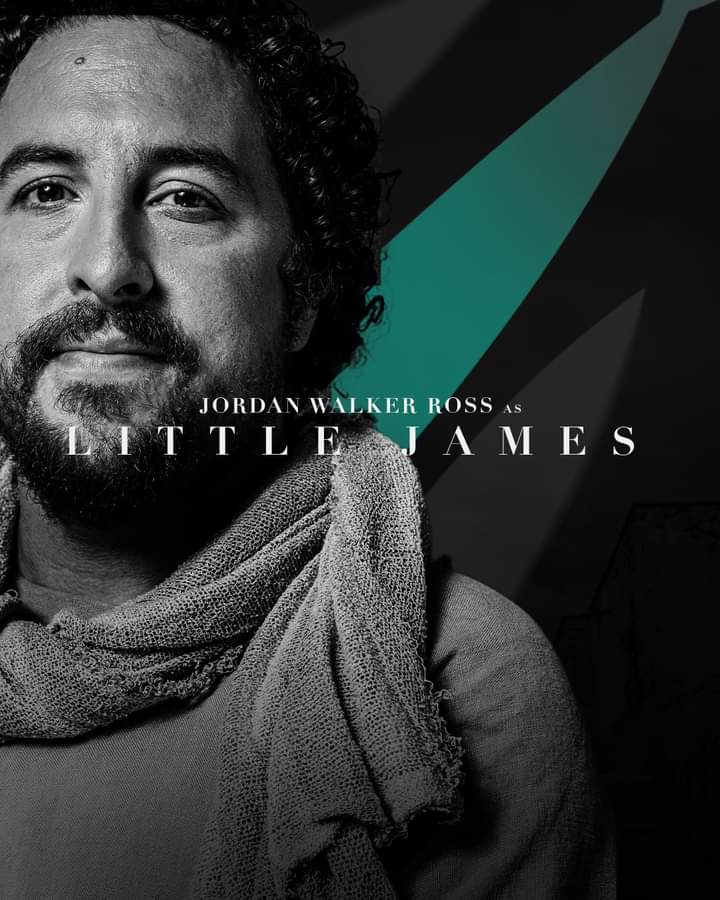
Little James, like Matthew, is depicted with a quirk. Again, no scripture that I can recall right off hand supports this portrayal, but such is the approach of The Chosen.

While Matthew’s issue is being on the spectrum, Little James suffers from a limp. Partially crippled, he relies on a walking stick he uses as a crutch. He struggles during travel, and believes his gait slows down the company as they travel.

So, the apostles travel, witnessing the miraculous healing our Lord freely performed for the masses. Multitudes, many of whom had the same disability as James, were suddenly healed and able to walk with little to no effort.

So, here’s Little James, crippled while everyone else around him is healed. He wants to ask, but he does not want to offend the Lord. He wants to understand, but does not want to be disrespectful to Jesus, and certainly doesn’t feel as if the Lord has withheld anything from him.

But, he desires healing. He desires understanding, and it’s breaking his heart. So, near then end of Season 3 Episode 2, he tearfully approaches Jesus, who gracefully understands, and encourages him.

Not gonna lie, that scene got me. It ranks right up there with the final scene of “Field of Dreams” for me.

Jesus told Little James that he could be healed, and someday he would, but what made his testimony so powerful was that he believed even though he had not been healed. And that through his testimony many would come to faith.

Modern Christianity has wrongfully turned faith into a transaction. You believe, then God gives you what you want. Therefore, if you do not have what you want, there must be something wrong with your faith. This is wrong and contrary to the scriptures, but leads to the following situations.

How many times have I sat with a weeping woman who couldn’t understand why God would not give her a child. A weeping man who doesn’t understand why God would allow his wife to have cancer, and why the miraculous healing still hadn’t come.

They had prayed, trusted the Lord, and called out to Him in ways we probably couldn’t imagine. Yet, no baby, no healing, no response. Yet, they still believed in the Lord. And yet, others continued to accuse them of imperfect faith, secret sin, and whatever else they could think of to explain the lack of a miracle.

Yet, these believers remained faithful, for their faith was in the Lord, His goodness and grace, regardless of their outcomes.

And I can not only admire that, I relate to it as well. I have lived knowing that God has forgiven me and cleansed me of all my sin, even while others tell me how awful I am. I have seen others receive tangible blessings from the Lord, while observers tell me that the lack of tangible answers to prayer in my own life reflect a flaw in my faith.

Yet, I live, with the peace in my heart knowing Jesus loves me, and that I have been blessed and forgiven. And nothing will take that away from me, nor will I ever be deterred.

And that’s why the story line of Little James resonates with me. How about you? Have you seen The Chosen? If so, what character resonates with you?

Maybe we’ll see him when we get there

Coolio performing for the troops ca. 2002

Accepting an MTV VMA award in 1994, Coolio imparted the following timeless wisdom, “This year, we kept it real. Next year, let’s keep it honest.”

Such became the mission statement for his music career. While “Fantastic Voyage” encouraged hope and striving for a better way to do life, “Gangsta’s Paradise” honestly assessed the condition of the inner city and the reasons for the struggle.

No one with a conscience can ignore the heaviness of the second verse of “Gangsta’s Paradise.” In it, he opined, “Look at the situation they got me facing, I can’t live a normal life. I was raised by the street…. I’m 23 now but will I live to see 24, the way things is going I don’t know.”

The song came to a hopeless conclusion in the third verse, “They say I’ve got to learn but nobody’s here to teach me. If they can’t understand, how can they reach me? I guess they can’t. I guess they won’t. I guess they’re frontin’, that’s how I know my life is out of luck, fool!”

The song was a hit, the lead single off of the Dangerous Minds soundtrack, and resonated across the nation. While most hip-hop chronicled life in the inner city and assessed the hopelessness thereof, “Gangsta’s” was sort of a call for help with an indictment on the hypocrisy of those who claimed to care, but offered no help that would provide any real relief.

From the inner city perspective, help meant viable education, spiritual support, and a pathway forward. Yet despite all the conversation in the media about solving inner city violence and poverty, that help was not coming.

To this day, I cannot listen to the song without considering what I can do to take the Gospel, God’s light and hope, into the inner cities.

Coolio’s final hit, “I’ll C U When U Get There,” shifted the focus internally. Instead of waiting for help from the outside that wasn’t coming, Coolio implored those in the inner city to look within, and make the changes in their own lives to find a better way. It’s a message that actually applies to all of us, whether rural or urban, rich or poor, White or Black.

That song reminds me to honestly assess what I’m doing while evaluating my priorities and my standing with God.

It may seem unusual for a Baptist preacher to relate to hip-hop. However, brokenness, searching and a longing for redemption resonate with me, which is why Coolio’s music hit home.

That’s why I was heartbroken to hear of Coolio’s untimely death. I can only hope that he found the hope and redemption he pined for, and that he found salvation in the Lord. I truly hope to see him when I get there.