Tag: society

Scrooged! What We All Miss in Dickens’ ‘A Christmas Carol’

Photo by Lisa from Pexels on Pexels.com

When reading written works, most people apply the lessons learned to other people. Few have mastered the art of applying a lesson to oneself.

When we read the Bible, we easily see the sin of others while excusing ourselves of our own sin. Or, redefining our own sin so it’s not sin. Or, reframing it so it does not seem so bad. I digress.

When we read the classics like “A Christmas Carol,” by Charles Dickens, we identify a villain (Ebenezer Scrooge), and we apply a lesson to the villains in our lives (the greedy rich.)

I mean, isn’t that the moral of “A Christmas Carol?” Greed hurts others and will lead you to an untimely death?

And since I am not rich, and I am not withholding anything from anyone else, it makes sense that this is a lesson intended for others. And, I should be the one to tell the greedy rich capitalist that he is responsible for Tiny Tim’s death.

The problem with that interpretation is that it lets me off the hook too easily.

Classic literature, like “A Christmas Carol,” always carried a message. Authors saw an injustice, or a fallacy in society, and crafted intricate stories to illustrate their points.

Harper Lee did it in “To Kill a Mockingbird.” George Bernard Shaw was a master at this art, especially in his work, “Major Barbara.” John Steinbeck was a major progressive voice in his novels “The Grapes of Wrath” and “The Pearl.”

Their messages were sharp. Their indictments were merciless. They pulled no punches as their laid out the evidence that would convict society.

This is why these works are read in high school and college classrooms. Not so much to promote the messages contained therein, but rather to teach students to analyze written works in light of their context, and to think.

With “A Christmas Carol,” Dickens was no different. While most people see Bob Crachit as the protagonist, and Scrooge as the villain, the story actually has more to do with Scrooge than Crachit.

The reader was not intended to see himself in Crachit, rather, the reader was to see himself in Scrooge.

In Victorian England, life centered around religion, which all too often missed the Gospel and became self-righteous in nature. As a result, compassion for the poor was lost, and many treated the poor with contempt because they saw poverty as the rightful curse of a sinful lifestyle.

Dickens saw this cruelty first-hand as a child, when his father was thrown into debtors’ prison and he was forced to sell his book collection and go to work. He saw the effects on the many children who were denied education and placed in the mines and the mills.

So, Dickens creates a character who is wealthy, who has disdain for the poor, and who is leading a life that is as harmful to society as it is to himself as the protagonist. And, to make sure the Victorian reader’s sympathy lay with this despicable protagonist, Dickens sets the surrounding characters as people whom the Victorian reader wouldn’t dare admit to sharing commonalities with… the poor.

In the story, Scrooge is unloved as a child, faces poverty in his youth, but works his way up into a partnership with Jacob Marley, and lifts himself out of poverty. Then, he becomes the insufferable miser who is too cheap to allow Marley more coal to stay warm and refuses to allow a full day off for Christmas.

The thing about Scrooge is that he never demands from anyone else what he has not demanded from himself.

Scrooge is not sitting in a warm office while Crachit freezes in the foyer. Scrooge is just as cold. Scrooge is not taking a week off for vacation on Christmas while demanding Crachit work through the holiday. Scrooge is working as well.

Scrooge is not basking in luxury while Crachit’s family starves. Scrooge is thrifty, and barely spends anything on himself.

When Scrooge is asked for donations, his responses (Are there no prisons, are there no workhouses), are rooted in his demand that everyone do what he has done. Work hard, save money, provide for yourself.

And when Scrooge said to let the poor die and decrease the surplus population, he was expressing no value in human life, if that human life was not willing (in his mind) to sustain itself by all means necessary.

What Dickens captures in Scrooge is self-righteousness, and a disdain for anyone who has not attained to his level of self-sufficiency (which is Scrooge’s standard of righteousness.) Scrooge is a man who believes he pulled himself up by his own bootstraps, and everyone else should do the same.

Essentially, what Dickens was presenting in the character of Scrooge was the Victorian manifestation of Pharisaism. I earned it. I’m better. God is pleased with me.

It’s not until Scrooge is faced with eternal judgment (death) by the Ghost of Christmas Yet to Come that he reconsiders his ways. Having realized that his life and value system leads to death, Scrooge repents. Scrooge then emerges on Christmas Day a new man, one who is benevolent, generous, and cares about the plight of Crachit and his family, as well as the poor at-large.

This change in Scrooge is one reason why many see the Christian theme of redemption and salvation in the novel. And perhaps Dickens was trying to demonstrate to his predominantly Christian audience what redemption looks like.

Mainly, however, Dickens was calling his audience to repentance from their sins of pride, self-righteousness, and hatred of the poor.

Again, it is human nature to take these themes and apply them to others. We all know people that are self-righteous, bigoted, and who harm others by their selfishness. However, Dickens’ plan is for us to see ourselves in the Scrooge character.

Right now, our culture hurts. We are being ravaged by political fighting, economic uncertainty, divisive messaging in the news media, and a constant assault on our way of life.

It would be easy for us to fall into the “us vs. them” way of thinking, and to drift into the destructive lifestyles of self-righteousness. Instead, let’s remember that we are blessed because God shed His grace upon us. And instead of trying to defeat “them,” let’s try to win them over.

Like Scrooge began to share his wealth with others, let’s share the grace with which God has blessed us with others.

When the people of God view life through the Gospel lense, and live accordingly, there is no limit to what God can do.


We Didn’t Realize Where We Stood

Photo by Pixabay on Pexels.com

It was Saturday afternoon, sometime in late 1997. I sat in a booth at the Pizza Hut in Jacksonville, Texas, waiting for my personal pepperoni pan pizza.

They brought that delicacy out in a piping hot iron pan and served it to you right there on your table, pan and all. I was already sipping on my soda, served in one of Pizza Hut’s iconic red plastic cups.

The jukebox was jamming out to an old AC/DC song and I was looking forward to a big night at my best friend, Ronnie’s, house. We were going to, once again, attempt to conquer “Tomb Raider” on the first-generation PlayStation system. If Ronnie ever beat that game, I wasn’t there for it.

Sunday night would see my return to college at Stephen F. Austin State University, where I would wake up at 9 a.m. on Monday just in time to make it to my 10 a.m. broadcasting class before going to lunch at East Cafeteria, where I would be treated to all-u-can-eat flame broiled hamburgers, and “Silver Springs” by Fleetwood Mac playing on the jukebox.

Fleetwood Mac… in a few months, I would be able to attend their tour, “The Dance,” at the Coca Cola Starplex in east Dallas. That show was perfectly choreographed, with every move, note and song matching Fleetwood’s PBS special that aired earlier that year. The only thing missing was the USC Marching Band. Not a bad show for $10.

No bills. Inexpensive entertainment. And disposable income. No worries, just how to entertain myself next. Life at the age of 19… as it should be.

Life was good. Those were the “good ole days.”

In 2016, Donald Trump ran for his first term in office under the slogan, “Make America Great Again.” At the time, I was co-hosting a talk radio show with my good friend, Brian Wade. We theorized that, if Donald Trump wanted to “make America great again,” then there must be a time in American history that he was looking back on which he perceived America to be greater than it is today.

So, we went on the air and asked our audience to call in. Tell us, “When was America greater than it is now?”

Our audience gave different answers, ranging from the 1950s to the 1990s. What we found was that most people saw America at its greatest around the time they turned 18… when the benefits of earning money and starting their lives were first being realized, but before the realities and burdens of adult life set in.

For most, America was at its finest, not when the markets rallied or the wars were won, but when their lives were good. One man even said America was at its best in the late 1970s. The voters in the 1980 election beg to differ, but in the late 70s, this man had a good job, a good home, and a good family.

The good ole days.

Brian ran the show from the control room while I offered commentary, audio, lined up guests, and answered calls from “Studio B.”

What I didn’t realize in August of 2016, as Brian and I were creating the best radio that Brownwood, Texas, has ever heard, was that in a few short months, Brian would be called home to Heaven after suffering a pulmonary issue.

We never really know where we are standing, how good the time is, and how fleeting that moment truly is.

Adam and Eve stood in the garden of Eden… a perfect life, everything they could want, no problems. But… they didn’t realize where they were standing, how good things were, and how that paradise would be lost once they rebelled against God.

I wonder if Adam and Eve ever felt nostalgic for the Garden, the way we often feel nostalgic for our lost youth?

Nostalgia…

Nostalgia is an English word that descends from two ancient Greek words, Nostos (homecoming) and algos (pain.) It’s a sentimental longing for a period in the past, often accompanied by the pain of grief over the innocence and youth lost, the time past, and friends and family who have passed on.

Me and two of my kids at the total solar eclipse in Central Texas. Much of my nostalgia centers on my time as a Dad.

What does scripture say about nostalgia?

Very little.

Ecclesiastes 7:10 warns us, “Say not thou, What is the cause that the former days were better than these? for thou dost not enquire wisely concerning this.” That the ongoing longing for times that seem better than now is not wise.

Philippians 3:13-14 tell us “Brethren, I count not myself to have apprehended: but this one thing I do, forgetting those things which are behind, and reaching forth unto those things which are before, 14 I press toward the mark for the prize of the high calling of God in Christ Jesus.”

In both verses, we are warned against living in the past, but that doesn’t mean that it’s a sin to remember the past. Rather, when we remember the past, we do so with purpose, remembering God’s goodness, blessings and mercy, while at the same time looking forward to what He will do next.

So, to help us with this, let’s keep a few things in mind.

First, realize that when we look back on memories, we tend to look back with rose-colored glasses. Truth be told, the good ole days weren’t always that good.

Sure, America was prospering in the post-war years of the 1950s, but we faced a polio epidemic and the threat of nuclear annihilation at the hands of the Russians.

The 1960s might have been fun, but that’s only if you forget the near collapse of the American government and economy in the aftermath of the Kennedy assassination and the dark forces that were truly driving the counter-cultural revolution.

The 1970s may have had good movies and music, but stagflation wiped out the income of American workers and there were gas shortages.

The 1980s brought us AIDS. The 1990s brought us scandal, divisive politics and the beginnings of global terror.

I mean, Billy Joel has a hit song from the 1980s about all the challenges that post-war America faced.

Secondly, realize that today isn’t all bad. Yes, the simplicity of last century is gone, and the world we grew up in will never return. However, from the 1950s through the 1990s, generations back then grieved the changes that were taking place. Yet, today, we look back on those years as the good ole days, remembering some really good things about the times we complained about back then.

Everything is different now, and there are a lot of anxieties to daily life now. Cell phones and remote work has isolated us. Entire communities are disappearing even though the houses and people remain.

Yet, good things are happening today.

On a Spiritual level, I don’t think I have ever seen a younger generation so inquisitive and accepting of Biblical truth as the young Gen-Z, and Gen-Alpha. While social media shows the extreme left-wing and atheistic wing of those generations, in real life, there are multitudes of young people who are not only open to the Gospel, but crave a deeper understanding of the scriptures.

They seek what’s real. And, we as Christians and churches have the opportunity to cultivate that curiosity and foster that growth in faith in these younger generations that could spark a revival such as we have not seen since the 1950s.

Furthermore, if we take stock of our own lives, and take the time to count the blessings God has given us, we will find that, national and global issues notwithstanding, life is still good.

And finally, it will help if we remember that there is still purpose to life. If you opened your eyes this morning, God still has a purpose for your life. If you are still breathing, God is still working with you.

Sometimes, we go through seasons where we feel that we no longer have a reason to live. There’s no more purpose to life.

This is very common for empty nesters whose children have just moved out of the home. This is also common for retirees who have no idea what to do now that there’s no longer a career to wake up to.

It may take some time, but God will lead you to your purpose. Take this time to rest and to get into His word, and gain more understanding of him. Also, take a road trip, or go fishing. Enjoy life.

And as you enjoy it, just know that there is still purpose to life.

As we follow these steps, we will find ourselves less bereaved over the passing of the good ole days, and more purpose-driven, making these current days the good ole days. As we do that, we may even see the Kingdom of God advance.

May God bless you richly today.

The Heathen Rage

Photo by Pixabay on Pexels.com

Let’s face it. The world has descended into chaos. If you only watch 30 minutes of cable news, you will undoubtedly come to that conclusion.

We have protests in the streets of the United States, for causes ranging from open borders to supporting Palestine. The Middle East is an ever-increasing powder keg, with tensions rising between Israel and Palestine, along with instability in other parts of the region.

Asia is unstable as well, with tensions rising between China and its neighbors.

Situations like this have us asking the same question that the Psalmist asked in Psalm 2, “Why do the heathen rage, and the people imagine a vain thing?”

The psalmist answers in verse 2, “The kings of the earth set themselves, and the rulers take counsel together against the Lord, and against His anointed, saying, ‘Let us break their bands asunder, and cast away their cords from us.'”

The reason the heathen raged in the Old Testament times is that they rejected God and rebelled against His will. The reason the world rages today is that the people have rejected God, and seek to pursue their own wills and desires instead.

The result, of course, is open rebellion against God which leads to the chaos that you see in the streets and on the world stage.

Now, it would be easy to sit back, watch the news, and say, “That’s awful!”

Unfortunately, too many Christians fall into the comfort trap of observing the evil in the world and denouncing it without considering their own Spirituality.

The Psalmist states in Psalm 2:6, “Yet have I set my King upon my holy hill of Zion.”

The world rages and rebels against God, but the Psalmist worships God and trusts in the Christ that is coming into the world.

The psalmist goes on to encourage others to do the same, saying in verse 12, “Kiss the Son, lest He be angry, and ye perish from the way, when His wrath is kindled but a little. Blessed are all they that put their trust in Him.”

So, the message we take from Psalm 2 is that the world is chaotic, but the Lord is peace. The world may rage in rebellion against God, but we are to trust in Christ.

The world may seek its own power and glory, but we rest in the power and glory of the Lord.

So, don’t be disheartened by the news, the images of the riots, and the threat of war. Trust the Lord, and be at peace waiting for His arrival.

Not because it’s right, but because it’s trending

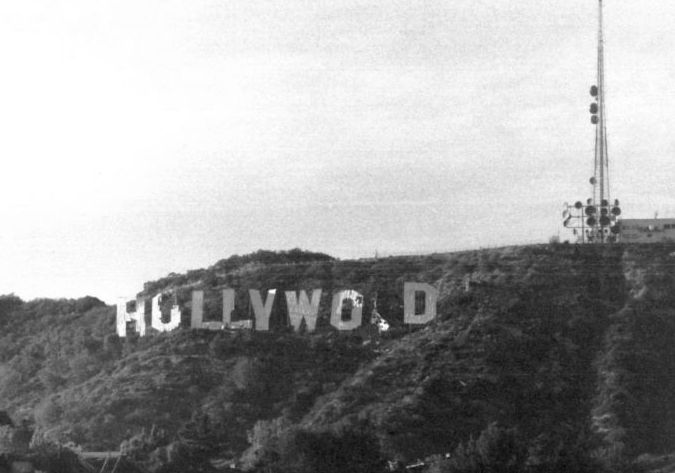
Hullywod-Sign-broken
Photo: Bob Beecher

I was on the phone with a publicist for a movie production taking place in Texas.

“This is big,” she said. “Oprah has reviewed our script, decided she likes it, so the film will be produced by The Weinstein Company.”

Back when this conversation took place, The Weinstein Company was nothing more than a “W” logo that flashed on the screen at the beginning of a movie trailer or at the end of the movie credits. I didn’t know who they were or what they did. I did know who Oprah was, and I thought it was really cool that she had taken on this particular project.

There’s a lot with which I disagree with Oprah. I think her daytime TV talk show is overly emotional. Her politics lean left, mine lean way right. I still haven’t forgiven her for thrusting Dr. Phil upon us. Then again, I can blame the Texas beef industry for that. Had they never sued her over her show on “Mad Cow” disease, she’d have never gone to court in Amarillo, and would have never met Dr. Phil.

On the other hand, I have to respect a woman who went from absolute poverty to the billionaire she is today. She accomplished her success through hard work, good decisions, and by creating a product that, even if I don’t like it, is adored by millions.

Still, her speech at the Golden Globes the other night went all over me. While I agree with the message she spoke, I wondered how she must have felt delivering the message.

I don’t think Oprah engaged in inappropriate behavior with Harvey Weinstein. She has too much dignity and class. I don’t think she knowingly helped him, or was complicit in any specific encounter he had. She has a moral compass.

Yet, everyone in Hollywood, Oprah included, knew what Harvey Weinstein was. Go back and look at the Seth McFarlane joke on YouTube. Read or watch the jokes about the entertainment industry, and how Hollywood execs, including Weinstein, behaved themselves. What was going on was common knowledge, and had even become the punchline of a twisted cultural joke.

So, when she stood on stage and proclaimed that a new day was coming when powerful men would no longer be able to prey on young ladies, I couldn’t help but think, “Why haven’t you said anything before now?”

As long as getting along with Harvey Weinstein was good business, Oprah did it. Now that Weinstein has been revealed to be the pervert that he is, good business dictates criticism of him and the entertainment industry that allowed him to thrive.

But that’s all it is. Good business. Oprah’s speech, and the “Time’s Up” pins worn to the Golden Globes amount to nothing more than a social media post designed to get page views because the right hashtag was used. And therein lies the problem.

Our culture has become one of “hashtag activism.” You don’t actually do anything, you just post about it, and people congratulate you on your compassion for being able to type 140-280 characters.

When you log onto Facebook, look in the right-hand margin. You’ll notice a few topics that Facebook says is trending. On Twitter, that list is to the left. Make any post, add a hashtag that aligns with the word or phrase that is trending, and presto! Page views, comments, likes and shares.

When Weinstein’s accusers came out, the #MeToo hashtag began to trend. When that happened, accusations came out against multiple Hollywood celebrities and executives. Justice for sexual harassment victims trended, which is why Hollywood added the #TimesUp pins, and Oprah gave her speech. They are merely following the social trend.

Next year, this will all be forgotten, and another social cause, environmental cause, or political cause will take its place. Hopefully, more will have been accomplished than a few elite personalities going viral on social media.

In the meantime, Oprah can bring about a lot of healing, to her industry and reputation, by apologizing for her associations with Weinstein and vowing to create an entertainment industry where young ladies will be able to sell their talents, not their bodies.