In his final address to the students at Azusa Pacific University, former megachurch pastor Francis Chan announced that he is leaving the United States to pursue ministry in Asia.
In his message to the students, Chan noted that the people of Asia are open to the Gospel and cleaving to the Lord. He compared his ministry in the United States to fishing in a fishing hole that was over-fished, such that the fish no longer bit the lures. As part of his message, Chan expressed frustration at the way scripture is being de-emphasized and how more people are building beliefs on what feels good rather than the truth of the Bible.
“We only believe what we want to believe!” Chan said. “Name one thing in the Bible that you believe that you don’t want to believe.”
He went on to say that there is absolute truth, and that truth can be found in the scriptures.
Chan exhorted students to take the Bible at its word, and not to try to twist its meaning through endless word studies. He criticized the way the current generation (as all generations have) rejects prior wisdom, believing they have found their own wisdom.
“Are you ready to surrender to the Word?” Chan asked. “Let God be true and every man a liar. If your thoughts contradict this book, then you need to come under this book and change your way of thinking.”
There I sat across the table from a man who would determine whether my qualifications were strong enough to warrant a position within his company.
“What brings you to Brownwood?” He asked.
“I am coming here to start a church to reach the lost and unchurched of the Brown County area,” I said. I know that talking about church planting, state mission work, and religious work to someone in a secular setting like a business meeting or job interview can sound insane, but I had to answer the question honestly. Besides, if I couldn’t tell a potential employer my plans, then would I be able to effectively share the Gospel to the general public?
My future employer then joked that I was another preacher who thought he could convert the city of Brownwood, Tex.
To those outside the church, I can understand how insane it must seem. When the general public thinks about missions, they think about soup kitchens and clothing drives for impoverished people living in a desert overseas. They don’t think about ministers taking to the streets of their hometowns preaching the Gospel, desperately trying to reach the lost they pass by on a daily basis.
So, when you tell someone that you are a state missionary sent to a town that already has a few dozen churches in the same denomination, and hundreds of others, they probably wonder if you are really a scam artist or cult leader.
This type of thinking is not limited to the lost and unchurched, either. Often, pastors, ministers and denominational leaders will evaluate the legitimacy of a mission project based on how many other churches of like faith are located on the field of labor.
In both scenarios, you may hear someone say, “We already have too many churches.” Others will say that the presence of so many churches dishonors Christ, because it shows that Christians cannot get along. After all, shouldn’t we want to come together in one large glorious church and be one big happy family? In a perfect world, maybe so. In the perfect world that God will create after He destroys sin once and for all, we will.
Until then, however, we live in a fallen world.
When I came to Brownwood, I was immediately introduced to a few churches, and dozens of individuals who were faithfully serving the Lord in spirit and truth who worked tirelessly to reach the lost. Some helped us get Life Point started. Upon meeting these dedicated servants of the Lord, I wondered why God would call me to a place where so much Gospel activity was already occurring.
Through time and experience, God taught me that He called me to Brownwood because, despite the best efforts of so many, there were still those who needed the Gospel, who would respond to the Gospel.
Simply put, the more workers for the harvest, the greater the harvest.
In business, there’s a concept called market penetration, which is the measure of the sales or adoption of a product in a particular market. Companies work to increase market penetration by increasing promotions, offering new outlets to purchase their product, and diversifying their efforts to reach different demographics within the market.
Subway restaurants drew a few odd stares when they announced the opening of a new store inside a megachurch. (That’s a different subject for a different day). In explaining the move, Subway representatives simply said, “If we think we can sell sandwiches in a particular location, we’re going to open a store in that location.”
If you look around, you’ll notice that there are Subway locations everywhere. A small town near my home that cannot support a traditional restaurant has a Subway.
The same tactic has been employed by McDonald’s, 7-11, and the Southern Baptist Convention. A location on every corner penetrates the market, and increases “sales.”
Yet, no one ever complains of there being too many McDonald’s restaurants, 7-11s, or Subways. They do, however, complain of too many churches.
Why? It’s Spiritual.
The Missionary Baptist Association of Texas holds its messenger meeting in November. Several local and area associations will meet between now and then. As we discuss missions at these meetings, whether as part of the formal proceedings, or informally around the table of fellowship, let’s not discuss missions in terms of how many churches exist in how many towns. Let’s discuss missions in terms of how we are penetrating these fields of labor with the Gospel.
There are many reasons why people think that the Ryman Auditorium is called “the Mother Church of Country Music.” First, it looks like a church. Notice the arched windows and doorways, the American Gothic architecture, and the wooden pews inside.
Then, there’s the devoted, religious following of the Grand Ole Opry, which still closes most of its performances with a Gospel tune.
Finally, there’s the notion that you haven’t really arrived in Country Music until the “Mother Church” gives you her blessing, and you are invited to play the Opry (even if most of the performances are now held at the Opryland Resort.)
But how many realize that the Ryman Auditorium, the Mother Church of Country Music, was actually a church?
In 1885, Riverboat operator and saloon owner Thomas Ryman noticed that the ongoing Christian revival across Tennessee is cutting into his business. Looking to preserve his business ventures, Ryman decided to go to a revival meeting held by the great Evangelist Samuel Porter Jones for the purpose of disrupting and heckling the service.
Instead of stopping the revival, Ryman himself wound up converting to Christianity. So moved by the preaching of Jones, and his own redemption, Ryman endeavored to make sure everyone could hear the Gospel as spoken by Jones’ voice. So, he invested $100,000 ($2.7 million in today’s cash) to build the “Union Gospel Tabernacle,” a 6,000 seat chapel where Jones would be able to preach to multitudes.
Worship services were held, and Jones held many revivals in the facility. The tabernacle was renamed the “Ryman Auditorium” in 1904 by Jones as he preached Ryman’s funeral.
The Ryman Auditorium closed in the 1930s, and fell into disrepair before being taken over by WSM-AM in the 1960s to become the site of the Grand Ole Opry.
I read this story several years ago, and it continues to impress me that a hardened sinner was so moved with gratitude for his salvation, and concern for the eternal destiny of his fellow man, that he put his fortune to the test to build a place where everyone could come, hear the Gospel, and be saved.
When I think about this, I wonder what I have done to show my gratitude to God for my salvation. I also wonder what would happen if I did more. Furthermore, what if we had more Thomas Rymans in the world, hardened sinners broken and redeemed by the power of Christ who turned around and did everything in their power to reach those around them? If this happened, what kind of revival would we see in our country?
Right now, the entertainment industry politicizes everything, thinking that to legitimize their fame and popularity, they have to adopt a cause or message to change the world. Politicians legislate to leave their mark on the world. Athletes endorse ideas and causes.
The rest of the world uses its platform to advance a secular agenda. Isn’t it time that Christians use their platform to advance the Kingdom of God?
May God grant you the boldness to live out your faith and reach others with the Gospel.
In 2003, I was sold on the Iraq invasion. Saddam Hussein had used weapons of mass destruction against his own people in order to put down rebellions, and was possibly colluding with terrorist organizations who planned on carrying out major attacks against the American homeland.
If the above statement seems ignorant to you, please forgive me. I, like millions of other Americans only want to see our nation secure and our people prosper. In the aftermath of 9/11, neither could be guaranteed as terrorist organizations in the Middle East had not only stated their intent to destroy America, but managed to kill thousands merely by hijacking airliners.
What we were told leading up to the invasion of Iraq was that we would (a) be neutralizing a direct threat to the American homeland, (b) eliminating stockpiles of chemical and biological weapons, (c) disrupting terror operations and (d) liberating an oppressed people.
We were warned that the war would be a prolonged effort to establish a free and democratic nation in Iraq, and that the culture change would take at least a generation. The cost would be high, the sacrifice would be great, but once successful, Iraq and Afghanistan would become beacons of freedom and hope to the Middle East, which would result in people being liberated from dark totalitarian regimes.
That’s what we were told. I believe that President George W. Bush was sincere in his desire to effect lasting change in the Middle East, but that didn’t happen.
In the aftermath of the invasion, the country destabilized. Al Qaeda set up operations in northern Iraq and immediately began persecuting Christians. When the Obama administration pulled out of Iraq (to fulfill a campaign promise to end the war), ISIS went on the offensive, essentially conquering the northern part of Iraq and increasing the persecution of Christians and non-Muslims.
This morning on my radio show, I had the opportunity to visit with Juliane Tamoorazy, the president and founder of the Iraqi Christian Relief Council. Tamoorazy discussed the plight of Christians in northern Iraq, and hoped that Vice President Mike Pence would visit with them upon his trip to Iraq scheduled for January.
While Tamoorazy blames American policy for the problem in northern Iraq, she doesn’t blame Americans, emphasizing that Americans have good hearts and want to help people. She noted that, even in Iraq, the people blame the politics, and not the American people.
It was a difficult interview for me to conduct, because I couldn’t help but think about what the situation would be like if it were my house that were marked for persecution, if it were my family kidnapped and sold into slavery, or it was my time to be killed, all for believing in my Lord and Savior Jesus Christ.
On my show, we debate policy. We discuss political ramifications of legislative or executive action. We discuss what’s happening in the government. Today, I couldn’t have that conversation.
So, I asked, “What can Americans do for our Christian brothers and sisters who are enduring persecution in Iraq?”
She thanked me for the question, indicating to me that she doesn’t get that question very often, and told me that the Iraqi Christians need blankets, heaters, air conditioners and basic needs for living. Of course, her organization is putting on a drive for those products.
Scripture tells us in Hebrews 13:3, “Remember them that are in bonds, as bound with them; and them which suffer adversity, as being yourselves also in the body.”
To remember them in bonds, to remember the persecuted Christians, means to keep them top-of-mind, the way God remembered Noah in Genesis 8:1. We are to be mindful of them as if it were our very own in bondage, because, when you think about it, they are our very own. We are to remember them the way we would want to be remembered if we were enduring that persecution.
And, we are to remember them “which suffer adversity, as being yourselves also in the body.” This means that when some of us suffer, we all are affected.
2018 promises to be a good year in American life. Let us not be guilty of enjoying the good times while our Christian brothers and sisters suffer. Let us remember them, and as we have opportunity, do good unto them. This can be done through a number of organizations, including the Iraqi Christian Relief Council, Open Doors, or Voice of the Martyrs.
The time for silence and complicity has ended. It’s time to help.
 There I sat across the table from a man who would determine whether my qualifications were strong enough to warrant a position within his company.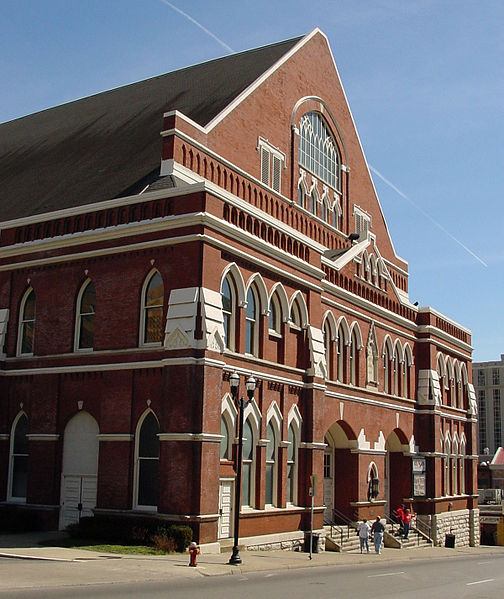
 In 2003, I was sold on the Iraq invasion. Saddam Hussein had used weapons of mass destruction against his own people in order to put down rebellions, and was possibly colluding with terrorist organizations who planned on carrying out major attacks against the American homeland.
 Leland Acker