Category: Life

When the Light shines, darkness scatters

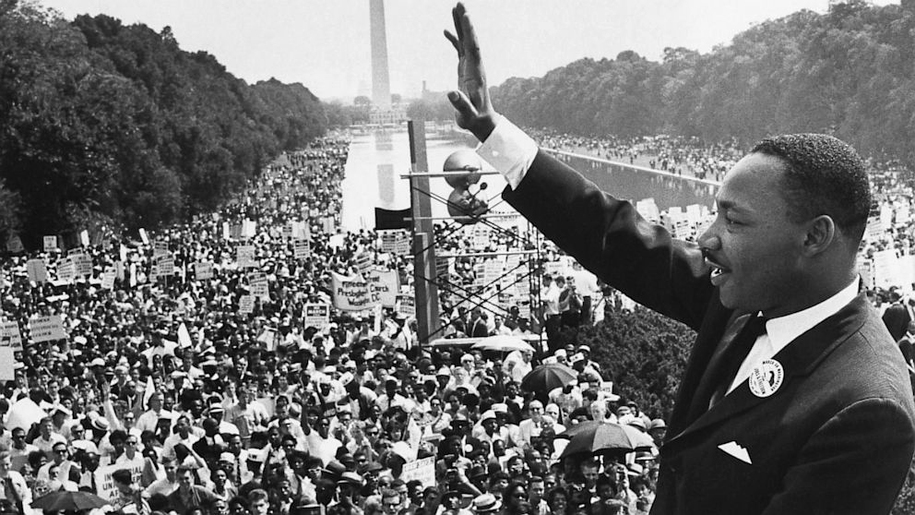
marchonwashington

“Darkness cannot drive out darkness; only light can do that. Hate cannot drive out hate; only love can do that.”

-Dr. Martin Luther King, Jr.

Few people positively impacted American culture more than Dr. Martin Luther King, Jr. His leadership in the Civil Rights Movement of the 1960s was propelled by his faith, and his understanding that America could not survive under the racial division, animosity and segregation that defined America in the first half of the 20th Century.

If the land of opportunity, the free nation he knew growing up was to survive the test of time, then the cancer of segregation had to be surgically removed. The danger of cancer treatment, however, is that it can often cause as much damage to the body as the cancer itself.

Dr. King understood this. He understood that for America to emerge from the Civil Rights Movement stronger, freer and more prosperous, the Civil Rights Movement had to not only secure freedom and opportunity to the African American community, but also had to foster reconciliation between African Americans and their white counterparts.

You see, one of the biggest hurdles to desegregation in the South was the fear held among many whites that, once equally protected under the law, African Americans would begin to enact Jim Crow style laws against them as a multi-century payback for the sins of the past.

During the 1960s, it was not uncommon to hear someone say, “The day is coming when a white man will be afraid to pump gas.”

And while there was a feudal societal structure in the South, Dr. King understood that the old Confederate caste system could be overturned if he assuaged the fears of middle-class, working voters.  Therefore, he reminded his followers, partners and supporters that “darkness cannot drive out darkness, only light can do that. Hate cannot drive out hate, only love can do that.”

Dr. King understood to change the South, he had to change its heart, and that required love.

In a speech given on the subject, Dr. King described the three Greek words used to describe love: eros, which is romantic love, phileo, which is brotherly affectionate love, and agape which describes the self-sacrificial love that regards the need and well-being of the other, rather than self.

This agape love is the love that propelled Christ to the cross to redeem us from sin. And it’s that agape love that Dr. King urged his followers to have toward those who opposed the Civil Rights Movement.

In a sermon entitled, “Love Your Enemies,” preached at Dexter Avenue Baptist Church in Montgomery, Ala., Dr. King taught how love has a redemptive quality to it. Hate destroys. Love redeems.

Even back in 1957, Dr. King had caught the vision of not only eliminating Jim Crow from American society, but seeing America redeemed to the free and open country envisioned in the writings of the Declaration of Independence and the U.S. Constitution. Dr. King did not want to, nor did he advocate, defeating any segment of society. Rather, he envisioned redeeming his adversaries over to his point of view, creating a stronger, unified, just and free United States of America.

Love redeems.

America has had a relapse. The cancer of racism and racial division has returned, and once again a generation has been called upon to treat and remove this cancer.

As we strive toward racial healing, reconciliation and unity, let’s not focus on the sins of the past, nor be distracted by the vitriolic voices that would divide us further. Let’s remember Dr. King’s vision of redeeming our adversaries, as well as each other, through love.

We can do this if we learn to love the sinner, while hating the sin and system he is in. If we speak the truth gently and faithfully, while rejecting responses of anger or violence, we will allow the evil of our day to be revealed for what it is, without clouding the picture with our own indiscretions.

Love your enemies, and do not evil thinking good will come. We’ve been here before, we’ve overcome this challenge before, and we can again. Redemption and reconciliation will come, if we do God’s will.

Because America enjoys a good train wreck

Let’s be honest. America loves a good train wreck.

You may have heard of Amy Winehouse, but have you ever listened to her music? Most who read this know of Winehouse, fewer can recite her lyrics.

You never heard of Paris Hilton or Kim Kardashian before their sex-films were made public. Tommy Lee’s fame extended beyond his days with Motley Crue as his rocky relationship with Pamela Anderson kept his image on the front of tabloid publications everywhere.

While Lindsey Lohan had a good acting career as a child, most of her press coverage came as a result of her meltdown as she transitioned into adulthood.

These, and other celebrities plagued by personal calamities spawned gossip column articles, magazine covers, reality shows and movies of the week. So, it should come as no surprise that a movie detailing the saga of Tonya Harding and Nancy Kerrigan in the run up to the 1994 Olympics will hit theaters on Dec. 8.

I, Tonya chronicles the life of Tonya Harding leading up to the incident where a hit man hired by her bodyguard struck Nancy Kerrigan above the knee, bruising her thigh and taking her out of the USA National Competition.

The movie chronicles the abuse she endured at the hands of her mother, her dysfunctional relationship with Jeff Gillooly, her struggle to rise to the top of the figure-skating world, the attack on Kerrigan and the fallout thereafter.

Previews of the movie show a jaded Harding character, played by Margot Robbie, struggling through life in the brash fashion that got her labeled as “white trash” back in the 1990s. The depiction of Harding in news reports, TV shows, made-for-TV movies and reality shows in the aftermath of the attack on Kerrigan is one of an unsophisticated white trash girl who somehow stumbled into the talent to make the world figure-skating stage.

The goal of each of these depictions is not necessarily to tell her side of the story, nor is it to tell Nancy’s side, but rather to present another train wreck for America’s entertainment. Judging by the trailers for I, Tonya, this next film promises to be no different.

The saga of Tonya Harding speaks to a blemish on America’s culture at large. The culture is content to thrust a person like Harding into the national spotlight for our amusement, with no regard given for her personal healing and well-being. We laugh at her failure, poke fun at her rural impoverished upbringing, mock her tears, and think of ways we could have done it better.

Such a cultural mentality is not only a shame, but falls into a category of evil described in Romans 1:31-32, “Without understanding, covenantbreakers, without natural affection, implacable, unmerciful: Who knowing the judgment of God, that they which commit such things are worthy of death, not only do the same, but have pleasure in them that do them.”

Tonya Harding was a mess. I’d like to see a revived, redeemed and stronger Tonya emerge. But the fact that we are willing to sit back and find amusement in her demise places us in the same category as those who carried out the attack on Nancy Kerrigan. And folks, that’s not where you want to be on Judgment Day.

Blood, Sweat and Tears: The forgotten formula for long-term peace and prosperity in America

17504623_1425582290846774_1723984855442417737_oDuring a segment on my morning drive talk show on News/Talk 102.3 KXYL, Woody Tasch  of the Slow Money Institute and I discussed the perils of the modern American economy which emphasize short-term profit over a long-term vision of growth and development.

While I haven’t learned enough about the Slow Money Institute to offer any kind of endorsement, the premise of his organization falls right in line with a problem I have with the modern way of doing business in America.

Tasch’s organization raises money to offer no-interest loans to small family farms that serve local communities. His vision seeks to move America away from centrally planned agriculture to local farming by sparking a revival through financial aid.

The road will be long, and will require substantial investments of money, time and effort before any return is realized, let alone the realization of his dream. But Tasch realizes that, and forges ahead anyway.

And, without knowing his political or religious views, I wish him well, because I know that if America is truly to become great again, it will need a generation of Taschs to rise up and plant trees beneath whose shade they may never sit.

America overcame all odds to win World War II and become a world superpower. We enjoyed unprecedented prosperity in the 1950s, survived an economic recession in the 1970s, enjoyed more unparalleled prosperity in the 1980s and 1990s, and, thanks to technology, enjoy a convenient, peaceful and prosperous lifestyle never before experienced in the history of man.

This way of life was not won in a single stock market rally. It wasn’t won in a lottery, and while World War II propelled us to superpower status, our success in the 1950s had as much to do with the ground that had been tilled in the progressive era as it did with Eisenhower’s leadership in the war and as President.

The proverb, previously referenced, that a society becomes great when old men plant trees under whose shade they know they’ll never sit, was the basis for American culture for more than 300 years. The colonists knew they would never enjoy the blessings of the nation they worked to build, yet they worked to build it anyway.

The revolutionary war soldiers knew that the nation of which they dreamed, where all men are regarded as equal in the sight of God and the law, would never mature in their lifetime, yet they took to the battlefields anyway, losing life and limb at the hands of the British army.

The founding fathers knew that their effort to shape a free and prosperous nation wouldn’t be completed in their lifetimes, yet they worked to create that nation anyway.

Men built farms, businesses, communities, towns and cities, dreaming of the greatness those things would become long after they passed. Fathers left legacies and inheritances to their children. Factories were built. Companies started. New inventions sent to market. Through this great society that arose on the premise of planting trees for the next generation, we saw the industrial and technology revolutions arise, which not only lifted America out of poverty, but much of the world as well.

Today, we enjoy the shade of those trees planted by our forefathers. We stand on the shoulders of giants. However, we have become so accustomed to enjoying prosperity, we’ve forgotten how to build it for the future.

You will rarely find a CEO of a publicly traded company that looks beyond the next quarter’s earnings report. After all, that’s the benchmark by which his performance is measured. The board of directors want to see an increasing stock price, strong earnings reports, and good coverage in the media.

A temporary drop in stock price, earnings, or public perception can be the end of a CEO’s career, even if that temporary downturn could lead to a brighter long-term future for the company. Therefore, few look farther than 3-6 months out. There’s no reward for planting trees for the next generation. In fact, it can be penalized.

It’s not just Wall Street CEO’s. Politicians rarely look past the next election, therefore long-term solutions are never offered. The Interstate Highway system, Civil Rights legislation, Social Security, and Women’s Suffrage would never pass in today’s political climate. In times past, politicians would risk their political careers if they thought it would better the country long-term.

Consumers rarely look beyond the next iPhone, smart screen or automobile. What legacy are we building and leaving for the next generation? Where are the trees we are planting?

We need a new generation to rise up, and we don’t necessarily have to wait for that generation to be born or come of age. The Baby Boomers, Gen-X, Y, or the Millennials can do this. We need a generation to rise up and plant trees for tomorrow, trees under whose shade they may never sit.

The opportunities are there. Wall Street has sucked up the big money in most industries, leaving a vacuum on Main Street that can be filled by the right breed of entrepreneurs. We can build America into a great country. We can do what generations of great Americans did before us.

The question is, are we willing? Are we willing to begin a project that will not be completed in our lifetime? Are we willing to make the sacrifices to benefit the generations to come?

I hope I am.

The real issue with the Boys Scouts

13350239_624569961040640_8092507861845382051_oPeriodically, controversy will erupt concerning the Boys Scouts of America. The latest “outrage” over the Scouts allowing girls to join Cub Scouts, with the promise of adding a program for older girls in the near future, is just the latest salvo in the culture proxy war that has become modern scouting.

Liberals and social justice warriors feel that if they can effect change in the Boys Scouts organization, they can use that victory to effect change in the culture at large. Conservatives and Christians feel with every change that takes place, more ground is lost in the culture war.

And so it goes, both sides lighting up the phones on talk radio, writing letters to the editors of local papers, and blasting or praising the scouting organization itself. Lost in all of this hyper-political drama is what’s at issue itself.

In this case, it’s the idea that girls should be able to join the Boys Scouts and learn what boy scouts learn.

Now, on one hand, I get it. The world is changing, and it would be nice to have some thing to hold on to that will not change. A reminder of “the good ole days,” as it were. But as I have previously posted, the good ole days are going away, and are not returning.

That doesn’t mean the future is dim, but rather that our future good ole days are going to be different, and we’d be wise to position ourselves to enjoy the future good ole days.

When I look at what is at stake with the Boys Scouts admitting girls, I see an organization that teaches it’s members to do their best, to do their duty to God and country, and to always be honest and act with integrity. I fail to see the harm in teaching those things to girls.

When I look at what Boys Scouts do, learning to tie knots, fix things, build things, hunt, fish, camp, survival skills, archery, etc, I see no harm in teaching girls the same things. In fact, with masculinity declining in our culture, girls need to know these things so they can function in the presence of a man who cannot do these things.

Masculinity. There’s an issue. Matt Walsh, a commentator for The Blaze and a conservative blogger, tweeted in the aftermath of the decision to allow girls into Cub Scouts, questioning why boys couldn’t just have a place to be boys? Good question. However, the question insinuates that by allowing girls to go on the camping trip, we’re somehow taking away the boys’ place to be boys. I mean really, have Cub Scouts Camps become “safe spaces?”

Here’s the issue with masculinity in the Boys Scouts. Like it is in our culture, masculinity is fading in the organization. Here’s why.

Since the Cub Scouts began allowing women to be scoutmasters in 1976, with the Boys Scouts making the same move in 2014, more mothers are becoming scoutmasters. And they do a heck of a job. A great job. I know a few. The issue to me isn’t women teaching boys to be men, it’s why aren’t more men stepping up to teach these boys to be men?

This issue is neither limited to the scouts, nor is it caused by the scouts. I read an article recently where tool manufacturers and hardware stores were starting to market their products by teaching millennials how to use them. Basically, “this is a skill-saw, here’s what you’d use it for, and here’s how you’d use it.”

While it would be easy to poke fun at millennial men for not being able to use a table-saw, we have to wonder why he doesn’t know. For every 20-something that doesn’t know how to change a tire, I’ll show you a dad who never took the time to show his son how to change a tire.

For every 20-something that can’t figure out how to use a drill-driver, I’ll show you a dad who never built a deck or tree-house with his son.

The reason masculinity is declining in our culture is because dads don’t teach their sons how to be men. How to take responsibility and raise and support a family. How to fix the toilet. How to change a taillight.

That’s a cultural issue. And that’s where the culture war is being lost.

So, if the Boys Scouts want to admit girls, let ’em.

And if your daughter wants to join the Boys Scouts, let her. Maybe she’ll learn some skills so a future repairman won’t empty her wallet by charging for blinker fluid.

As for me, I’m going to re-evaluate my life, and go home and teach my boys how to build a privacy fence in the back yard.