Author: Leland Acker

Scars, stars, bazaar: The Greatest Showman rocks our imaginations

Forget everything you know about P.T. Barnum. The Connecticut-born son of a tailor who so coveted high society that he swindled and cheated his way into mass fortune died 126 years ago. All that remains of him is the name of a circus.

The P.T. Barnum depicted in “The Greatest Showman” is a fictitious character, an energetic, benevolent man whose blind ambition led him to make occasional mistakes in his relationships.

Portrayed by Hugh Jackman, P.T. Barnum whisks his love, Charity, away by imploring her to use her imagination, adding that the world is what they make of it. A running theme throughout the musical is how they can change their stars, and create their own world, being limited only by their own imaginations. His love, dreams and enthusiasm lights the hearts of his wife and daughters, and inspires his followers, a rag-tag group of misfits including the bearded lady, the world’s smallest man, a theatre director and even a world-renown opera singer.

The movie maintains a happy tone, even when the characters deal with very difficult situations, ranging from rejection, personal pain, and hopelessness. The darkest of times are quickly abandoned for the next adventure, and the next song.

The ongoing theme of “The Greatest Showman” is that of acceptance. P.T. Barnum struggled to gain the acceptance of high society, while his cast of odd characters struggled to accept themselves, and struggled to gain acceptance of mainstream society.

Having gone from pauper to prince with the financial success of Barnum’s Circus, Barnum enlisted the help of a popular theatre director to “win the high brows.” This resulted in an audience with the queen of England, which connected Barnum to the famous opera singer Jenny Lind, with whom Barnum strikes up a partnership for a North American tour.

Regardless of all that happened, Barnum never really gains the acceptance of high society. He is then reminded of the true value of the friends he has, and learns to quit living to impress people that he doesn’t really like in the first place.

The cast of odd-characters struggle throughout the movie. Rejected not only by their own mothers, many had trouble accepting themselves. Throughout the course of the movie, they learn to accept themselves, and to see their oddity as a gift. They also find comfort in each other.

I came away from this movie inspired and happy. I was reminded to dream big, to be myself, and to love those around me. And for that reminder, I give the movie a thumbs up!
Not because it’s right, but because it’s trending

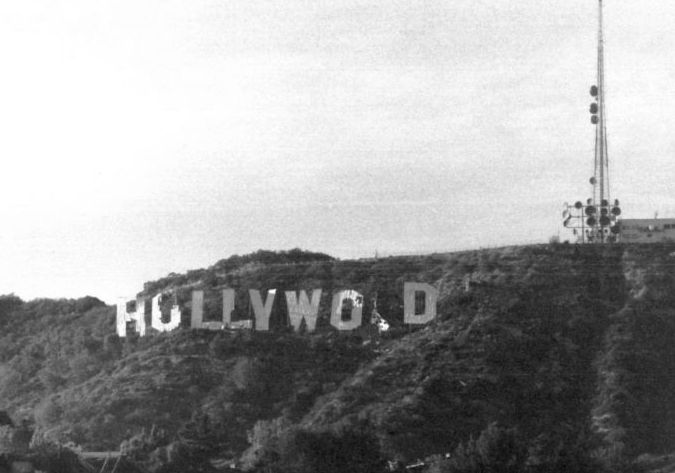
Hullywod-Sign-broken
Photo: Bob Beecher

I was on the phone with a publicist for a movie production taking place in Texas.

“This is big,” she said. “Oprah has reviewed our script, decided she likes it, so the film will be produced by The Weinstein Company.”

Back when this conversation took place, The Weinstein Company was nothing more than a “W” logo that flashed on the screen at the beginning of a movie trailer or at the end of the movie credits. I didn’t know who they were or what they did. I did know who Oprah was, and I thought it was really cool that she had taken on this particular project.

There’s a lot with which I disagree with Oprah. I think her daytime TV talk show is overly emotional. Her politics lean left, mine lean way right. I still haven’t forgiven her for thrusting Dr. Phil upon us. Then again, I can blame the Texas beef industry for that. Had they never sued her over her show on “Mad Cow” disease, she’d have never gone to court in Amarillo, and would have never met Dr. Phil.

On the other hand, I have to respect a woman who went from absolute poverty to the billionaire she is today. She accomplished her success through hard work, good decisions, and by creating a product that, even if I don’t like it, is adored by millions.

Still, her speech at the Golden Globes the other night went all over me. While I agree with the message she spoke, I wondered how she must have felt delivering the message.

I don’t think Oprah engaged in inappropriate behavior with Harvey Weinstein. She has too much dignity and class. I don’t think she knowingly helped him, or was complicit in any specific encounter he had. She has a moral compass.

Yet, everyone in Hollywood, Oprah included, knew what Harvey Weinstein was. Go back and look at the Seth McFarlane joke on YouTube. Read or watch the jokes about the entertainment industry, and how Hollywood execs, including Weinstein, behaved themselves. What was going on was common knowledge, and had even become the punchline of a twisted cultural joke.

So, when she stood on stage and proclaimed that a new day was coming when powerful men would no longer be able to prey on young ladies, I couldn’t help but think, “Why haven’t you said anything before now?”

As long as getting along with Harvey Weinstein was good business, Oprah did it. Now that Weinstein has been revealed to be the pervert that he is, good business dictates criticism of him and the entertainment industry that allowed him to thrive.

But that’s all it is. Good business. Oprah’s speech, and the “Time’s Up” pins worn to the Golden Globes amount to nothing more than a social media post designed to get page views because the right hashtag was used. And therein lies the problem.

Our culture has become one of “hashtag activism.” You don’t actually do anything, you just post about it, and people congratulate you on your compassion for being able to type 140-280 characters.

When you log onto Facebook, look in the right-hand margin. You’ll notice a few topics that Facebook says is trending. On Twitter, that list is to the left. Make any post, add a hashtag that aligns with the word or phrase that is trending, and presto! Page views, comments, likes and shares.

When Weinstein’s accusers came out, the #MeToo hashtag began to trend. When that happened, accusations came out against multiple Hollywood celebrities and executives. Justice for sexual harassment victims trended, which is why Hollywood added the #TimesUp pins, and Oprah gave her speech. They are merely following the social trend.

Next year, this will all be forgotten, and another social cause, environmental cause, or political cause will take its place. Hopefully, more will have been accomplished than a few elite personalities going viral on social media.

In the meantime, Oprah can bring about a lot of healing, to her industry and reputation, by apologizing for her associations with Weinstein and vowing to create an entertainment industry where young ladies will be able to sell their talents, not their bodies.

When Rome falls

26230690_10155970904968077_5024045526499751539_n.jpg

You find the most interesting things on Facebook.

Scrolling through my news feed this morning, I came across this gem, comparing the distraction most Americans enjoy via the NFL with the distractions most Romans enjoyed via chariot races, gladiator “games,” and the Olympics.

And while the Roman government deliberately built elaborate stadiums to distract the masses from the crumbling empire and human rights abuses, in America, we distracted ourselves.

Now, I’m not bashing sports, or the NFL. I enjoy watching football, and even have been able to attend a few Big-12 College Football games, and one Dallas Cowboys’ Thanksgiving Day game.  I will probably continue to enjoy watching sports for the foreseeable future.

But for some reason, seeing the above-posted meme on Facebook was kind of an eye-opener for me.

Do you know why the NFL protests were so controversial? And subsequently, why the NFL protests have, at least in part, played a role in the decline of NFL ratings? It’s because, once the players used their platform to advance a socially conscious agenda, they reminded us of the social problems that remain in America.

Whether you agree with Colin Kaepernick or not, seeing he and his followers take a knee during the Star-Spangled Banner reminded you that the reconciliation we thought we had accomplished hadn’t advanced us as far as we had thought. Having that bubble burst, watching football became a reminder of the deep-divides that remain in American society. Once that happened, watching football wasn’t as fun as it was before.

And that’s why the NFL protests were so controversial. People don’t like to be reminded of their problems as they try to escape them. So, we had the controversial debate over the past two years, and we quit watching football.

The good news is that we can use our newly raised awareness to make good things happen. True change will not come through legislation, political action, or by socially-conscious NFL players. It will come through the small, daily decisions made by each individual. So, to borrow a phrase, “be the change.” Extend random acts of kindness to others, and let your light so shine before men that they may see your good works, and glorify your Father in Heaven.

And Go Bulldogs!

We never meant for this to happen, but we can still help

11156384_10206298906337374_6382280851986253488_nIn 2003, I was sold on the Iraq invasion. Saddam Hussein had used weapons of mass destruction against his own people in order to put down rebellions, and was possibly colluding with terrorist organizations who planned on carrying out major attacks against the American homeland.

If the above statement seems ignorant to you, please forgive me. I, like millions of other Americans only want to see our nation secure and our people prosper. In the aftermath of 9/11, neither could be guaranteed as terrorist organizations in the Middle East had not only stated their intent to destroy America, but managed to kill thousands merely by hijacking airliners.

What we were told leading up to the invasion of Iraq was that we would (a) be neutralizing a direct threat to the American homeland, (b) eliminating stockpiles of chemical and biological weapons, (c) disrupting terror operations and (d) liberating an oppressed people.

We were warned that the war would be a prolonged effort to establish a free and democratic nation in Iraq, and that the culture change would take at least a generation. The cost would be high, the sacrifice would be great, but once successful, Iraq and Afghanistan would become beacons of freedom and hope to the Middle East, which would result in people being liberated from dark totalitarian regimes.

That’s what we were told. I believe that President George W. Bush was sincere in his desire to effect lasting change in the Middle East, but that didn’t happen.

In the aftermath of the invasion, the country destabilized. Al Qaeda set up operations in northern Iraq and immediately began persecuting Christians. When the Obama administration pulled out of Iraq (to fulfill a campaign promise to end the war), ISIS went on the offensive, essentially conquering the northern part of Iraq and increasing the persecution of Christians and non-Muslims.

This morning on my radio show, I had the opportunity to visit with Juliane Tamoorazy, the president and founder of the Iraqi Christian Relief Council. Tamoorazy discussed the plight of Christians in northern Iraq, and hoped that Vice President Mike Pence would visit with them upon his trip to Iraq scheduled for January.

While Tamoorazy blames American policy for the problem in northern Iraq, she doesn’t blame Americans, emphasizing that Americans have good hearts and want to help people. She noted that, even in Iraq, the people blame the politics, and not the American people.

It was a difficult interview for me to conduct, because I couldn’t help but think about what the situation would be like if it were my house that were marked for persecution, if it were my family kidnapped and sold into slavery, or it was my time to be killed, all for believing in my Lord and Savior Jesus Christ.

On my show, we debate policy. We discuss political ramifications of legislative or executive action. We discuss what’s happening in the government. Today, I couldn’t have that conversation.

So, I asked, “What can Americans do for our Christian brothers and sisters who are enduring persecution in Iraq?”

She thanked me for the question, indicating to me that she doesn’t get that question very often, and told me that the Iraqi Christians need blankets, heaters, air conditioners and basic needs for living. Of course, her organization is putting on a drive for those products.

Scripture tells us in Hebrews 13:3, “Remember them that are in bonds, as bound with them; and them which suffer adversity, as being yourselves also in the body.”

To remember them in bonds, to remember the persecuted Christians, means to keep them top-of-mind, the way God remembered Noah in Genesis 8:1. We are to be mindful of them as if it were our very own in bondage, because, when you think about it, they are our very own. We are to remember them the way we would want to be remembered if we were enduring that persecution.

And, we are to remember them “which suffer adversity, as being yourselves also in the body.” This means that when some of us suffer, we all are affected.

2018 promises to be a good year in American life. Let us not be guilty of enjoying the good times while our Christian brothers and sisters suffer. Let us remember them, and as we have opportunity, do good unto them. This can be done through a number of organizations, including the Iraqi Christian Relief Council, Open Doors, or Voice of the Martyrs.

The time for silence and complicity has ended. It’s time to help.