
Category: Religion

Merry Christmas, I don’t want to fight this year

Andrew KlavanA secular Jew who loved Christmas, that’s how you would have described Andrew Klavan (pictured right) as a young child growing up on Long Island, N.Y.  Klavan, author of the True Crime series, as well as other mystery/suspense novels, in addition to providing commentary for The Daily Wire, shared in his autobiography how the joyousness of the holiday attracted him to Christmas.

The Great Good Thing chronicled Klavan’s journey from secular Jew, to agnostic, to Christian by detailing the influences that shaped his faith and worldview. He wrote that as a child, he was attracted to the festiveness of the holiday, as well as the presents and the music that made Christmas the splendid celebration we have enjoyed over the centuries.

A friend of the family used to send Klavan Christmas presents, a practice his mother ended. When Klavan protested, his mother allowed him to celebrate Christmas with a Christian family down the street. Even though Christmas was synonymous with toys, Tonka trucks and candy, it was the music and festivities that attracted him to the holiday well into his adult years.

The joy of Christmas is contagious. The holiday spirit spreads like wildfire this time of year. And even though most people celebrate the holiday with the secular traditions of music, parties and gift exchanges, it does provide an opportunity for us to share Christ with an unbelieving culture. The joy of Christmas is a conduit through which we can transmit God’s message of love, redemption and hope, if we conduct ourselves properly.

Over the past several years, we have seen a national debate over “The War on Christmas.” Now, companies should not prevent their employees from celebrating or even acknowledging Christmas. We should advocate for those employees rights.

However, the Christmas war involving greetings or decor in retail locations concerns me. It concerns me that we organize boycotts over a store hanging “happy holidays” in their window, or accost a store clerk for uttering the same phrase to a customer as he checks out.

Often, very little thought goes into saying “happy holidays.” Most of the time, it’s just a catch-phrase that goes with the season. That, or it’s said to include the other holidays of this season, like New Years.

I have said this before, and I’ve been branded an apostate for it, but I do not believe we do the cause of Christ any good when we complain to store managers about “happy holidays” or correct retail employees for saying that phrase. In our battle to keep “Merry Christmas” on the tips of everyone’s tongue, I believe we lose sight of the larger mission to spread Christmas cheer and to re-insert the Gospel into a cultural cornerstone.

If the joy of Christmas can be the starting point for drawing a young secular Jew like Klavan into the faith, imagine what could happen if we let that joy permeate throughout our culture. Imagine how many other Klavans are out there.

So, as we enjoy a wonderful Christmas season, let’s remember the word of God, inscribed in Colossians 4:6, “Let your speech be always with grace, seasoned with salt, that ye may know how ye ought to answer every man.”

If someone tells you “Happy Holidays,” gently respond with “Merry Christmas.” And if you get a chance to share the Reason for the season, then by all means, do.
When the Light shines, darkness scatters

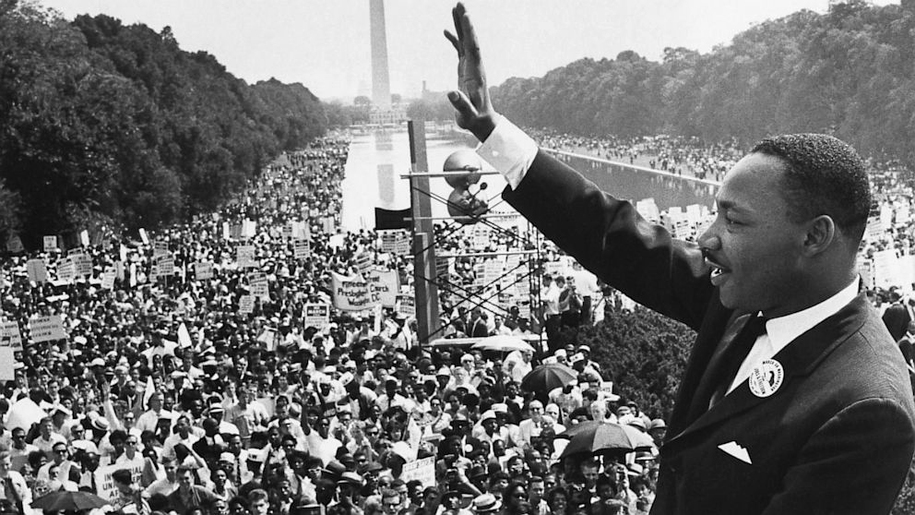
marchonwashington

“Darkness cannot drive out darkness; only light can do that. Hate cannot drive out hate; only love can do that.”

-Dr. Martin Luther King, Jr.

Few people positively impacted American culture more than Dr. Martin Luther King, Jr. His leadership in the Civil Rights Movement of the 1960s was propelled by his faith, and his understanding that America could not survive under the racial division, animosity and segregation that defined America in the first half of the 20th Century.

If the land of opportunity, the free nation he knew growing up was to survive the test of time, then the cancer of segregation had to be surgically removed. The danger of cancer treatment, however, is that it can often cause as much damage to the body as the cancer itself.

Dr. King understood this. He understood that for America to emerge from the Civil Rights Movement stronger, freer and more prosperous, the Civil Rights Movement had to not only secure freedom and opportunity to the African American community, but also had to foster reconciliation between African Americans and their white counterparts.

You see, one of the biggest hurdles to desegregation in the South was the fear held among many whites that, once equally protected under the law, African Americans would begin to enact Jim Crow style laws against them as a multi-century payback for the sins of the past.

During the 1960s, it was not uncommon to hear someone say, “The day is coming when a white man will be afraid to pump gas.”

And while there was a feudal societal structure in the South, Dr. King understood that the old Confederate caste system could be overturned if he assuaged the fears of middle-class, working voters.  Therefore, he reminded his followers, partners and supporters that “darkness cannot drive out darkness, only light can do that. Hate cannot drive out hate, only love can do that.”

Dr. King understood to change the South, he had to change its heart, and that required love.

In a speech given on the subject, Dr. King described the three Greek words used to describe love: eros, which is romantic love, phileo, which is brotherly affectionate love, and agape which describes the self-sacrificial love that regards the need and well-being of the other, rather than self.

This agape love is the love that propelled Christ to the cross to redeem us from sin. And it’s that agape love that Dr. King urged his followers to have toward those who opposed the Civil Rights Movement.

In a sermon entitled, “Love Your Enemies,” preached at Dexter Avenue Baptist Church in Montgomery, Ala., Dr. King taught how love has a redemptive quality to it. Hate destroys. Love redeems.

Even back in 1957, Dr. King had caught the vision of not only eliminating Jim Crow from American society, but seeing America redeemed to the free and open country envisioned in the writings of the Declaration of Independence and the U.S. Constitution. Dr. King did not want to, nor did he advocate, defeating any segment of society. Rather, he envisioned redeeming his adversaries over to his point of view, creating a stronger, unified, just and free United States of America.

Love redeems.

America has had a relapse. The cancer of racism and racial division has returned, and once again a generation has been called upon to treat and remove this cancer.

As we strive toward racial healing, reconciliation and unity, let’s not focus on the sins of the past, nor be distracted by the vitriolic voices that would divide us further. Let’s remember Dr. King’s vision of redeeming our adversaries, as well as each other, through love.

We can do this if we learn to love the sinner, while hating the sin and system he is in. If we speak the truth gently and faithfully, while rejecting responses of anger or violence, we will allow the evil of our day to be revealed for what it is, without clouding the picture with our own indiscretions.

Love your enemies, and do not evil thinking good will come. We’ve been here before, we’ve overcome this challenge before, and we can again. Redemption and reconciliation will come, if we do God’s will.

Shell Shock

In World War I, there was a condition where soldiers would mentally shut down after their minds and emotions could no longer process the violence and devastation around them. The condition was known as “shell shock.”

This is a condition where you have experienced so much trauma that you can no longer process any more difficult emotions, tragedies, traumatic experiences, etc. You just go on autopilot.

I don’t claim to be an expert in this area, and I cannot really describe the intricacies of this disorder. However, even a layman can observe the way people who are “shell shocked” tend to just shut down mentally and emotionally. They may continue the motions of life, but the thought and passion just aren’t there.

With the recent events in the U.S., and in my personal life, I have found myself a little “shell shocked.”

I have found myself unable to explore my own emotions and reactions to things. Thus, my writing has been hindered, and I have been unable to formulate coherent thoughts to post on this blog.

Thankfully, I am finding healing, and I will soon be able to share my thoughts on some of the horrible events to hit our nation recently.

This healing I have found has come through a study of the scriptures. My small-group has been studying through the book of 1 Peter. I highly recommend this book to anyone who is dealing with pain or struggling through life, because this book was written directly to people who are suffering.

Chapter 1 seeks to comfort those who are hurting, mourning and struggling by reminding them of the blessings they have as a result of their salvation in Christ. Oh, I skipped that part, did I?

Yes, 1 Peter was written to Christians who were suffering, particularly those enduring persecution at the hands of Nero and the Roman Empire. And while evangelical writing may not be your thing, the fact remains that any hope we have of going to Heaven, or eternal blessings, come through the Salvation what is freely given in Christ Jesus.

Peter brings this out in 1 Peter 2. He reminds us that Christ suffered for us, taking our sin upon Himself, that we can be freed and delivered from the judgment of God because Christ endured that for us on the cross. Christian doctrine teaches that this salvation is freely given by Christ to all who turn from their sin and trust Him to receive them into His Kingdom based on His work on the cross.

If you believe that your only hope for getting into Heaven is the death of Christ on the cross for your sins and His willingness to forgive you, then you have the proper faith for salvation. Profess that to others.

That’s the backdrop of 1 Peter 1. Peter is writing to people who have trusted Christ as their Savior. He is reminding them how Christ not only gave His life on the cross, but that the Lord diligently worked to bring them to the saving knowledge of the Lord. We also have the assurances that the Lord will receive us into Heaven and that our suffering will one day end.

In Chapter 2, Peter gives purpose to our suffering, which is basically for the purpose of bringing as many people to Heaven with us as possible. Toward the end of the chapter, the underlying theme becomes “Christ suffered for us, can’t we in turn endure hardness for Him?”

While an agnostic may feel that concept borders sadism, the fact is that our willingness to suffer empowers us to live out the challenges of life. Chapter 3 immediately turns the topic to marriage. If Christ suffered for us, can’t we in turn sacrifice for our spouse? If Christ suffered for us, can’t we in turn sacrifice for our friends and family?

It’s hard to make a living today, and parents often find themselves sacrificing their dreams in order to care for their kids. Young adults find themselves overwhelmed, trying to take care of an aging parent. There are no shortages of demands for self-sacrifice in living the typical 21st Century life, and there are no shortages of people who simply walk away from the responsibility.

But for those of us who stay in the “fight,” who continually struggle to care for family and friends in need, the struggle can become exhausting. Yet, Jesus endured all for us.

That reminder keeps me going. Christ endured all for me, so I can endure all for my family. Chapter 4 continues this thought pattern, and Chapter 5 relates it to our church life.

Someday, we’ll all overcome this together as we enter the Lord’s Kingdom. Until then, let’s endure together and keep each other encouraged.

Hit me up anytime on Facebook or Twitter. Or, come visit me at Life Point Baptist Church, 104 E Industrial in Early, TX, inside the Early Chamber of Commerce, Sundays at 10 am.


The State of Mississippi’s a little more hard-nosed

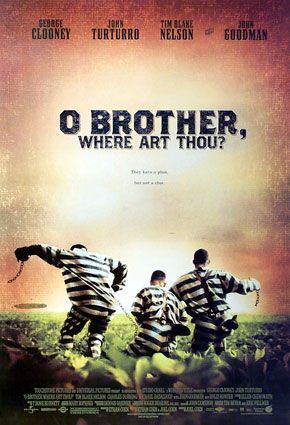
O_brother_where_art_thou_ver1In the movie, Oh, Brother, Where Art Thou, three prison escapees evade law enforcement while journeying home to find a hidden treasure. The three convicts, Everett, Pete and Delmar, embarked on a fantastic journey mirroring that of Homer’s The Odyssey while traversing the back roads of Mississippi.

One afternoon, while dining on fire-roasted gopher, the three observe a group of Christians march down to the river’s edge for a baptismal service. Delmar runs out into the water, speaks to the pastor, and then is baptized. Pete follows suit.

Later, the three discussed their fates as they drove down the road.

“But that man said that our sins were washed away,” Pete said.

“We’ve been forgiven of our sins,” Delmar said.

“You boys may be square with the Lord, but the State of Mississippi is a little more hard-nosed,” Everett explained as he convinced the boys to stay incognito.

They had been forgiven by God, but not by the State of Mississippi.

Scripture promises forgiveness of sin and redemption from sin. However, those around us might not be so quick to forgive.

I recently read a Facebook post from a lady who had recently been baptized. She had repented, trusted Jesus Christ as her Savior, and had followed the Lord in baptism. She was in church. She was raising her kids. She was making every right decision she could think of. However, the people around her were still skeptical, and reluctant to let her back in their lives.

As hurtful as that situation was, we often have to accept that, while God has forgiven us, those who saw us live through our sinful phase may not be so quick to give us a fresh slate.

As painful as it might be, we have to remember that God’s rewards are in the life to come, not this life. If we are living for rewards in this life, we are living for the wrong reasons.

Sometimes we experience the redemption Christ offers, but we don’t see the redemption in our broken relationships. And that’s okay. Just as we have to heal from the scars of our sins, those around us often need to heal as well, and that’s a process that takes time.

In the mean time, remember that 1 Peter 1:4-5 says that we have been begotten “to an inheritance incorruptible, and undefiled, and that fadeth not away, reserved in heaven for you, Who are kept by the power of God through faith unto salvation ready to be revealed in the last time.”

Whatever brokenness you may be experiencing right now, just know that it is not eternal. The day is coming when Christ will come and receive all of us who know Him as savior into His kingdom, and this pain will be a dark, distant memory. Take heart. Our best days are still ahead of us.