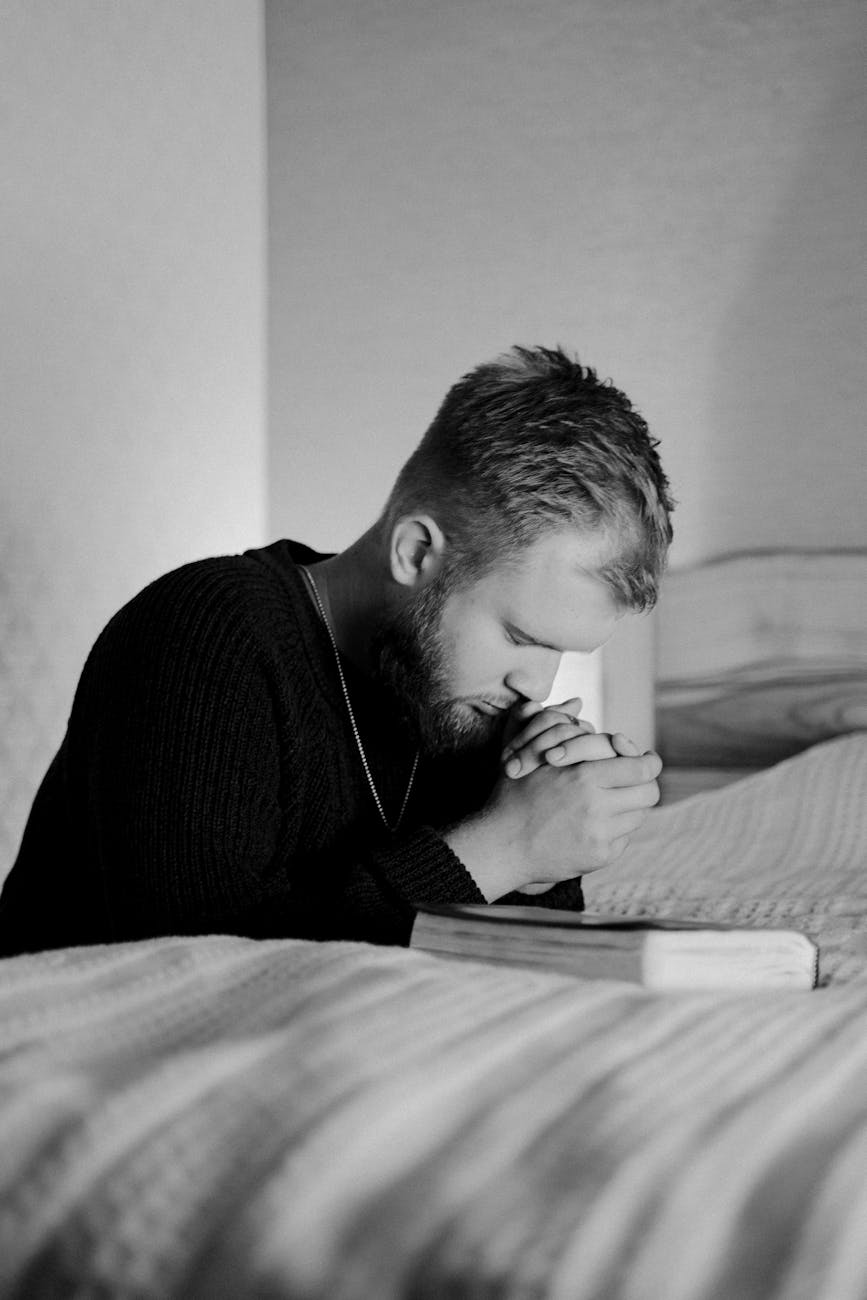
Category: Life

Why So Mad at Phillies Karen?

From time to time, a seemingly insignificant event is caught on camera, and it galvanizes the nation. Such an event took place this past week at a Phillies/Marlin game.

A homerun was hit into the upper deck of the left field seats, which, as usual, prompted a massive scurrying of fans to collect the much-coveted souvenir. A father came away with the ball and handed it to his son.

This situation plays itself out hundreds of times throughout the course of every baseball season. A ball is hit into the stands, fans scurry for it, the victor claims his prize, and on some occasions, there is a confrontation over who the rightful owner of the ball is. Again, this happens all the time.

What happened this time, however, is that the lady confronting the man over the ball was so adamant, the man wound up taking the ball from his son and giving it to her.

Recently, I took two of my kids to a Round Rock Express game. We got free admission to the left-field upper deck with the donation of canned goods. During the game, a homerun was hit into our section. My son pursued the ball, only to break off the pursuit when he saw the father of a young child going after it.

Again, these situations happen all the time.

Just me and a couple of my kids taking in a ballgame

So, why is the entire country mad at this one woman? Here’s why, and it’s an answer that the country is not ready to discuss at this moment.

A father taking his son out to a baseball game is one of the last remaining safe-havens of childhood. Few things remain as a part of childhood that are as pure, innocent, peaceful and fun as that.

Think about it. We still sing “Take Me Out to the Ballgame” during the seventh-inning stretch. That song is obviously written from a child’s viewpoint.

“Buy me some peanuts and Cracker Jacks. I don’t care if we never get back.”

If you go to a minor-league game, you will see that the entire event (except for the beer sales) is centered around creating a wholesome event for the family… for parents and children.

Everything from the team name (What is a Sodpoodle anyway?), to the games they play between innings (Tricycle races, etc) which are usually played by kids picked at random from the stands.

Baseball is still America’s pastime. It is still where people go to leave their problems at the gate and enjoy some peaceful, fun time with the kids, and to make memories.

There’s nothing like the view from the cheap seats. Dell Diamond, Round Rock, TX.

And… on occasion, the families are able to take home a souvenir, whether it is a t-shirt shot into the crowd, or a baseball hit into the stands. The baseball is the ultimate prize. You take home a piece of the game, handled by the actual players, and catching it (or retrieving it) is the ultimate accomplishment.

To have your dad catch a homerun ball at a major league game? That’s the kind of formative memory that sticks with you. That’s a story you tell your grandkids when they come visit you in the nursing home 70 years later.

This is why, when Shannon Stone died trying to catch a ball for his son at a Texas Rangers game, it became a national tragedy. As a local reporter, I covered the funeral, stationed next to ABC News, Univision, ESPN, CNN and others.

If any other fan had died in the same way, it would have been written off as a tragic accident, and no big deal would have been made. But in this case, it was a father, looking for a souvenir for his son, who called out to Josh Hamilton for the ball. Reached out for the catch, lost his balance, and fell.

In a press conference following the tragedy, Rangers owner Nolan Ryan said, “This hits us at the core of who we are.”

As a way of helping fans grieve, recover and move on, the Rangers erected a statue of Stone and his son outside the gates of the stadium, to remind us who we are, and why we bring our kids to the game.

Which brings us back to Phillies Karen. The father catching (or retrieving) the ball for his son is an emblematic moment, in this case shattered by the selfishness of an irate individual.

The audacity not only offended fans at the game, but the TV commentators, the Phillies organization, and social media. Why?

Because without even realizing it, this moment encapsulates the ongoing war our culture has with the innocence of childhood.

Let’s be honest. Our culture is at war with childhood. The sad part is, that war was never officially declared. It just sort of happened. And those warring against childhood often don’t even realize that they are.

Like the situation with the baseball at the Phillies game was driven by the selfishness of adults, the war on childhood is driven by the selfishness of adults.

Kids can no longer just enjoy playing summer baseball. Now, every level of youth sports is seen as a preparation for the major leagues. Sure, the leagues now hand out participation trophies, but I believe that is even driven by the selfishness of adults.

Does a 5-year old joining his first T-ball team really hope the league prepares him for the next level? No. He just wants to play and have fun. It’s the parents who are looking for validation from the child’s on-field performance. And the problem is not limited to youth sports either.

Recently, Snoop Dogg drew criticism for saying he was afraid to take his grandkids to the movies for fear of having to explain same-sex relationships (and other adult themes) when they are depicted in children’s movies. Now, Snoop is shrugging off the controversy and stands by his statements, but that controversy raises another question…

When was the last time Hollywood truly produced a movie for kids?

When was the last time they produced something as benign as “Bambi,” as adventurous as “The Jungle Book,” as fantastical as “Mary Poppins,” or as sentimental as “The Land Before Time?”

When was the last time a movie was produced for kids for the sole purpose of taking them on a big adventure?

Today, even the children’s movies have an agenda to advance the cause of certain adult groups.

So, we’ve ruined youth sports. We’ve ruined movies. The kids cannot open a lemonade stand without getting a tax-use permit and a permit from the health department (because cities now lack the capability to distinguish between legit businesses and kids trying to pass the time and make a quarter.)

I could go on citing different examples from different areas of life, but that would be exhausting for both you and me. The war on childhood and the innocence thereof is a complex issue that requires much discussion.

And it’s hard to encapsulate that issue and how it truly makes us feel. That is, until a random stranger at a ballgame we aren’t watching takes a ball from a child whose father just gave it to him. Then it all comes to a head.

To a large degree, I believe some correction is needed on our part. We need to allow youth sports to return to the simplicity of a season played, with scores kept, wins and losses, and a champion crowned. But when the season is over, let the kids do something else for a while.

We need to let kids be in the moment, and enjoy the simplicity and the joy of the moment. Not every activity needs to be a preparation for a competitive career.

And finally, we need to quit making the minds of our children the latest battleground in the culture war.

We need to restore childhood to what it ought to be, an innocent period of discovery and imagination. A time of learning and of play.

If we accomplish that, angry adults may still take homerun balls away from kids during the game. But, if they do, it’ll be far less triggering.

The Difference

Photo by Pixabay on Pexels.com

What separates believers from the rest of the world? What is the difference between us, and those who remain condemned in their sin?

In Psalm 5, King David discusses how God hates sin and evil. He discusses how God takes no pleasure in wickedness and cannot let evil dwell with Him. Ultimately, David references how the wicked and evil will be destroyed.

Yet, David himself admitted in Psalm 51 that “I was shapen in iniquity and in sin did my mother conceive me.”

How does a man, who readily admits his own sin, expect to be spared the destruction that God will pour out on sinners?

He discusses it in Psalm 5. He opens by saying “Give ear to my words, O Lord, consider my meditation. Hearken unto the voice of my cry, my King, and my God: for unto thee will I pray. My voice shalt thou hear in the morning, O Lord; in the morning will I direct my prayer unto thee, and will look up.”

David expresses faith that the Lord hears his prayers because David lifts those prayers up daily, beginning with his morning prayers. Despite the fact that David dwells in a dark and sinful land, he will look up to the Lord and pray to him.

David goes on to say in verses 7-8, “But as for me, I will come into thy house in the multitude of thy mercy: and in thy fear will I worship toward thy holy temple. Lead me, O Lord, in thy righteousness because of mine enemies; make thy way straight before my face.”

The reason David expects to be spared from the judgment and wrath of God is because he is placing himself at the mercy of God, and worshipping God for His goodness and righteousness. He then begs the Lord to lead him in righteousness.

What separated David from the rest of the sinful world is that he recognized his sinfulness, confessed it to God, then placed himself at God’s mercy. God responds to that, and David knew he could trust in the Lord’s mercy.

What separates the saints from the sinners has nothing to do with societal standing, wealth, intelligence, or heritage. The saints are merely the sinners who realized their sinfulness, confessed it to God, then stepped out of that darkness and into the light by placing themselves at the Lord’s mercy.

The saints are the sinners who trusted the Lord’s mercy and grace, and believe in His righteousness and holiness. The saints are the sinners who trust the Lord has forgiven their sin, and will transform them into the people that He intended on them being.

The saints are the sinners who looked to Jesus on the cross and saw salvation and redemption. They are the ones who look forward to the Lord’s return, and who look forward to exiting this life in favor of the next.

We’re not spared God’s wrath and judgment because we’re “just better people.” And we’re not looking forward to the mansions in heaven because “we’ve earned it.” We are merely sinners who placed ourselves at God’s mercy, knowing and trusting that God rewards those who do.

That is the difference.

The Answer Was Right There All Along

Photo by Pixabay on Pexels.com

At the end of “The Wizard of Oz,” Dorothy asks Glinda for help getting back to Kansas, to which Glinda says, “You’ve always had the power to go back to Kansas.”

Dorothy had been through a harrowing journey with the scarecrow, the lion, and the tin man on the yellow brick road to Oz, dodging the evil witch and flying monkeys, en route to a man behind the curtain blowing smoke and mirrors, all in hopes of solving their problems.

In the end, each character learned that the solution to his problems was right in front of him the whole time.

In life, we often face problems and seemingly insurmountable obstacles. We try to solve these problems with our own wit, and often self-medicate our own anxieties through TV, music, food and drink. At the end of the day, our problems still plague us.

However, when I read Psalm 4, I am confronted with the same truth that Dorothy faced at the end of The Wizard of Oz. My solution was always right in front of me.

In opening Psalm 4, King David writes, “HEAR me when I call, O God of my righteousness: Thou hast enlarged me when I was in distress; have mercy upon me, and hear my prayer.”

David’s first response was prayer, and in his prayer, he praised God for continually helping him in distress and hearing his cries.

David’s prayer life was so robust, and he often praised God even in the storms of life, because David had an intense faith in the Lord. You see this in his writings in the Psalms.

Often, David describes the calamity he faces, but then contrasts that calamity from God’s mercy, strength, love and grace. Psalm 4 is no different.

In Psalm 4:2, David asks his fellow man, “How long will ye turn my glory into shame? How long will ye love vanity and seek after leasing?” He then writes “Selah,” which is an instruction to stop and ponder.

Human nature gravitates toward the vain, the empty. When David asks “How long will you love vanity?” he is asking “How long will you love emptiness?”

What are some things that we love that, at the end of the day, are empty and worthless?

How often do we get caught up in the temporary things of the day-to-day life and fail to take a moment to consider the goodness of God and the eternal things of His Kingdom? And how often do we misplace our priorities on those temporary things of this world while neglecting the eternal things of the Kingdom?

We become like Dorothy, needlessly taking a frightful journey down a yellow brick road to meet a “wizard” that offers no real solutions.

In the second phase of Psalm 4, David expresses his faith.

“But know that the LORD hath set apart him that is godly for himself: The LORD will hear when I call unto Him. Stand in awe, and sin not, commune with your own heart upon your bed, and be still. Selah.”

David tells us that the Lord sets apart His people. As His people, we are different, and we are set apart for God’s higher purpose. We are special.

Special items are set apart from the rest. The classic 1964 1/2 Mustang may be kept in the garage, while the 2003 Honda Civic sits in the driveway. The Civic may be driven more, but the Mustang’s trips are special, and are for certain occasions.

Likewise, when we become God’s children at the point of faith, the Lord sets us apart. We may not see the same highway miles as the rest of the world, but our highway miles are ordered and have a special purpose.

Like a car collector takes special care of his classic, God takes special care of us. Thus, He hears and answers our prayers in the most perfect way possible.

On that note, David implores us to take time, to stand in awe of this, and to ponder this in our hearts as we rest upon our beds.

David then concludes the Psalm by calling the people to worship, while praising God for the joy that He has given, and the provision He makes.

Life is not a bed of roses. (Seriously, why would that even be a good thing? Roses have thorns.) Life comes with trials and tribulations.

When we focus on life’s problems, often problems are all we see. How can we overcome these problems and find ourselves back in a peaceful place?

Simple. Remember that God has set you apart. Pray to Him, and trust Him to bring you through the storm. You have the power to do that, and you don’t even have to be wearing the ruby-red slippers in order to find peace in the Lord.

The Lord: Protects, Rescues, and Comforts

Photo by lalesh aldarwish on Pexels.com

Has the entire world ever collapsed on you? I mean, has everything that could go wrong in your life gone wrong, at the worst possible moment, and has it all gone wrong at the same time?

Have you ever had the time where you employer laid you off, your spouse walked out, the bills came due and the transmission on your car blew up, all at the same time?

The problems in life can pile up and become overwhelming. Scripture not only validates this experience, but shows us how we can find peace during those super-storms of life as well.

In Psalm 3, King David had been evicted from the palace, thanks to a coup led by his own son, Absalom. He was on the run and hiding in the wilderness.

To the casual observer, it seemed that David’s time as king may have been ending, with many believing that not even God would step in and help him.

King David wrote, “Lord, how are they increased that trouble me! many are they that rise up against me. Many there be which say of my soul, There is no help for him in God. Selah.”

King David acknowledged his troubles and even came to terms with how they made him feel. Not only were troubles piling up against him, and enemies rising from every direction, but he also experienced the intense loneliness that often comes with life’s storms.

Despite the ongoing betrayals and problems against him, however, David never lost faith in the Lord.

In verse 3, David acknowledged that the world turned its back on him, “But thou, O Lord, art a shield for me; my glory, and the lifter up of mine head.”

David knew that even when no one else loved him, and when there was nothing but bad news on the horizon, God still loved him, and stood as his shield, and encourager. For David, that was enough to keep his head up, and to keep him moving forward.

Knowing God still had his love and favor upon David, he reached out to God, and then praised Him for his deliverance.

Psalm 3:4-5 says, “I cried unto the Lord with my voice, and he heard me out of his holy hill. Selah. I laid me down and slept; I awaked; for the Lord sustained me.”

David prayed, God listened, and the Lord sustained.

I will tell you that there is nothing this world can do that can truly hurt you, because beneath your family, possessions, wealth, and even your body, is your soul. And nothing can touch your soul if you belong to the Lord.

I have personally experienced times when I was attacked on all sides, with troubles arising from my family, my work, my church and my finances, all at the same time. I will tell you that the Lord was with me.

With the Lord’s presence and favor upon me, I was able to withstand the storms, pass through the fire, and I stand here today able to tell you about it. There are scars… but there is also hope, and the promise of a Spiritually abundant life ahead.

So, when you feel that this world is about to swallow you whole, don’t give up. When there’s trouble on all sides, don’t surrender. And when you can’t see the light at the end of the tunnel, don’t despair.

God is still there, and He will answer you and pull you through, if you trust Him and call out to Him.