Category: Faith

Because America enjoys a good train wreck

Let’s be honest. America loves a good train wreck.

You may have heard of Amy Winehouse, but have you ever listened to her music? Most who read this know of Winehouse, fewer can recite her lyrics.

You never heard of Paris Hilton or Kim Kardashian before their sex-films were made public. Tommy Lee’s fame extended beyond his days with Motley Crue as his rocky relationship with Pamela Anderson kept his image on the front of tabloid publications everywhere.

While Lindsey Lohan had a good acting career as a child, most of her press coverage came as a result of her meltdown as she transitioned into adulthood.

These, and other celebrities plagued by personal calamities spawned gossip column articles, magazine covers, reality shows and movies of the week. So, it should come as no surprise that a movie detailing the saga of Tonya Harding and Nancy Kerrigan in the run up to the 1994 Olympics will hit theaters on Dec. 8.

I, Tonya chronicles the life of Tonya Harding leading up to the incident where a hit man hired by her bodyguard struck Nancy Kerrigan above the knee, bruising her thigh and taking her out of the USA National Competition.

The movie chronicles the abuse she endured at the hands of her mother, her dysfunctional relationship with Jeff Gillooly, her struggle to rise to the top of the figure-skating world, the attack on Kerrigan and the fallout thereafter.

Previews of the movie show a jaded Harding character, played by Margot Robbie, struggling through life in the brash fashion that got her labeled as “white trash” back in the 1990s. The depiction of Harding in news reports, TV shows, made-for-TV movies and reality shows in the aftermath of the attack on Kerrigan is one of an unsophisticated white trash girl who somehow stumbled into the talent to make the world figure-skating stage.

The goal of each of these depictions is not necessarily to tell her side of the story, nor is it to tell Nancy’s side, but rather to present another train wreck for America’s entertainment. Judging by the trailers for I, Tonya, this next film promises to be no different.

The saga of Tonya Harding speaks to a blemish on America’s culture at large. The culture is content to thrust a person like Harding into the national spotlight for our amusement, with no regard given for her personal healing and well-being. We laugh at her failure, poke fun at her rural impoverished upbringing, mock her tears, and think of ways we could have done it better.

Such a cultural mentality is not only a shame, but falls into a category of evil described in Romans 1:31-32, “Without understanding, covenantbreakers, without natural affection, implacable, unmerciful: Who knowing the judgment of God, that they which commit such things are worthy of death, not only do the same, but have pleasure in them that do them.”

Tonya Harding was a mess. I’d like to see a revived, redeemed and stronger Tonya emerge. But the fact that we are willing to sit back and find amusement in her demise places us in the same category as those who carried out the attack on Nancy Kerrigan. And folks, that’s not where you want to be on Judgment Day.

Shell Shock

In World War I, there was a condition where soldiers would mentally shut down after their minds and emotions could no longer process the violence and devastation around them. The condition was known as “shell shock.”

This is a condition where you have experienced so much trauma that you can no longer process any more difficult emotions, tragedies, traumatic experiences, etc. You just go on autopilot.

I don’t claim to be an expert in this area, and I cannot really describe the intricacies of this disorder. However, even a layman can observe the way people who are “shell shocked” tend to just shut down mentally and emotionally. They may continue the motions of life, but the thought and passion just aren’t there.

With the recent events in the U.S., and in my personal life, I have found myself a little “shell shocked.”

I have found myself unable to explore my own emotions and reactions to things. Thus, my writing has been hindered, and I have been unable to formulate coherent thoughts to post on this blog.

Thankfully, I am finding healing, and I will soon be able to share my thoughts on some of the horrible events to hit our nation recently.

This healing I have found has come through a study of the scriptures. My small-group has been studying through the book of 1 Peter. I highly recommend this book to anyone who is dealing with pain or struggling through life, because this book was written directly to people who are suffering.

Chapter 1 seeks to comfort those who are hurting, mourning and struggling by reminding them of the blessings they have as a result of their salvation in Christ. Oh, I skipped that part, did I?

Yes, 1 Peter was written to Christians who were suffering, particularly those enduring persecution at the hands of Nero and the Roman Empire. And while evangelical writing may not be your thing, the fact remains that any hope we have of going to Heaven, or eternal blessings, come through the Salvation what is freely given in Christ Jesus.

Peter brings this out in 1 Peter 2. He reminds us that Christ suffered for us, taking our sin upon Himself, that we can be freed and delivered from the judgment of God because Christ endured that for us on the cross. Christian doctrine teaches that this salvation is freely given by Christ to all who turn from their sin and trust Him to receive them into His Kingdom based on His work on the cross.

If you believe that your only hope for getting into Heaven is the death of Christ on the cross for your sins and His willingness to forgive you, then you have the proper faith for salvation. Profess that to others.

That’s the backdrop of 1 Peter 1. Peter is writing to people who have trusted Christ as their Savior. He is reminding them how Christ not only gave His life on the cross, but that the Lord diligently worked to bring them to the saving knowledge of the Lord. We also have the assurances that the Lord will receive us into Heaven and that our suffering will one day end.

In Chapter 2, Peter gives purpose to our suffering, which is basically for the purpose of bringing as many people to Heaven with us as possible. Toward the end of the chapter, the underlying theme becomes “Christ suffered for us, can’t we in turn endure hardness for Him?”

While an agnostic may feel that concept borders sadism, the fact is that our willingness to suffer empowers us to live out the challenges of life. Chapter 3 immediately turns the topic to marriage. If Christ suffered for us, can’t we in turn sacrifice for our spouse? If Christ suffered for us, can’t we in turn sacrifice for our friends and family?

It’s hard to make a living today, and parents often find themselves sacrificing their dreams in order to care for their kids. Young adults find themselves overwhelmed, trying to take care of an aging parent. There are no shortages of demands for self-sacrifice in living the typical 21st Century life, and there are no shortages of people who simply walk away from the responsibility.

But for those of us who stay in the “fight,” who continually struggle to care for family and friends in need, the struggle can become exhausting. Yet, Jesus endured all for us.

That reminder keeps me going. Christ endured all for me, so I can endure all for my family. Chapter 4 continues this thought pattern, and Chapter 5 relates it to our church life.

Someday, we’ll all overcome this together as we enter the Lord’s Kingdom. Until then, let’s endure together and keep each other encouraged.

Hit me up anytime on Facebook or Twitter. Or, come visit me at Life Point Baptist Church, 104 E Industrial in Early, TX, inside the Early Chamber of Commerce, Sundays at 10 am.


The State of Mississippi’s a little more hard-nosed

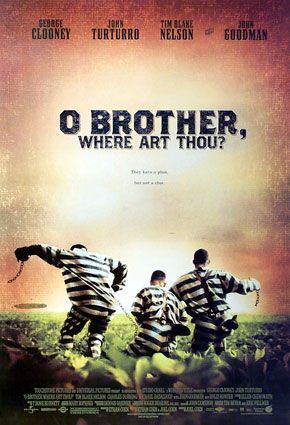
O_brother_where_art_thou_ver1In the movie, Oh, Brother, Where Art Thou, three prison escapees evade law enforcement while journeying home to find a hidden treasure. The three convicts, Everett, Pete and Delmar, embarked on a fantastic journey mirroring that of Homer’s The Odyssey while traversing the back roads of Mississippi.

One afternoon, while dining on fire-roasted gopher, the three observe a group of Christians march down to the river’s edge for a baptismal service. Delmar runs out into the water, speaks to the pastor, and then is baptized. Pete follows suit.

Later, the three discussed their fates as they drove down the road.

“But that man said that our sins were washed away,” Pete said.

“We’ve been forgiven of our sins,” Delmar said.

“You boys may be square with the Lord, but the State of Mississippi is a little more hard-nosed,” Everett explained as he convinced the boys to stay incognito.

They had been forgiven by God, but not by the State of Mississippi.

Scripture promises forgiveness of sin and redemption from sin. However, those around us might not be so quick to forgive.

I recently read a Facebook post from a lady who had recently been baptized. She had repented, trusted Jesus Christ as her Savior, and had followed the Lord in baptism. She was in church. She was raising her kids. She was making every right decision she could think of. However, the people around her were still skeptical, and reluctant to let her back in their lives.

As hurtful as that situation was, we often have to accept that, while God has forgiven us, those who saw us live through our sinful phase may not be so quick to give us a fresh slate.

As painful as it might be, we have to remember that God’s rewards are in the life to come, not this life. If we are living for rewards in this life, we are living for the wrong reasons.

Sometimes we experience the redemption Christ offers, but we don’t see the redemption in our broken relationships. And that’s okay. Just as we have to heal from the scars of our sins, those around us often need to heal as well, and that’s a process that takes time.

In the mean time, remember that 1 Peter 1:4-5 says that we have been begotten “to an inheritance incorruptible, and undefiled, and that fadeth not away, reserved in heaven for you, Who are kept by the power of God through faith unto salvation ready to be revealed in the last time.”

Whatever brokenness you may be experiencing right now, just know that it is not eternal. The day is coming when Christ will come and receive all of us who know Him as savior into His kingdom, and this pain will be a dark, distant memory. Take heart. Our best days are still ahead of us.

‘I miss Him’

Anselmo was a benevolent, peaceful man, raised in the church, and thrust into the perils of the Spanish Civil War. Having seen the atrocities of the war, Anselmo’s faith wavered.

Struggling to harmonize the sufferings of the war with the existence of God, he told Robert Jordan, “If there were God, never would he have permitted what I have seen with my eyes.

“Clearly I miss him, but a man must be responsible to himself.”

While Anselmo is nothing more than an imagination of the late Ernest Hemingway immortalized on the pages of For Whom the Bell Tolls, his unbelief and reasoning are typical of the modern mind, which struggles to understand how a loving, righteous God can allow evil to flourish in this lost and dying world.

Clearly the evil of this world cannot be overstated. Texas Child Protective Services are overwhelmed by caseloads as thousands of kids are abandoned, neglected, abused, harmed, and prostituted by their biological families. Human trafficking has become the modern day slavery, a dark underbelly of an otherwise prosperous and advanced culture.

Law enforcement is overwhelmed by the increased prevalence of illegal drug abuse to the point that law enforcement officials, politicians and correctional facilities are even beginning to wonder, “why bother?”

Contemporary Christians preach against judgmentalism and absolute truth while abusive husbands maim their wives. Yet, adding a coffee bar to the church foyer will somehow save the world.

Murder rates skyrocket and hope plummets in the inner cities, and students on college campuses have become incapable of debate without riots.

These are all first-world problems. Overseas, people sleep in fear of being captured and executed for no other reason than being born into the wrong tribe. The atrocities happening around the world are unprintable, but we’ll gladly pretend they aren’t happening if we can build a factory producing cheap electronics, or if we can buy cheap bananas from the despot in charge.

Modern man living in western culture has been blessed with technological and medical advancements that allow him to solve almost any problem that arises in his life. We have become comfortable with modern living.

Therefore, when faced with the suffering that man faces in the third world, and that man has faced throughout history, our perception of blessings versus suffering is challenged, and often, western man comes to the conclusion that suffering negates God’s presence, and with so much suffering in the world, God must not be present at all. Therefore, He does not exist.

This conclusion ignores the facts of God’s character as revealed in the Bible.

First, God did not create suffering, man did. In Genesis 1, God created a perfect world. In Genesis 2, God placed man in paradise. In Genesis 3, man tried to overthrow God, and was thus banished from paradise. In doing so, sin and disease entered in, as did ambition, avarice, lust and evil. The result, man suffers for his sin, and all too often inflicts suffering on others. God didn’t create this chaos, but He is working to correct it.

Since the fall of man, suffering is a natural part of life. Whether it is Adam eating bread in the sweat of his brow, or the Christians in Romans 8:35-39 who are killed all the day long, suffering is a common part of the human existence. In modern times, it manifests itself in political turmoil and physical illness. In other times and places, it manifested itself in conquests, persecutions, and famines.

God is present throughout the suffering. While modern man equates suffering with the absence of God, scripture actually teaches that God is present through the suffering. Romans 8:38-39 says:

For I am persuaded, that neither death, nor life, nor angels, nor principalities, nor powers, nor things present, nor things to come, 39 Nor height, nor depth, nor any other creature, shall be able to separate us from the love of God, which is in Christ Jesus our Lord.

Suffering is not the result of God withdrawing His presence. It is the result of sin and evil. Meanwhile, God remains present, working through the suffering to transform His children into the people He intends on them being, building our endurance, building testimonies for Him, and lining up the global geopolitical situation to bring about the return of Jesus Christ.

God Himself suffered. Or, as Romans 8:32-34 says:

He that spared not his own Son, but delivered him up for us all, how shall he not with him also freely give us all things? 33 Who shall lay any thing to the charge of God’s elect? It is God that justifieth. 34 Who is he that condemneth? It is Christ that died, yea rather, that is risen again, who is even at the right hand of God, who also maketh intercession for us.

God suffered in that He gave His only begotten Son, who suffered at the hands of sinners during the crucifixion which resulted in the payment for the sins of all mankind.

Hebrews 4:15 says, He was in all points tempted like as we are, yet without sin. Jesus Christ lived the human experience in a country that was occupied by a tyrannical empire, working to survive in a meager economy, before launching his earthly ministry which saw Him live on nothing, sleep outside, and suffer the persecution and rejection of His own people.

God is not some mystic being who sits in comfort in the clouds completely oblivious to the plight of those who suffer. Bette Midler is full of baloney. He is one who has experienced our suffering, weeps when we weep, and takes our pain personally.

In For Whom the Bell Tolls, Anselmo made the false conclusion that the sufferings of the war negated the existence of God. As a result, Anselmo’s life lacked direction, meaning and comfort. Thus he said, “I miss Him.”

For us, it doesn’t have to be that way.

Recently, I was counselling with a young mother who wanted to get her kids involved in a youth program. She discussed how simple and good life was when she went to church as a girl. There were youth car washes where they raised funds for church camp. There was church camp, retreats, lock-ins, and Sunday night pizza.

“Those were good days,” she said. Truth be told, she was missing the peace and comfort that come from living by faith in the company of other believers. The fact is, this young mother can return to that lifestyle any time she chooses.

So, if you have wandered from the faith, and are finding your life empty and hopeless, address the root cause of your emotional strife. You miss God. But you don’t have to. You can return to His presence at any time. Turn from your sins, place your faith in Him, and then gather with other believers at a true church that teaches His word, and that fellowships together.

Do this, and God will not only give you the grace to endure, but you’ll understand the “why,” and then receive the peace that surpasses all understanding.