Category: Encouragement

Stay or Hit, The Risk Remains

Few people realize that the success of the Houston Astros was birthed at the Blackjack tables of a Lake Tahoe casino before Billy Beane employed Moneyball to save the Oakland As.

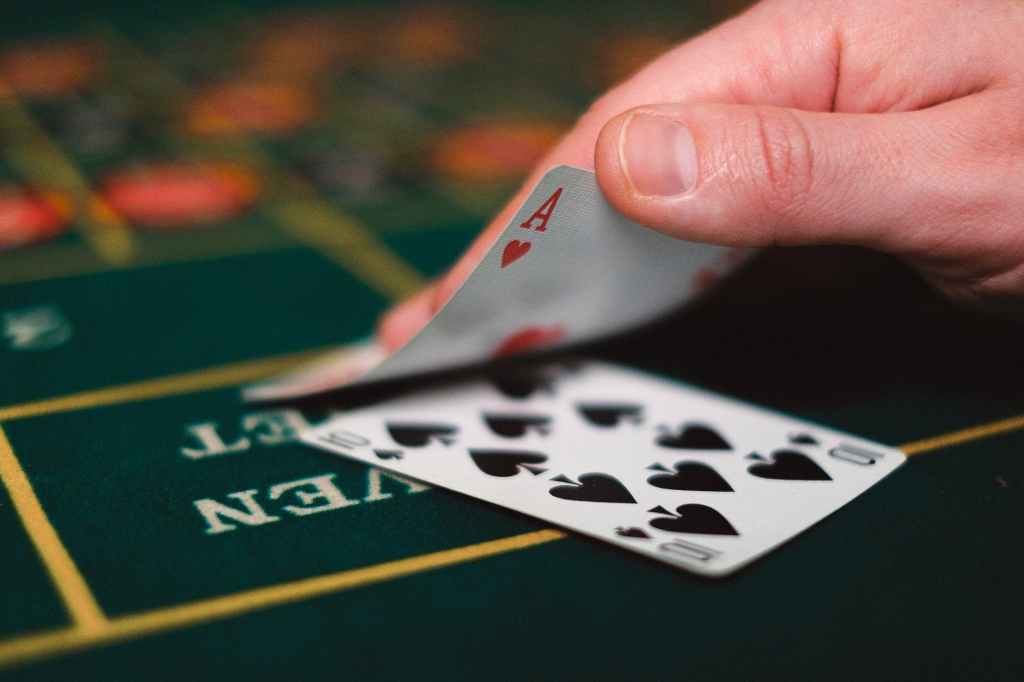
Working as a dealer at the table, an engineering student majoring in statistical analytics noticed a pattern. Whenever blackjack players “hit” when they already had a score of 17 or more, they almost always busted (exceeded 21, thus losing). However, if they hit on 16 or less, they often got close to 21, sometimes winning, sometimes losing.

This student watched as players lost hundreds, if not thousands, by making emotional decisions, hitting on 18, or staying at 16. To consistently perform well, this student concluded that 17 was the magic number. Stay if more than 17, hit if 16 or less.

From this experience, the student learned the value of rational decisions that are data driven. That same student went on to develop the analytics program of the Houston Astros, which was instrumental in the development of the roster that won the 2017 World Series.

That program analyzed prospective players not only by their stats, but also by their experiences and physical characteristics, using patterns identified by analyzing the prior 30 years of MLB draft picks.

The book, Astroball, by Ben Reiter, outlines how the Astros built a perennial winner out of a team that was built and developed, not bought.

Despite the success of the Astros, their trek was not without failures. The Stros often released players who went on to brilliant careers, and retained players who flamed out.

Despite all the data and direction offered by a sound analytics program, the Astros were unable to eliminate risk from the equation when it came to analyzing prospective players.

Which takes us back to the blackjack table. Even if you religiously follow the data-driven wisdom of when to hit, and when to stay, sometimes you bust, sometimes you win, and sometimes the House wins.

Obviously, as The Chaplain’s Corner, this blog is not about how to win at the card table, and I’ve never been successful as a sports writer. Seeing the intersection of cards and baseball, however, I do see some life lessons.

In either of those situations, there is risk. There’s risk in action, and there’s risk in inaction. There are consequences for taking the leap, and there are consequences for staying put.

The Astros took a risk in spending millions to pioneer a new form of analytics for player evaluation. Had it not worked, the team would have wasted a fortune to stay in last place. But it worked, and the evidence is right there on the field.

Had they stayed put, they may have still built a winning team, but they’d likely have overpaid, the way they did in 2005.

In blackjack, taking the hit can win the hand, or it can bust you. Staying will keep you from busting, but it may or may not win the hand.

And in life, you have choices. To change careers. To relocate to accept a promotion. To start a business, invest in the stock market, or to buy bonds.

Maybe the business succeeds, maybe it fails, or if you don’t start the business, maybe you miss an opportunity. The stocks rise, the stocks fall, or maybe you don’t buy and you miss an opportunity. You buy the bonds with a guaranteed yield, but inflation negates your gain.

Risk is inherent in every decision, every opportunity, and every moment in life. Stay or hit, the risk remains.

Fear and avoidance of risk is futile. The reasonable thing to do is to evaluate risk, choose the risk with the maximum upside and minimum downside, and hedge against losses.

But losses will happen. So will successes. The key is to live life, to move forward (even if that means staying) and to glorify God in the process.

So the choice is yours. Stay, or hit?

I’ll Buy Gas Tomorrow, and other Lies We Tell Ourselves

Finish my coffee, grab my bag, climb in the Tahoe with just enough time to make my 30-minute commute, turn the key, before checking my dash to see that, while I have enough time to get to work, I don’t have the gas.

Foiled again!

Foiled again by my fine art of procrastination. Foiled again by my fatigue, pulling into the driveway after a long day to see that I’ve only a quarter of a tank of gas left. Foiled again by my self-delusions of waking up early in order to refuel on my way to work.

Foiled again by my snooze button, by checking my Facebook account before getting ready for work, foiled again by the extra few minutes under the hot water of the shower.

Foiled again!

It’s almost as bad as running into the mall at 3 p.m. on Dec. 24 to complete my shopping list. Foiled by the lie I told myself repeatedly about doing my Christmas shopping after work, or tomorrow afternoon. The store is out of what I need.

Foiled again.

I was going to start the diet and fitness program after the holidays, next Monday, or tomorrow. Yet, there I sat in the doctor’s office with a new diagnosis.

Foiled again.

My former employer Matthew Williams used to say, “The bill always comes due.”

Procrastination doesn’t kick the can down the road, it makes it bigger. And the more you kick the can, the more it compounds with interest.

So if there’s a change you need to make, don’t lie to yourself. You won’t change tomorrow. Change today!

I’m living! Here’s how…

Yesterday, I shared with you how I was recently diagnosed with diabetes, and the lessons I learned from the diagnosis. Today, I want to share hope, because the changes I made following the diagnosis are already working.

My diagnosis is nearly a month old. I may throw a little birthday party for it. LOL.

The day I received the diagnosis, I made changes. I consented to every medication the doctor wanted to prescribe, and I changed my diet. The McDonald’s drive-thru is dead to me, unfortunately, and I will no longer consume McNuggets. I had quit full-sugar sodas, but now I’ve almost completely eliminated diet sodas.

What do I drink? Lipton Diet Green Tea Citrus flavor… it’s good and doesn’t leave me feeling bloated.

My diet consists of Cobb Salads (when I’m in a rush, I can get one from Chick-Fil-A), Subway sandwiches, McAlister’s club sandwiches, grilled and sauteed meats, sauteed veggies, and dark rye bread. I have also been able to keep peanut butter in my diet, as well as salsa, and eggs. I often mix the salsa and eggs for my own form of huevos rancheros, which is good.

There’s an old joke where a doctor tells a diabetic to purchase a box of diabetic snacks, throw away the snacks, and eat the box. The idea is that healthy eating is bland and gritty. Nothing can be farther from the truth.

I’ve had to get creative, and I’ve had to rediscover my love for the kitchen and the grill, but utilizing fresh vegetables, fresh meats, low carb seasonings, almonds and cashews, I’ve been able to put together some recipes that I find delicious that I actually enjoy eating.

The second step is exercise. I am currently putting in at least 20 minutes on an elliptical each evening with the resistance level set to 4. My goal is to get to 30 minutes. Once I get to that, I will begin running.

How is all this working?

I haven’t tested my blood sugar. I need to purchase a device. However, my weight is down to 257, which means I’ve lost 20 pounds since the day of my diagnosis. And I feel great. My goal is to get down to 177 by the end of the year, and if I can keep my program going, I know I can make it.

The key is a change in my mentality. I am having to intentionally change the way I see food, the reasons I want food, and the way I evaluate a food’s quality. I have to see exercise as a pathway to life, and a fuller life. And, I have to be willing to trust my doctor, which I do.

There is also a spiritual component to this as well. What drove my bad eating and health habits up until now has been a spirit of depression and angst. I’m having to repent of that, and learn to deepen my relationship with the Lord. As my doctor said, “If you get your relationship right with God, all else falls into place.”

Angst, anxiety and depression are often (but not always) symptoms of a spiritual issue, where the individual’s relationship with God is strained by a lapse in faith. This is common and completely understandable. It’s understandable, as we can all understand why Peter took his eyes off of Jesus and saw the waves when he tried to walk on water, or why the disciples panicked when they were in a ship in the storm.

This is nothing to be ashamed of, but it is something to turn away from. God is in control of all things, and He intends good toward you. Trust that. As you trust Him, your relationship with Him will blossom, the negative feelings that drive our bad habits will subside, and we’ll find physical healing to match our spiritual healing.

May God bless you today.

I’m Dying: What I Learned from My Diabetic Diagnosis

“It’s probably no big deal,” my doctor told me. “Any blood sugar reading below 100 means you’re okay. 100-125 means you’re pre-diabetic, and above 125 means you’re diabetic.”

The reading came back on the monitor… 200.

“Okay, so you’re a diabetic. Here’s what we’re gonna do…”

The following words were a series of prescriptions the doctor would recommend, the recommendation for exercise (run 30 minutes per day, four times per week) and a dietary recommendation (no simple sugars).

I wish I could say that this all came as a shock. It didn’t. I wish I could say I am just a victim of circumstance, the recipient of bad DNA. I can’t. I wish I could claim I wasn’t warned. I was.

Two years prior, I sat in the same doctors office after having a life insurance application denied due to a high A1C. Back then, we tested, and I came out okay. Diet and exercise would save the day. I started out well, but I didn’t finish.

Ten years prior to that, I registered a high blood sugar during a visit with the same doctor. I corrected my diet then, returned for a follow up, and was fine.

The doctor warned me that this day was coming. I was told to eliminate fried foods, not to drink my calories (sodas), and to exercise. After each warning, I would start out well, but after a couple of months, the disruptions would get to me, and I’d fall off my program.

A headline involving dying and diabetes may sound melodramatic, but it’s not. This is a terminal illness, but it’s one that can be managed. Diabetes is a disease where your body no longer breaks down the blood sugar. The result is a thickened blood that fails to reach the capillaries, resulting in organ damage. Also, the sugar itself damages tissues within the body.

Diabetics suffer from nerve damage, vision loss, and ultimately heart attacks and strokes, if not managed properly. Once the damage is done, it does not heal. Lost vision does not get restored. Damaged nerve endings never regain function.

My doctor and I have a plan, and I am confident in his ability to help me manage this diagnosis, but receiving this diagnosis has taught me a few things.

  1. The day of reckoning is coming. For so many of us, we know that the consequences of our actions are coming, but we deceive ourselves into thinking that the consequences are far away, and we will be better able to manage those consequences when they finally arrive. This is one of the biggest lies we tell ourselves. Whether we think we are delaying the consequences of poor health choices, or delaying the consequences of our spiritual choices, we tend to put off making the decisions that we need to make. However, the day is coming, and it will come as a thief in the night, at a time when we least expect it.
  2. We must make the right choices today. As I just mentioned, the day of reckoning, when we will receive the full consequences of our choices is upon us, and it is coming faster than we think. We can no longer afford to say, “I’ll start that diet tomorrow,” or “I’ll open that retirement account next month,” or “I’ll start going to church and get right with Jesus next week.” We must make those decisions today. First, we don’t know that we have tomorrow, next week or next month. Our day may creep up on us sooner than we think. Secondly, the sooner we make those choices, the more beneficial they will be for us.
  3. To follow those choices, we must learn to manage the disruptions in life. When my doctor asked me why I hadn’t been able to get my diet in order, I told him about the upheaval in my family, last year’s COVID outbreak at church, career issues, and the ongoing turmoil that I have found to be life. I told him, “I just did not do a good job of managing the disruptions in my life.” We can no longer afford to use those disruptions as excuses, because disruptions are part of every day life. As Agent K said in Men In Black, “There’s always an Achillian Battlecruiser or an intergalactic plague about to wipe out our planet. The only way these people get on with their lives is that they do not know about it.” Over the past few years, we’ve seen economic and political disruptions, and our entire society shut down by a global pandemic. This is the new normal, and such disruptions will continue, in addition to your personal disruptions. We have to learn to manage these disruptions and move forward.
  4. What was death to me has now become life. Prior to my diagnosis, the idea of being fit sounded good, but I was happy being chubby and lazy. Sure, healthy food will make me feel better, and there’s nothing like the rush of finishing an ultra-marathon, but have you ever enjoyed a bowl of Blue Bell Ice Cream and a Netflix movie on an overcast Saturday afternoon? I chose the latter. It was easier, simpler, and more delicious. However, with my diagnosis, I now see that health foods and medications are not a way to a better life, they are the only way to seize and maintain life. With each salad, vegetable, and lean grilled meat, I am extending my life, and with each medication, I am helping my body restore its function. Over the past few decades, churches have sought to sell potential converts on the benefits of Christianity by saying that it leads to a better life. It does. But Christianity is life. Faith in Jesus is the only way to avoid eternal damnation. And just like my diabetic diagnosis came suddenly (but with warning), our last day of life and the day of judgment will come upon us suddenly. Don’t get shocked by a negative test result that day. Turn from your sin and trust Jesus as your Savior.

The diabetic diagnosis can be a life sentence or a death sentence. My doctor told me that in those exact words. And with God’s help, I will manage this disease and live to serve Him well in my life. However, this whole experience has taught me that I need to wake up, and start taking care of what matters, regardless of how I feel. I can no longer make excuses, I can no longer procrastinate. And the same goes for you.

If you have been putting off the decision to turn your life over to Christ, make that decision today. And if you have been putting off your health and financial decisions, you will avoid catastrophes and reap better benefits if you make those choices today. Don’t follow in my footsteps. You have the opportunity to do better.

May God bless you.