Tag: Faith

Jacob Marley’s Ghost… did you catch this?

As written works of literature become more familiar, we often lose the lessons the authors hide in the details. Whether you are discussing a familiar Bible story, or a piece of classic literature, the tendency is to drift toward the obvious story arc, and the moral thereof, missing the little nuggets and Easter eggs hidden along the way.

Such is the case with “A Christmas Carol,” by Charles Dickens.

So many of the details used in the story are often interpreted by the reader to simply paint the picture of who Ebenezer Scrooge was, and by extension who his late partner Jacob Marley was.

Scrooge was a heartless, bitter miser, no doubt formed by his meager, loveless upbringing and his pride in his own business dealings. Marley was like Scrooge, but being dead, was now condemned to an eternity of guilt, shame, and torment as a result of his sins against humanity.

The sins, by the way, were actually named in the book. Marley rejected any opportunity to help others, and thus was condemned to an eternity bound with chains, compiled by his many rejections of benevolence, and was doomed to watch helplessly as humanity suffered.

The other ghosts Scrooge was able to see during Marley’s visit suffered the same fate, with many giving futile efforts to help the living now that they had crossed into the afterlife.

Granted, none of this is scriptural, and Dickens wasn’t really trying to give us a Bible lesson, however, he was trying to give us a moral lesson.

Marley’s chains are often seen as the worst part of his condemnation, chains that were forged and linked by Marley’s own greed and disregard for others.

Those who read too fast, however, often miss what composed those chains.

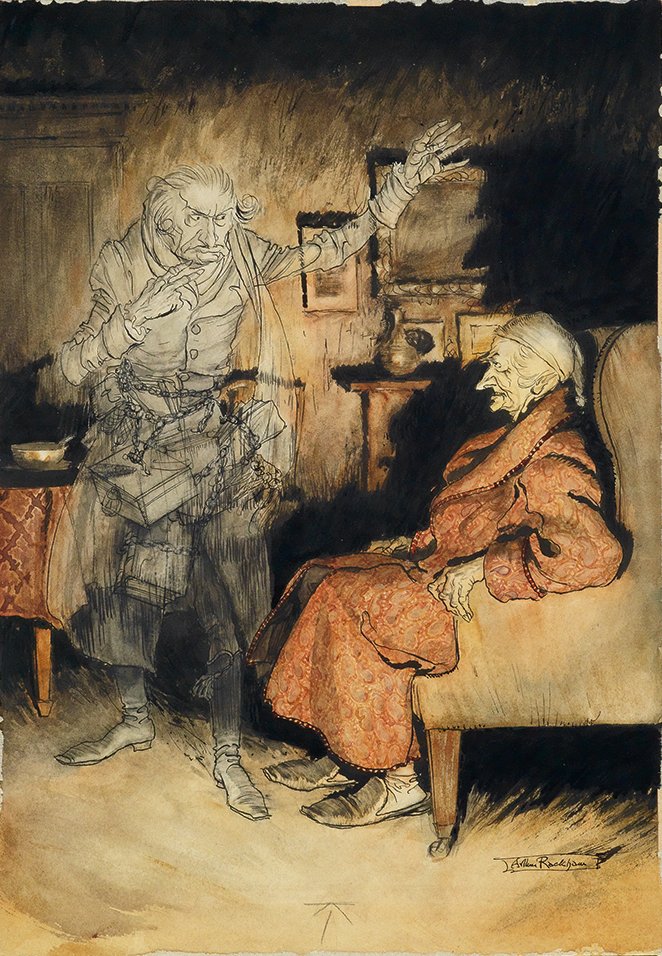
Sure, the chains had your usual iron links that were looped together, but a major component of the chains were the cash boxes, bank books, deposit bags and ledgers that were connected.

Marley’s sin was driven by his love of money and his desire to be the shrewdest businessman in town.

As I was reading this, I began to think about the sins that would keep us out of Heaven, or the sins that could cost us in eternity. For many, there is a sin that is found so enjoyable that the sinner is reluctant to repent and turn to the Lord.

Thirty years ago, I drove across Northeast Texas listening to a radio show out of Dallas. It was a rock station with two “shock-jock” hosts who were interviewing an Independent, Fundamentalist Baptist pastor.

The radio hosts had no problem with the existence of God, or the Gospel message of the death, burial and resurrection of Christ. The problem they expressed, in a mocking tone, was that they enjoyed their sins of drunkenness, reveling, and sexual immorality.

While I believe the interview to have been a staged bit (my 20 years in broadcasting have ruined me to the notion that I will ever see or hear anything real in broadcast media), it did make an imprint on my mind.

How many people are so in love with their favorite sin that they are willing to wear the shame of it for eternity? How many people enjoy the pleasures of sin so much that they are positioning themselves for an eternity of condemnation as a result of it?

This is the condition Jesus speaks about in John 3:19-21, when He says, “And this is the condemnation, that light is come into the world, and men loved darkness rather than light, because their deeds were evil. 20 For every one that doeth evil hateth the light, neither cometh to the light, lest his deeds should be reproved. 21 But he that doeth truth cometh to the light, that his deeds may be made manifest, that they are wrought in God.”

Notice that. “This is the condemnation.”

Christ (the Light of the world) came into the world, but men loved darkness, because their deeds were evil. Choosing to cling to their beloved darkness and evil deeds, they avoided the Light so their deeds would not be reproved (confronted and corrected.)

In essence, people are building their own condemnation for eternity the way Jacob Marley built his own chains.

If you’re reading this and you don’t know Christ as your Savior, what sin are you willing to give up Heaven for? What sin do you want chained to you as you are condemned to Hell?

And if you do know Christ as your Savior, what sin are you willing to miss His blessings over?

The Christian faith, however, is not about condemnation and rejection. Rather, it is about seeing the blessing of redemption, the blessing of being freed from the chains of sin and being brought into an abundant life of Light, freedom and blessing. And all of this is given freely when the sinner decides they no longer want the darkness, when they no longer love the sin, but rather want the life, trusting that the life is given because Jesus bore the condemnation for their sin when He died upon the cross.

So, the main question is, which would you choose? The chains? Or Redemption?

How should Christian parents handle “Santa Claus?”

Photo by Andrea Piacquadio on Pexels.com

Somehow, parenting has become more complicated over the past 40 years. When I was a child, Christmas was simple. We enjoyed a huge dinner with extended family on Christmas Eve, exchanged presents, chatted and played card games or dominoes, then went to bed.

My grandfather always slept in the same room as us kids, vowing to help us “stay up and catch Santa Claus.” In reality, he was the lookout, the one responsible for making sure we were all asleep before the adults brought out the big toys brought to us by “Santa Claus.”

At some point early Christmas morning, I’d be awakened by a cousin or an adult who discovered, “Santa’s been here!”

It was fun. It was joyous. And, it was make-believe.

Later that week, we’d go to church to worship God and learn about Jesus.

It never occurred to me to question the fact that the same adults telling me about Santa were also telling me about Jesus. The thought never crossed my mind that “if the adults are perpetuating the Santa hoax, what if Jesus is a hoax as well?”

The thought never occurred to me because I never really bought into the Santa Claus myth.

Even as a grade-school student, I understood that the Santa legend was make-believe, and a fun way to celebrate Christmas, and that God was real.

I never believed in the mall Santas (and was actually somewhat bothered by them). I never actually expected to catch Santa in my house. (I was actually trying to catch the adults so I could say, “A-HA!”)

That’s a skill that I not only possessed, but that was very common in my generation. We seemed to have a knack for separating fantasy from reality, even if we preferred to indulge and live within the fantasy as much as possible.

This skillset, however, is not unique to my generation. I believe kids today are also highly capable. In fact, kids today are more likely to leave the fantasy at a younger age thanks to information available via YouTube and Google, which is at their fingertips as they play CandyCrush on Mom’s new iPhone.

You think they reached level 10, but they’re actually going down a rabbit hole of information on a 4th-century saint who cared for children.

Which brings me to the topic at hand… how should Christian parents handle the myth of Santa Claus?

I believe the best approach is to treat Santa Claus as a fantasy, while teaching kids the true meaning of Christmas.

It’s okay to indulge the fantasy with “Maybe Santa will bring you one,” or “Are you going to be on the naughty, or nice list?” and to sing songs like “Here Comes Santa Claus.” Just like my earlier post on Halloween, I will again advocate for letting the kids have fun and allowing childhood to be “magical.”

Childhood is under enough pressure as it is, with every political group and social organization trying to destroy it in the name of their cause without us taking away what little joy remains to satisfy our piety.

So, convince the kids to go to bed early so they can wake up to see what Santa brought. Leave milk and cookies out for him (because, you know… Dad), and act surprised and overjoyed when they discover their gifts on Christmas morning. Have fun. Make memories. Be warm and happy.

But… under no circumstance, should we let the meaning of the holiday be lost in that.

First, keep the reason for Christmas front and center, the birth of Christ, and the salvation He brought for all people. That’s the true gift of Christmas.

Secondly, teach the kids a little Christian history. There’s nothing wrong with them learning who Saint Nicholas really was. Their learning will help the transition from fantasy to reality, while maintaining a healthy sense of “play-pretend.”

Finally, when they question the reality of Santa, instead of trying to keep their faith in a mythical being that doesn’t exist, respond by telling them how much fun it was to indulge this fantasy.

It’s rare that the myth of Santa Claus is successfully used to destroy a young person’s faith in Christ. Still, by successfully navigating the balance of fantasy vs. reality, you can establish yourself not only as a great parent, but also as one who can be trusted for guidance, mentorship, and entertainment.

The story of Cain and Abel should scare us

Photo by Brett Jordan on Pexels.com

Why did God have respect for Abel’s offering and not Cain’s?

The answer to that question should have us doing some serious soul-searching.

In Genesis 4, we’re told the story of Cain and Abel. The story is that Cain and Abel both brought their offerings to the LORD.

Cain, a master gardener, brought some of the fruit he had grown to the LORD. Abel, a skilled shepherd, brought of the firstlings of his flock.

Scripture records in Genesis 4 how God respected Abel’s offering but had no respect for Cain’s offering. This upset Cain, as his countenance fell and he began to harbor a hostile attitude toward God, and toward Abel.

God confronted Cain about his attitude, and Cain confronted Abel, ultimately killing him. This led to Cain’s banishment, his horticulture skills being supernaturally taken from him, and his ostracization from what little society existed at that point.

Now, the question becomes, “Why did God have respect for Abel’s offering, but not for Cain’s?”

Many answers have been offered to this question over the years. Few have any real basis in scripture.

Some say God respected Abel’s offering over Cain’s because it was a blood sacrifice. While this answer does make sense (because scripture says without the shedding of blood there is no remission of sins), it overlooks the fact that grain offerings were part of the Temple sacrifices outlined in the book of Leviticus. Plus, scripture does not give that explanation for this specific circumstance.

Others say Abel brought the best of his firstlings to sacrifice, while Cain brought subpar fruit to sacrifice. Again, this makes sense, as God has been known to reject subpar sacrifices in other passages, but once again, lacks any scriptural support of this particular instance.

In fact, if you look at Cain’s demeanor following the sacrifices, you may get the idea that Cain brought his best. He is really offended that God did not honor his sacrifice. This is not the attitude who of someone who was giving his leftovers, but rather of someone who wanted God to be impressed, and wasn’t.

So, what was the difference between Cain’s sacrifice and Abel’s sacrifice? Why did God respect Abel’s offering, and not Cain’s?

Scripture (to my knowledge) only addresses this once. In Hebrews 11:4, which says, “By faith Abel offered unto God a more excellent sacrifice than Cain, by which he obtained witness that he was righteous, God testifying of his gifts: and by it he being dead yet speaketh.”

What separated the sacrifices was that Abel offered his by faith. Cain offered his out of obligation.

Faith is a deep-rooted trust in the Lord, and a conviction of His truth. Faith trusts not only that God exists, but that He is good and He intends good toward us. Faith believes that God rewards those who diligently come to Him.

It was that trust and conviction that motivated, that spurred Abel’s sacrifice. Cain made his offering because “it’s what you’re supposed to do.”

As I pondered this while preparing Wednesday night’s lesson on Hebrews 11, it hit me… how much do I do out of obligation to God?

What all do I do because it’s what a pastor should do?

And what all do I do because I love God and I trust Him?

The things that we do “just because,” or because they are expected, or because they are a great idea, God looks at those actions the same way he looked a Cain’s fruit. It might have been some of the best fruit ever grown, but God did not respect the heart from which it was given.

However, the things we do because we love God create a sweet smell in his presence. He regards that as highly as He does the sacrifice that Abel made. He honors such actions and such efforts.

The moral of this story in Genesis 4, and the scriptural commentary given in Hebrews 11:4, is that we need to reflect on our heart, learn to trust and love God, and learn to let that love and trust motivate our actions and offerings to God.

So, let’s take an inventory on our lives. And once we have that inventory complete, let’s correct our motivation where our motivation needs correcting, and our actions where our actions need correcting. We want to please God, and we want to hear, “Well done, good and faithful servant.”

Having your faith deeply rooted and living by that faith is how you will come to hear those words.

Am I a One-Trick Pony?

Photo by Barbara Olsen on Pexels.com

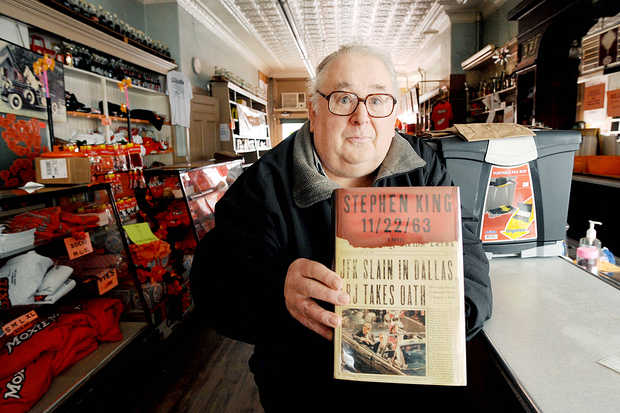
If you drove through Lisbon Falls, Maine, about 10 or more years ago, you may have found yourself stopping by the Kennebec Fruit Company, a corner store owned by Frank Anicetti, a local legend who was made famous nationally by Stephen King’s, 11/22/63. Anicetti passed away in 2017.

If you go to Lisbon Falls today, Anicetti has been memorialized through the renovation of his store, now a restaurant called “Frank’s Restaurant and Pub.” Stop in and visit with the locals, and they’ll tell you about a man who had one thing on his mind… Moxie soda.

Anicetti was a big fan of the drink, served it in his store, believed that the world was full of two types of people (those who liked Moxie, and everyone else), and always encouraged any new visitor to try the beverage.

Frank Anicetti, an enthusiastic fan of Moxie soda, relished being depicted in Stephen King’s 11/22/63.

Moxie was one of the first national beverages to be successfully marketed in New England, and it provided Anicetti with a great amount of nostalgic joy. Anicetti is a big part of the reason why, every year, Lisbon Falls hosts the “Moxie Festival.”

If everyone has one gift they give to society, Anicetti’s was Moxie soda. His love for the drink and his enthusiasm for its support were captured when Stephen King included him as a minor character in 11/22/63, a novel about a man from Lisbon Falls who goes back in time to prevent the assassination of John F. Kennedy.

We call people like Frank Anicetti a “one-trick pony.” Well, not really. We like Frank, and found his obsession with a mediocre beverage to be endearing. Usually when we call someone a “one-trick pony,” it’s not a compliment.

Frank Anicetti’s Kennebec Fruit Company, proud seller of Moxie soda, prior to 2017. Anicetti passed in 2017, and the store has been renovated and re-opened as a restaurant. The green paint is gone, and the store is now trimmed in Moxie orange.

It’s something we call people who have a high-level of expertise in one thing, and are useful for little else.

Which brings me to my question… “Am I a one-trick pony?”

If you’ve listened to me preach, or really have had any sort of theological discussion with me, you may have noticed (or at least I hope you’ve noticed) that I always bring the discussion back to the Gospel.

The Gospel, of course, is defined in 1 Corinthians 15:3-4 as how Jesus “died for our sins, according to the scriptures, was buried, and rose again the third day according to the scriptures.”

I believe that the Gospel is the central message of the Bible, and that every passage is either declaring the Gospel, illustrating the Gospel, points to the Gospel, or is recording events that set up the Gospel.

I believe the Gospel is the power of God unto salvation, that by placing one’s faith in the Gospel one is saved, and that every true Christian doctrine stems from the Gospel.

For example, I believe that marriage is to be a picture of the Gospel. The relationship between a husband and a wife should be an illustration of the relationship between Christ and His people.

I believe that Christian parenting should reflect the relationship between God and His children.

I believe that doctrines on giving, forgiveness, grace, and mercy, all are rooted in the Gospel.

I believe that Biblical teaching on how to conduct business and how to manage relationships should be rooted in the Gospel.

I believe this, not only because it’s true, but also because if you remove the Gospel from any Christian teaching, you will wind up with a legalistic system which will breed Pharisaism. We’ll become like the Sanhedrin of Jesus’ day.

Furthermore, if you remove the Gospel from Christian teaching, our religion becomes hard-hearted very quickly.

Therefore, I aspire to be like Charles Spurgeon, who famously said, “I take my text, and make a bee-line to the cross.”

Christianity is a religion of forgiveness, redemption, reconciliation and restoration. All of this is possible only because of the Gospel. When we lose the Gospel, we lose forgiveness, redemption, reconciliation and restoration. And when we lose those things, we lose hope.

So, if being obsessed with the Gospel makes me a one-trick pony, I’ll gladly wear that label, then I will retire to my living room with a freshly opened bottle of ice-cold Moxie soda. (Or, since they don’t have that in West Texas, I’ll settle for Diet Coke.)

May God bless you as you walk with Him today.