
Tag: Christianity

Why the story line of Little James in The Chosen resonates with me

Have you ever prayed to God, and not had your prayers answered? Or perhaps you’ve seen the Lord tangibly bless those around you, seemingly passing you over.

If this is you, good news! There is a Chosen character just for you.

The Chosen is a TV series offered through online streaming services like Prime, Angel Studios, and their app. The series is funded through crowdsourcing, and depicts the lives of Jesus and His apostles as they begin the Lord’s earthly ministry.

One of the great, yet controversial, aspects of the show is how it humanizes the apostles. Instead of being static figures depicted through stained glass, they each have personality quirks, and physical attributes.

The great thing about the way the apostles are humanized is that they become more relatable, thus more believable. In essence, The Chosen makes the Gospel come alive off of the pages of Matthew, Mark, Luke and John, and provide some tangibility and credibility.

The controversial aspect to this is that much of the characterizations of the apostles is fiction. We don’t know that Matthew was on the spectrum, and there is no scriptural evidence to support that theory. Furthermore, many of the scenarios depicted in the show happen between the instances recorded in scripture, meaning that many of the events in The Chosen are completely fabricated and are fictitious.

However, these portrayals humanize the apostles and make the Gospel real and relatable.

So while The Chosen may be good for making the apostles relatable, and communicating the gracious and loving nature of Christ, as well as His divinity, those seeking truth are still well advised to open the Bible. Enjoy the show, but read the Bible.

Which brings me to my new, favorite character. Spoiler alert… if you keep reading, you may come across some plot information.

Little James, like Matthew, is depicted with a quirk. Again, no scripture that I can recall right off hand supports this portrayal, but such is the approach of The Chosen.

While Matthew’s issue is being on the spectrum, Little James suffers from a limp. Partially crippled, he relies on a walking stick he uses as a crutch. He struggles during travel, and believes his gait slows down the company as they travel.

So, the apostles travel, witnessing the miraculous healing our Lord freely performed for the masses. Multitudes, many of whom had the same disability as James, were suddenly healed and able to walk with little to no effort.

So, here’s Little James, crippled while everyone else around him is healed. He wants to ask, but he does not want to offend the Lord. He wants to understand, but does not want to be disrespectful to Jesus, and certainly doesn’t feel as if the Lord has withheld anything from him.

But, he desires healing. He desires understanding, and it’s breaking his heart. So, near then end of Season 3 Episode 2, he tearfully approaches Jesus, who gracefully understands, and encourages him.

Not gonna lie, that scene got me. It ranks right up there with the final scene of “Field of Dreams” for me.

Jesus told Little James that he could be healed, and someday he would, but what made his testimony so powerful was that he believed even though he had not been healed. And that through his testimony many would come to faith.

Modern Christianity has wrongfully turned faith into a transaction. You believe, then God gives you what you want. Therefore, if you do not have what you want, there must be something wrong with your faith. This is wrong and contrary to the scriptures, but leads to the following situations.

How many times have I sat with a weeping woman who couldn’t understand why God would not give her a child. A weeping man who doesn’t understand why God would allow his wife to have cancer, and why the miraculous healing still hadn’t come.

They had prayed, trusted the Lord, and called out to Him in ways we probably couldn’t imagine. Yet, no baby, no healing, no response. Yet, they still believed in the Lord. And yet, others continued to accuse them of imperfect faith, secret sin, and whatever else they could think of to explain the lack of a miracle.

Yet, these believers remained faithful, for their faith was in the Lord, His goodness and grace, regardless of their outcomes.

And I can not only admire that, I relate to it as well. I have lived knowing that God has forgiven me and cleansed me of all my sin, even while others tell me how awful I am. I have seen others receive tangible blessings from the Lord, while observers tell me that the lack of tangible answers to prayer in my own life reflect a flaw in my faith.

Yet, I live, with the peace in my heart knowing Jesus loves me, and that I have been blessed and forgiven. And nothing will take that away from me, nor will I ever be deterred.

And that’s why the story line of Little James resonates with me. How about you? Have you seen The Chosen? If so, what character resonates with you?
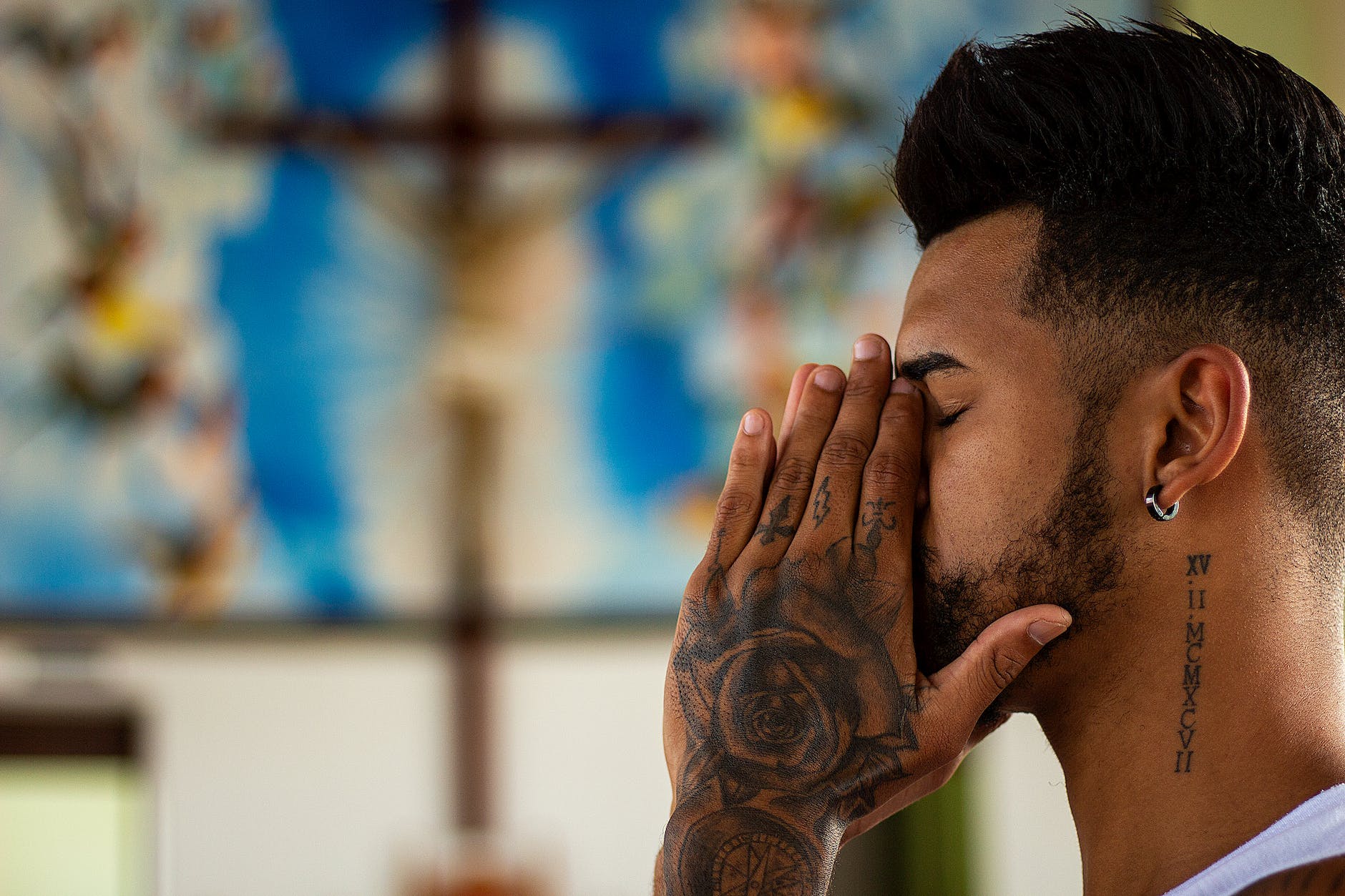

Confession to God

Photo by Ric Rodrigues on Pexels.com

Adam stood before the Lord guilty of breaking God’s one rule of the garden, he had eaten of the tree of knowledge of good and evil. Adam’s explanation? “The woman you gave to be with me gave me the fruit, and so I ate.”

David was confronted by Nathan the prophet after having an affair with the wife of one of his best soldiers before having that soldier killed to cover his sin. David’s response to being confronted with his sin? “Against thee, thee only have I sinned: and done this evil in thy sight…. Behold, I was shapen in iniquity and in sin did my mother conceive me.” (Psalm 51)

Which of these two men from the Old Testament offered God a true confession? If you answered David, you would be correct.

As we discussed in our previous post on confession, confession moves beyond an acknowledgement of one’s own action and admits fault, being transparent in one’s motivations and belief and placing one’s self at the mercy of another. Our previous exploration of the topic of confession was framed in the context of confessing our faults and struggles to each other, so that we can pray for one another, minister to one another, and be healed.

In this post, we will discover how this level of confession toward God not only brings forgiveness of sin, but also brings reconciliation to God and healing from the sin that has plagued one’s life. 1 John 1:9 says “If we confess our sins, He is faithful and just to forgive us our sins, and to cleanse us from all unrighteousness.”

According to 1 John, confession is the key that unlocks God’s forgiveness, cleansing, and thus healing. Denying sin, downplaying sin, or acknowledging the action without confessing that it is sin leads to a life marked by continued darkness, isolation and destruction. To deny sin is to call God a liar, which is the ultimate blasphemy, since lies are the hallmark of Satan.

Confession to God is made through one’s own prayer life, and while one may choose to confess their sin to their pastor, one has not truly confessed to God until one has approached God directly in prayer.

One of the great examples of confession in the Bible is the afore-mentioned Psalm 51. In it, David goes beyond confessing to his sins of adultery with Bathsheba and the subsequent murder of her husband. In fact, he does not even mention it. Rather, he focuses his confession on the very darkness within his own soul, and within his own heart that led to the sin.

In essence, David’s confession was not about the action, but rather the heart that birthed the action. His confession is like bypassing the symptoms in order to treat the disease itself.

In his Psalm 51 confession, David mentions that he is, at his core, a sinner. He then pleads with God to cleanse him, to create in him a clean heart, and to restore the joy of his salvation while restoring the fellowship he and God once enjoyed.

This level of confession is the mark of true repentance, to which God responds every time.

Another great example of confession in the Bible is Paul’s confession in Romans 7:15-25, where Paul confesses that no good thing dwells within him, therefore he is predisposed to rebelling against God’s law and leadership in his life. His confession is that he needs Christ to rescue him from the body of that death and to enable him to serve the Lord (Romans 7:24-25).

In Paul’s confession, we see the sinner move beyond confession and repentance and toward faith, as Paul’s only option is to trust the Lord.

Most people live life defeated. We sin, we face the consequence of sin, we promise God to never do that sin again if he will rescue us from the consequence, and then we go on and sin again. In this vicious cycle, we never confess what’s truly in our heart. In fact, we often deny it.

Furthermore, we never stop to consider the sin within our heart, and what it would take to be cleansed from that sin, if we even desire cleansing at all.

By stopping, assessing the sin within us, and confessing that sin to God, we can not only identify the cause of our destructive behavior, we can truly turn from it and allow God to heal that brokenness within us. Anything short of this is an exercise in futility.

With all this in mind, what will you confess to God today?

Confession

Photo by cottonbro on Pexels.com

Depending on your backstory or world view, the word “confession” can conjure up a variety of mental images and impressions. For example, if you are Catholic, then confession is a sacrament where you confess your sins to the priest who then intercedes on your behalf and proclaims that your sins have been forgiven.

If you are in law enforcement, then a confession is something you hope to obtain from your suspect to facilitate his prosecution.

Yet, for others, confession is an admission of guilt, an admission that they were wrong.

James 5:16 says “Confess your faults one to another, and pray one for another, that ye may be healed.” For my entire life, I thought this verse told me to confess to my brothers and sisters at church the sins that I had committed, and the temptations I had struggled with. If I shared my dirty laundry, and they shared theirs, we could all pray for each other and we’d find healing.

While that may be a good practice, it is highly unlikely. We fear being judged and marginalized by others, and that level of confession opened us up for both. In my experience, in church groups, or Bible studies, we tend to keep our confessions small (I violated my diet this week) in order to show imperfection without opening ourselves up for criticism. The problem is that this lack of transparency not only hinders the healing effect of praying for each other in faith, but it also falls way short of the healing and fellowship (dare I say Spiritual intimacy) that God intended for us.

James 5:16 does not tell us to confess everything we did wrong last week. It told us to confess our faults. In essence, we are to confess our weaknesses, struggles, and whether our faith is wavering, and why our faith may be wavering.

This level of confession is basically a total transparency with your brothers and sisters in Christ. It’s a transparency that is rare for the same reason we do not truly confess our sins to others. We lack trust in each other and we fear being judged by others.

Yet, it is this level of transparency that is completely necessary to heal. As a pastor and a chaplain, I cannot truly help you if I do not know what your real struggle is. I cannot truly pray for you if I do not truly understand what is distressing you.

Therefore, I ask my congregants and patients to be completely transparent with me, no matter how bad their confession may sound. (I often add that there is almost no chance that anything they say can catch me by surprise or draw my disgust).

If they are angry with God, I need to know. Then we can work to uncover the cause of that anger and pray it over. If they are struggling with sexual sin, I need to know, so that I can pray for them, but also so that I can refer them to resources that will help them overcome temptation. If they cannot understand how God would allow them to suffer, and so they are questioning His very existence, I need to know, so that I can take them to the scriptures that will explain it and offer them comfort.

And, in some cases, it is entirely necessary and appropriate for me to refer them to a competent, licensed professional counselor. But I cannot make that determination if I do not know their struggle.

Therefore, I ask, “What is your struggle? What is your fault? What do you need to confess today?”

I don’t ask to condemn. I ask so I can assess and help.

Confession is about transparency, and transparency is about identifying the problem so you can find healing. That healing is accessed by prayer, and that healing comes from God.

So, find a few brothers or sisters in Christ. Find your pastor. Confess your faults to each other. Be transparent. And pray for each other. You will find that God will indeed heal you.

We never meant for this to happen, but we can still help

11156384_10206298906337374_6382280851986253488_nIn 2003, I was sold on the Iraq invasion. Saddam Hussein had used weapons of mass destruction against his own people in order to put down rebellions, and was possibly colluding with terrorist organizations who planned on carrying out major attacks against the American homeland.

If the above statement seems ignorant to you, please forgive me. I, like millions of other Americans only want to see our nation secure and our people prosper. In the aftermath of 9/11, neither could be guaranteed as terrorist organizations in the Middle East had not only stated their intent to destroy America, but managed to kill thousands merely by hijacking airliners.

What we were told leading up to the invasion of Iraq was that we would (a) be neutralizing a direct threat to the American homeland, (b) eliminating stockpiles of chemical and biological weapons, (c) disrupting terror operations and (d) liberating an oppressed people.

We were warned that the war would be a prolonged effort to establish a free and democratic nation in Iraq, and that the culture change would take at least a generation. The cost would be high, the sacrifice would be great, but once successful, Iraq and Afghanistan would become beacons of freedom and hope to the Middle East, which would result in people being liberated from dark totalitarian regimes.

That’s what we were told. I believe that President George W. Bush was sincere in his desire to effect lasting change in the Middle East, but that didn’t happen.

In the aftermath of the invasion, the country destabilized. Al Qaeda set up operations in northern Iraq and immediately began persecuting Christians. When the Obama administration pulled out of Iraq (to fulfill a campaign promise to end the war), ISIS went on the offensive, essentially conquering the northern part of Iraq and increasing the persecution of Christians and non-Muslims.

This morning on my radio show, I had the opportunity to visit with Juliane Tamoorazy, the president and founder of the Iraqi Christian Relief Council. Tamoorazy discussed the plight of Christians in northern Iraq, and hoped that Vice President Mike Pence would visit with them upon his trip to Iraq scheduled for January.

While Tamoorazy blames American policy for the problem in northern Iraq, she doesn’t blame Americans, emphasizing that Americans have good hearts and want to help people. She noted that, even in Iraq, the people blame the politics, and not the American people.

It was a difficult interview for me to conduct, because I couldn’t help but think about what the situation would be like if it were my house that were marked for persecution, if it were my family kidnapped and sold into slavery, or it was my time to be killed, all for believing in my Lord and Savior Jesus Christ.

On my show, we debate policy. We discuss political ramifications of legislative or executive action. We discuss what’s happening in the government. Today, I couldn’t have that conversation.

So, I asked, “What can Americans do for our Christian brothers and sisters who are enduring persecution in Iraq?”

She thanked me for the question, indicating to me that she doesn’t get that question very often, and told me that the Iraqi Christians need blankets, heaters, air conditioners and basic needs for living. Of course, her organization is putting on a drive for those products.

Scripture tells us in Hebrews 13:3, “Remember them that are in bonds, as bound with them; and them which suffer adversity, as being yourselves also in the body.”

To remember them in bonds, to remember the persecuted Christians, means to keep them top-of-mind, the way God remembered Noah in Genesis 8:1. We are to be mindful of them as if it were our very own in bondage, because, when you think about it, they are our very own. We are to remember them the way we would want to be remembered if we were enduring that persecution.

And, we are to remember them “which suffer adversity, as being yourselves also in the body.” This means that when some of us suffer, we all are affected.

2018 promises to be a good year in American life. Let us not be guilty of enjoying the good times while our Christian brothers and sisters suffer. Let us remember them, and as we have opportunity, do good unto them. This can be done through a number of organizations, including the Iraqi Christian Relief Council, Open Doors, or Voice of the Martyrs.

The time for silence and complicity has ended. It’s time to help.