Category: Uncategorized

The State of Mississippi’s a little more hard-nosed

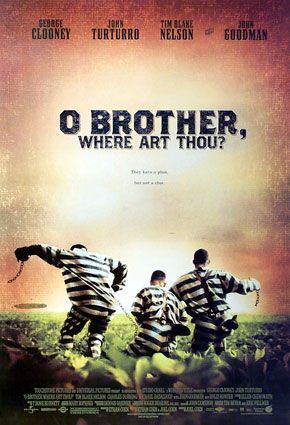
O_brother_where_art_thou_ver1In the movie, Oh, Brother, Where Art Thou, three prison escapees evade law enforcement while journeying home to find a hidden treasure. The three convicts, Everett, Pete and Delmar, embarked on a fantastic journey mirroring that of Homer’s The Odyssey while traversing the back roads of Mississippi.

One afternoon, while dining on fire-roasted gopher, the three observe a group of Christians march down to the river’s edge for a baptismal service. Delmar runs out into the water, speaks to the pastor, and then is baptized. Pete follows suit.

Later, the three discussed their fates as they drove down the road.

“But that man said that our sins were washed away,” Pete said.

“We’ve been forgiven of our sins,” Delmar said.

“You boys may be square with the Lord, but the State of Mississippi is a little more hard-nosed,” Everett explained as he convinced the boys to stay incognito.

They had been forgiven by God, but not by the State of Mississippi.

Scripture promises forgiveness of sin and redemption from sin. However, those around us might not be so quick to forgive.

I recently read a Facebook post from a lady who had recently been baptized. She had repented, trusted Jesus Christ as her Savior, and had followed the Lord in baptism. She was in church. She was raising her kids. She was making every right decision she could think of. However, the people around her were still skeptical, and reluctant to let her back in their lives.

As hurtful as that situation was, we often have to accept that, while God has forgiven us, those who saw us live through our sinful phase may not be so quick to give us a fresh slate.

As painful as it might be, we have to remember that God’s rewards are in the life to come, not this life. If we are living for rewards in this life, we are living for the wrong reasons.

Sometimes we experience the redemption Christ offers, but we don’t see the redemption in our broken relationships. And that’s okay. Just as we have to heal from the scars of our sins, those around us often need to heal as well, and that’s a process that takes time.

In the mean time, remember that 1 Peter 1:4-5 says that we have been begotten “to an inheritance incorruptible, and undefiled, and that fadeth not away, reserved in heaven for you, Who are kept by the power of God through faith unto salvation ready to be revealed in the last time.”

Whatever brokenness you may be experiencing right now, just know that it is not eternal. The day is coming when Christ will come and receive all of us who know Him as savior into His kingdom, and this pain will be a dark, distant memory. Take heart. Our best days are still ahead of us.

What I learned from a recent trip to the buffet

When you have seven kids, a simple trip to a restaurant for dinner is not only a major logistical operation, it’s a huge financial undertaking. Hence, it doesn’t happen very often.

This past Sunday being Fathers’ Day, however, we decided to go to an all-u-can-eat buffet in Waco, Tex. The kids could serve themselves, thus making logistics easier. The cost of the meal would top $100, but given that there was all-you-can-eat steak and shrimp on the buffet, the benefits outweighed the costs. And so we went.

This particular establishment was packed. Yet, despite the crowded conditions, everyone got along great. People helped kids load their plates, patrons courteously allowed other patrons ahead of them in the catfish line, and everyone was having a good time.

What made the harmony among the people so amazing was that, not only was this restaurant overcrowded, but the crowd consisted of a diverse group of people. There were multiple ethnic groups represented, ranging from Caucasian, to African American, to Hispanic, to Middle Eastern, to Asian. There were also people of different lifestyles, ranging from Christians arriving for a Fathers’ Day meal after Sunday worship, to LGBTQ, tattooed and non-tattoo’ed.

Everyone got along. There was harmony. There was friendliness. One African-American lady even complimented me on my looks. (That never happens to me, by the way.)

I should not have been surprised by the harmony and congenial atmosphere experienced that day. The same thing happened at another all-you-can-eat franchise in Washington, DC, during a visit I made there two years ago. But, given the political climate of the day, I expected more cold shoulders, and less comments about my beautiful red hair.

When you read articles on social media, you are treated to a barrage of racial incidents, and commentary which tells us that racial-tensions are at an all-time high, and race-relations are at an all-time low. Turn on the news, and you see BLM protesters blocking freeways in cities where police shootings have claimed the lives of African-American citizens. These are tragic circumstances and are not to be minimized.

But if those instances are indicative of the culture at large, the deep racial divisions in our country were not manifested in my recent trip to the buffet line. Here’s what I think is really happening.

Tragedies are happening. A police officer shoots an unarmed African-American motorist. The news media sensationalizes the story, because in the 21st Century media economy, page views and impressions are everything. Sensational headlines generate traffic, which generates ad revenue, so the story is sensationalized.

Activists groups then use the tragedy as a publicity and fundraising tool, and protesters take to the streets furthering the story, which goes viral on social media as those who have been victims of racism want to show solidarity, and those who have not wish for the problem to go away.

Then, CNN does a story about race relations being at an all-time low, which generates web traffic and TV viewership, the nation debates the issue, and the drama continues online.

Meanwhile, at a buffet in Texas, African Americans, Hispanics, Middle Easterners, Caucasians and Asians are gathered together at the table of brotherhood which is adorned by an endless supply of steak, shrimp, fried chicken, fried fish, and all the fixin’s.

I could draw the conclusion that people are people, regardless of race, who just want to live their lives, enjoy good things, and get along with everybody. At my core, I believe that to be true.

On the other hand, perhaps we all got along because we were drawn together by a common cause: steak and shrimp. Perhaps there’s a lesson to be learned. Perhaps the leaders and voices of our nation could draw people together by reminding us of the things that we hold dear, that we ALL hold dear, while offering comfort in the aftermath of tragedy.

Perhaps the leaders of our country could unify the country by reminding us of how great our country is, in spite of the tragedies that happen.

But that will never happen. The key to winning elections today is to divide and conquer. Convince one group that others are out to get them, and that you are the only one who can offer protection, and you have that group’s vote. Plus, calling someone a racist gets more page views than posts about unity. Our leaders and media sources will take the easy way out every time, to the detriment of our society.

So, it’s up to us. It’s up to us to see the humanity of each other. To see that the man across the table who has a different skin color, a different world view, and possibly a different religion is still a man. He has a life, responsibilities, worries and a family just like we do. He is, after all, a man.

In that humanity, we have a common bond. Once we recognize that, true healing and unity can take place in our nation, if it hasn’t started already.

I fear blogging about racial issues. I fear that my words will come off as calloused, uninformed, or even offensive.

But know this, regardless of who you are, I will pray for you, I will pray with you, and I want the best for you. And if your freedom is threatened, I will go to bat for you.

May God bless you, my friend.


‘I miss Him’

Anselmo was a benevolent, peaceful man, raised in the church, and thrust into the perils of the Spanish Civil War. Having seen the atrocities of the war, Anselmo’s faith wavered.

Struggling to harmonize the sufferings of the war with the existence of God, he told Robert Jordan, “If there were God, never would he have permitted what I have seen with my eyes.

“Clearly I miss him, but a man must be responsible to himself.”

While Anselmo is nothing more than an imagination of the late Ernest Hemingway immortalized on the pages of For Whom the Bell Tolls, his unbelief and reasoning are typical of the modern mind, which struggles to understand how a loving, righteous God can allow evil to flourish in this lost and dying world.

Clearly the evil of this world cannot be overstated. Texas Child Protective Services are overwhelmed by caseloads as thousands of kids are abandoned, neglected, abused, harmed, and prostituted by their biological families. Human trafficking has become the modern day slavery, a dark underbelly of an otherwise prosperous and advanced culture.

Law enforcement is overwhelmed by the increased prevalence of illegal drug abuse to the point that law enforcement officials, politicians and correctional facilities are even beginning to wonder, “why bother?”

Contemporary Christians preach against judgmentalism and absolute truth while abusive husbands maim their wives. Yet, adding a coffee bar to the church foyer will somehow save the world.

Murder rates skyrocket and hope plummets in the inner cities, and students on college campuses have become incapable of debate without riots.

These are all first-world problems. Overseas, people sleep in fear of being captured and executed for no other reason than being born into the wrong tribe. The atrocities happening around the world are unprintable, but we’ll gladly pretend they aren’t happening if we can build a factory producing cheap electronics, or if we can buy cheap bananas from the despot in charge.

Modern man living in western culture has been blessed with technological and medical advancements that allow him to solve almost any problem that arises in his life. We have become comfortable with modern living.

Therefore, when faced with the suffering that man faces in the third world, and that man has faced throughout history, our perception of blessings versus suffering is challenged, and often, western man comes to the conclusion that suffering negates God’s presence, and with so much suffering in the world, God must not be present at all. Therefore, He does not exist.

This conclusion ignores the facts of God’s character as revealed in the Bible.

First, God did not create suffering, man did. In Genesis 1, God created a perfect world. In Genesis 2, God placed man in paradise. In Genesis 3, man tried to overthrow God, and was thus banished from paradise. In doing so, sin and disease entered in, as did ambition, avarice, lust and evil. The result, man suffers for his sin, and all too often inflicts suffering on others. God didn’t create this chaos, but He is working to correct it.

Since the fall of man, suffering is a natural part of life. Whether it is Adam eating bread in the sweat of his brow, or the Christians in Romans 8:35-39 who are killed all the day long, suffering is a common part of the human existence. In modern times, it manifests itself in political turmoil and physical illness. In other times and places, it manifested itself in conquests, persecutions, and famines.

God is present throughout the suffering. While modern man equates suffering with the absence of God, scripture actually teaches that God is present through the suffering. Romans 8:38-39 says:

For I am persuaded, that neither death, nor life, nor angels, nor principalities, nor powers, nor things present, nor things to come, 39 Nor height, nor depth, nor any other creature, shall be able to separate us from the love of God, which is in Christ Jesus our Lord.

Suffering is not the result of God withdrawing His presence. It is the result of sin and evil. Meanwhile, God remains present, working through the suffering to transform His children into the people He intends on them being, building our endurance, building testimonies for Him, and lining up the global geopolitical situation to bring about the return of Jesus Christ.

God Himself suffered. Or, as Romans 8:32-34 says:

He that spared not his own Son, but delivered him up for us all, how shall he not with him also freely give us all things? 33 Who shall lay any thing to the charge of God’s elect? It is God that justifieth. 34 Who is he that condemneth? It is Christ that died, yea rather, that is risen again, who is even at the right hand of God, who also maketh intercession for us.

God suffered in that He gave His only begotten Son, who suffered at the hands of sinners during the crucifixion which resulted in the payment for the sins of all mankind.

Hebrews 4:15 says, He was in all points tempted like as we are, yet without sin. Jesus Christ lived the human experience in a country that was occupied by a tyrannical empire, working to survive in a meager economy, before launching his earthly ministry which saw Him live on nothing, sleep outside, and suffer the persecution and rejection of His own people.

God is not some mystic being who sits in comfort in the clouds completely oblivious to the plight of those who suffer. Bette Midler is full of baloney. He is one who has experienced our suffering, weeps when we weep, and takes our pain personally.

In For Whom the Bell Tolls, Anselmo made the false conclusion that the sufferings of the war negated the existence of God. As a result, Anselmo’s life lacked direction, meaning and comfort. Thus he said, “I miss Him.”

For us, it doesn’t have to be that way.

Recently, I was counselling with a young mother who wanted to get her kids involved in a youth program. She discussed how simple and good life was when she went to church as a girl. There were youth car washes where they raised funds for church camp. There was church camp, retreats, lock-ins, and Sunday night pizza.

“Those were good days,” she said. Truth be told, she was missing the peace and comfort that come from living by faith in the company of other believers. The fact is, this young mother can return to that lifestyle any time she chooses.

So, if you have wandered from the faith, and are finding your life empty and hopeless, address the root cause of your emotional strife. You miss God. But you don’t have to. You can return to His presence at any time. Turn from your sins, place your faith in Him, and then gather with other believers at a true church that teaches His word, and that fellowships together.

Do this, and God will not only give you the grace to endure, but you’ll understand the “why,” and then receive the peace that surpasses all understanding.
God of the Valley

In times following global tragedies like the terror attack in Manchester, England, or when we experience personal trauma, it can seem like God is distant. He isn’t present. He isn’t paying attention. He doesn’t care.

Bette Midler summed this up perfectly in her epic hit, “From a Distance,” which proclaimed that, from a distance, the world was blue and clear, beautiful and harmonious, while on the ground we were all at war. While her song sounds beautiful enough to sing as a special music presentation at church, it paints a picture of a God who likes the view from above, and does not engage with the struggles of man.

The reality is that God is not only aware of world affairs, our personal struggles and the pain of the real world, but He is also working through these events to bring in a better world where we will no longer suffer.

Daily Wire podcaster Andrew Klavan discovered this first hand. In his book, The Great Good Thing: A Secular Jew Comes to Faith in Christ, he related an experience where he was listening to a New York Mets baseball game on the radio while contemplating suicide. The Mets had won in the last inning, thanks to the heroic effort of a Christian baseball player, who in the post game interview, said, “Sometimes, you just have to play through the pain.”

During the above-posted interview on my radio show, Klavan said that when he heard those words, it was as if the Lord told him, “You have to play through the pain. You are needed.”

That moment was one of the key moments that led to his conversion to Christianity. Reflecting upon that moment, and the moments of his life that led him to Christ, Klavan noted that people live in the real world. There is violence, problems, death, suffering, and fear. In order to reach people, we have to start by meeting them where they are. That involves an acknowledgement of the reality of their situations, but also showing them that God is present during times of pain and suffering, and that he is using that pain and suffering to bring them into a place of glory.

That’s why, even after his conversion, he continued writing suspense-thrillers. That is also the approach he takes with his daily podcast on the Daily Wire.

In times of tragedy, catch-phrases like “give it all to God” don’t carry much weight. What does carry weight is ministering to people during times of tragedy. That involves being there, listening to them, and reminding them that they are not alone.

Woody Allen once said that 85 percent of life is showing up. Let’s show up. Let’s be there for our families, friends and neighbors. Let’s minister to them during times of distress.

And when we find ourselves in distress, let’s remember that God is always present, and always active. He is God when we stand victorious on the mountaintop. He is also God when we struggle through the darkness of the valley. He is the God of the mountain, and He is God of the valley. Trust Him, and know that it will all work out.