Category: Encouragement

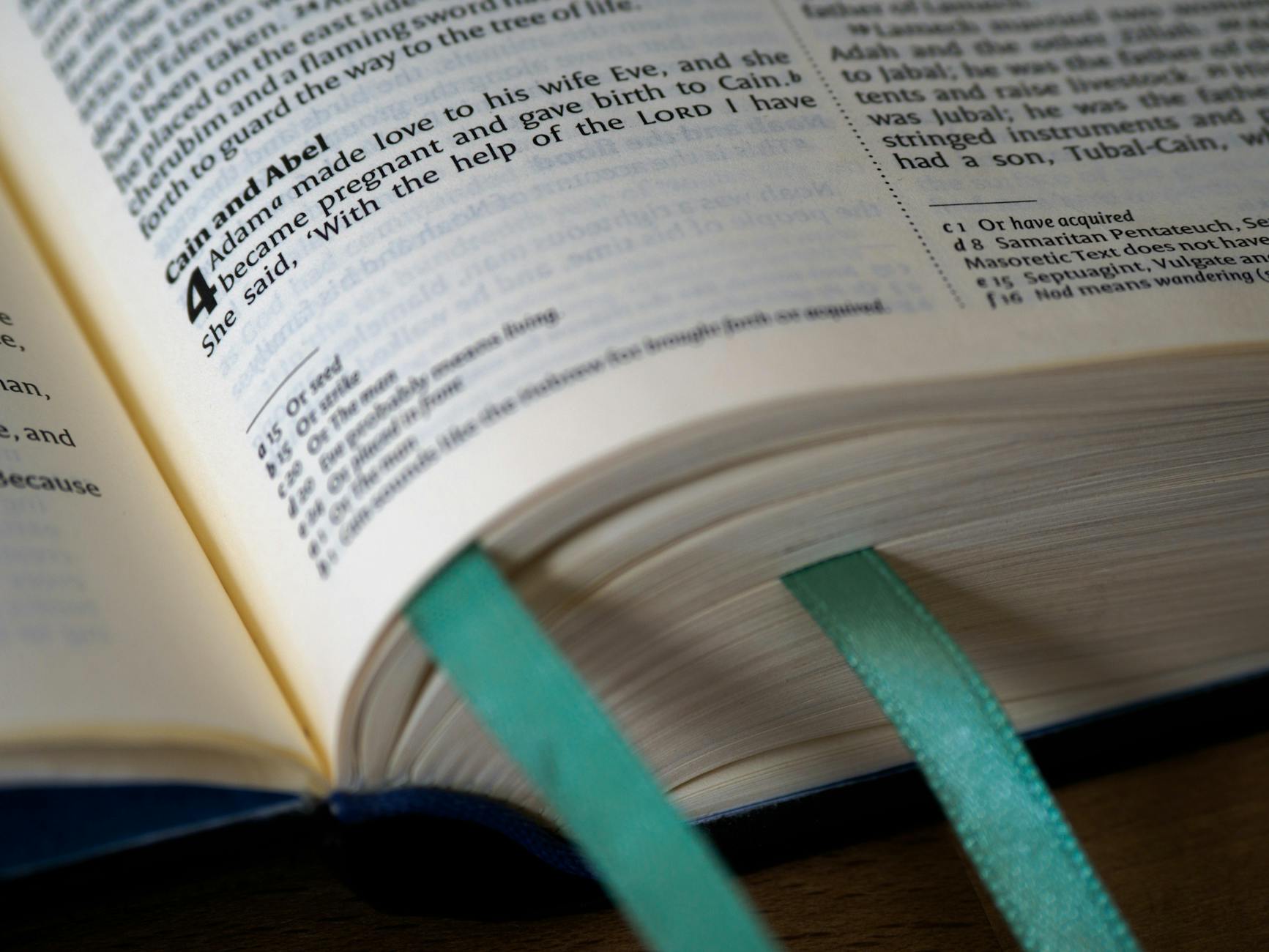
The story of Cain and Abel should scare us

Photo by Brett Jordan on Pexels.com

Why did God have respect for Abel’s offering and not Cain’s?

The answer to that question should have us doing some serious soul-searching.

In Genesis 4, we’re told the story of Cain and Abel. The story is that Cain and Abel both brought their offerings to the LORD.

Cain, a master gardener, brought some of the fruit he had grown to the LORD. Abel, a skilled shepherd, brought of the firstlings of his flock.

Scripture records in Genesis 4 how God respected Abel’s offering but had no respect for Cain’s offering. This upset Cain, as his countenance fell and he began to harbor a hostile attitude toward God, and toward Abel.

God confronted Cain about his attitude, and Cain confronted Abel, ultimately killing him. This led to Cain’s banishment, his horticulture skills being supernaturally taken from him, and his ostracization from what little society existed at that point.

Now, the question becomes, “Why did God have respect for Abel’s offering, but not for Cain’s?”

Many answers have been offered to this question over the years. Few have any real basis in scripture.

Some say God respected Abel’s offering over Cain’s because it was a blood sacrifice. While this answer does make sense (because scripture says without the shedding of blood there is no remission of sins), it overlooks the fact that grain offerings were part of the Temple sacrifices outlined in the book of Leviticus. Plus, scripture does not give that explanation for this specific circumstance.

Others say Abel brought the best of his firstlings to sacrifice, while Cain brought subpar fruit to sacrifice. Again, this makes sense, as God has been known to reject subpar sacrifices in other passages, but once again, lacks any scriptural support of this particular instance.

In fact, if you look at Cain’s demeanor following the sacrifices, you may get the idea that Cain brought his best. He is really offended that God did not honor his sacrifice. This is not the attitude who of someone who was giving his leftovers, but rather of someone who wanted God to be impressed, and wasn’t.

So, what was the difference between Cain’s sacrifice and Abel’s sacrifice? Why did God respect Abel’s offering, and not Cain’s?

Scripture (to my knowledge) only addresses this once. In Hebrews 11:4, which says, “By faith Abel offered unto God a more excellent sacrifice than Cain, by which he obtained witness that he was righteous, God testifying of his gifts: and by it he being dead yet speaketh.”

What separated the sacrifices was that Abel offered his by faith. Cain offered his out of obligation.

Faith is a deep-rooted trust in the Lord, and a conviction of His truth. Faith trusts not only that God exists, but that He is good and He intends good toward us. Faith believes that God rewards those who diligently come to Him.

It was that trust and conviction that motivated, that spurred Abel’s sacrifice. Cain made his offering because “it’s what you’re supposed to do.”

As I pondered this while preparing Wednesday night’s lesson on Hebrews 11, it hit me… how much do I do out of obligation to God?

What all do I do because it’s what a pastor should do?

And what all do I do because I love God and I trust Him?

The things that we do “just because,” or because they are expected, or because they are a great idea, God looks at those actions the same way he looked a Cain’s fruit. It might have been some of the best fruit ever grown, but God did not respect the heart from which it was given.

However, the things we do because we love God create a sweet smell in his presence. He regards that as highly as He does the sacrifice that Abel made. He honors such actions and such efforts.

The moral of this story in Genesis 4, and the scriptural commentary given in Hebrews 11:4, is that we need to reflect on our heart, learn to trust and love God, and learn to let that love and trust motivate our actions and offerings to God.

So, let’s take an inventory on our lives. And once we have that inventory complete, let’s correct our motivation where our motivation needs correcting, and our actions where our actions need correcting. We want to please God, and we want to hear, “Well done, good and faithful servant.”

Having your faith deeply rooted and living by that faith is how you will come to hear those words.

Am I a One-Trick Pony?

Photo by Barbara Olsen on Pexels.com

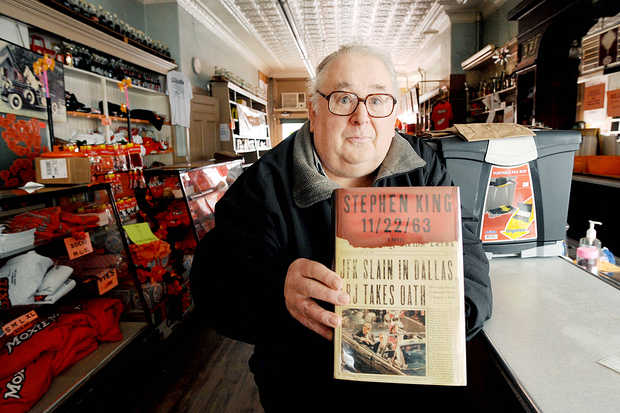
If you drove through Lisbon Falls, Maine, about 10 or more years ago, you may have found yourself stopping by the Kennebec Fruit Company, a corner store owned by Frank Anicetti, a local legend who was made famous nationally by Stephen King’s, 11/22/63. Anicetti passed away in 2017.

If you go to Lisbon Falls today, Anicetti has been memorialized through the renovation of his store, now a restaurant called “Frank’s Restaurant and Pub.” Stop in and visit with the locals, and they’ll tell you about a man who had one thing on his mind… Moxie soda.

Anicetti was a big fan of the drink, served it in his store, believed that the world was full of two types of people (those who liked Moxie, and everyone else), and always encouraged any new visitor to try the beverage.

Frank Anicetti, an enthusiastic fan of Moxie soda, relished being depicted in Stephen King’s 11/22/63.

Moxie was one of the first national beverages to be successfully marketed in New England, and it provided Anicetti with a great amount of nostalgic joy. Anicetti is a big part of the reason why, every year, Lisbon Falls hosts the “Moxie Festival.”

If everyone has one gift they give to society, Anicetti’s was Moxie soda. His love for the drink and his enthusiasm for its support were captured when Stephen King included him as a minor character in 11/22/63, a novel about a man from Lisbon Falls who goes back in time to prevent the assassination of John F. Kennedy.

We call people like Frank Anicetti a “one-trick pony.” Well, not really. We like Frank, and found his obsession with a mediocre beverage to be endearing. Usually when we call someone a “one-trick pony,” it’s not a compliment.

Frank Anicetti’s Kennebec Fruit Company, proud seller of Moxie soda, prior to 2017. Anicetti passed in 2017, and the store has been renovated and re-opened as a restaurant. The green paint is gone, and the store is now trimmed in Moxie orange.

It’s something we call people who have a high-level of expertise in one thing, and are useful for little else.

Which brings me to my question… “Am I a one-trick pony?”

If you’ve listened to me preach, or really have had any sort of theological discussion with me, you may have noticed (or at least I hope you’ve noticed) that I always bring the discussion back to the Gospel.

The Gospel, of course, is defined in 1 Corinthians 15:3-4 as how Jesus “died for our sins, according to the scriptures, was buried, and rose again the third day according to the scriptures.”

I believe that the Gospel is the central message of the Bible, and that every passage is either declaring the Gospel, illustrating the Gospel, points to the Gospel, or is recording events that set up the Gospel.

I believe the Gospel is the power of God unto salvation, that by placing one’s faith in the Gospel one is saved, and that every true Christian doctrine stems from the Gospel.

For example, I believe that marriage is to be a picture of the Gospel. The relationship between a husband and a wife should be an illustration of the relationship between Christ and His people.

I believe that Christian parenting should reflect the relationship between God and His children.

I believe that doctrines on giving, forgiveness, grace, and mercy, all are rooted in the Gospel.

I believe that Biblical teaching on how to conduct business and how to manage relationships should be rooted in the Gospel.

I believe this, not only because it’s true, but also because if you remove the Gospel from any Christian teaching, you will wind up with a legalistic system which will breed Pharisaism. We’ll become like the Sanhedrin of Jesus’ day.

Furthermore, if you remove the Gospel from Christian teaching, our religion becomes hard-hearted very quickly.

Therefore, I aspire to be like Charles Spurgeon, who famously said, “I take my text, and make a bee-line to the cross.”

Christianity is a religion of forgiveness, redemption, reconciliation and restoration. All of this is possible only because of the Gospel. When we lose the Gospel, we lose forgiveness, redemption, reconciliation and restoration. And when we lose those things, we lose hope.

So, if being obsessed with the Gospel makes me a one-trick pony, I’ll gladly wear that label, then I will retire to my living room with a freshly opened bottle of ice-cold Moxie soda. (Or, since they don’t have that in West Texas, I’ll settle for Diet Coke.)

May God bless you as you walk with Him today.

A Dissertation on White Wall Tires

Hands down, Cars is easily one of my favorite movies. It falls in somewhere behind Forrest Gump, but ahead of Pirates of the Caribbean.

Cars is a sentimental piece evoking nostalgia for Route 66, the Southwestern lifestyle, and for the relationships of small-town life.

There’s a moment in the film, as Lightning McQueen is preparing to return to his normal life of racing for Piston Cup glory, where he decides to patronize the businesses of the cars that hosted him in the fictitious small Route 66 town of Radiator Springs.

First stop, Luigi’s tire shop.

Luigi, who hasn’t had a customer in years, is overjoyed at the prospect of fitting Lightning for the perfect set of tires. (The scene is reminiscent of the old days of buying shoes in an actual shoe store with a salesman who not only helped you find the right fit, but the right look as well.)

Lightning, being as good a customer as possible, asks for the best set of black wall tires Luigi has, to which Luigi iconically replies, “No, you don’t know what you want, Luigi knows what you want.”

Lightning replies, “You’re the expert,” and completely goes along with whatever Luigi suggests. The same thing happens when Lightning visits Ramone’s paint and body shop.

The result, a shiny, sparkling Lightning McQueen that radiates on a main street that has just been repaved, with the neon signs fixed, and its Route 66 glory on full display. For a moment, the people, er, cars of Radiator Springs enjoy a beautiful time reminiscent of their former glory.

Lightning McQueen, a modern racecar, had only known racing tires, black wall, slick tread, and made by Goodyear. Yet, when he followed Luigi’s advice, he was introduced to a whole new world.

Out on my walk today, I got to thinking about how often we fail to understand what we really want, defining our desires around things that we’ve already known, and missing blessings that we’ve never seen.

You see, we don’t know what we want. God knows what we want.

Just like Lightning thought black wall racing slicks would meet his need, as it is all he has ever known, we think that our desires can be fulfilled with a better job, more money, better health, or maybe we’re just wishing that our one main problem would be solved.

And as Lightning so innocently asked for black wall tires, we pray to God asking for those things. Asking for the new job, the financial solution, for healing, or for God to resolve our conflict and win our battle once and for all.

But, unlike Lightning, who was fitted and placed into a set of white wall tires within a matter of seconds, often, our requests seem to go unanswered for days, weeks, months and even years.

What strikes me about this is that scripture says in Romans 8:28 that “we know that all things work together for good to them that love God, to them who are the called according to his purpose.”

The premise of this verse is that God is good. Not only is God good, but God does good. Not only does God do good (for the greater good), but He does what is good for us personally.

Romans 8:28 says that all things work together for our good. Our own good. Everything that life brings you, God uses it for your good.

That doesn’t mean that everything that happens in your life was God’s idea, neither does it mean that everything that happens in your life is good.

Some things happen in your life that are horrible, things that were perpetrated upon you by people who had the worst intentions. Yet, God, in His infinite wisdom, knowledge and goodness, saw a way to turn the evil done to you into a blessing. So, the road may be paved in suffering, but God drew the map and the road is taking you someplace amazing.

And the wild thing about this concept is that the good God is leading you to is something that you may never have imagined. That thing may be better than the solution or the desire you have imagined.

Sometimes, we get what we think we wanted, only to find out it’s not what we really wanted.

But, with God, we get what we didn’t really think we wanted, only to find out it’s what we really wanted all along.

The thing that helps me get through tough times, and gives me hope even when my prayers go unanswered, is that God knows me better than I know myself. Therefore, even if I don’t get what I ask for, I will come to realize that the answer that I do get will be good, and will probably be better than I could’ve imagined.

Taste and see that the Lord is good.