The reason we are not where we want to be Spiritually is because we don’t know the Lord as well as we should. If we knew Jesus better, we’d see His compassion, pray more, trust more, and tell others about Him.
Author: Leland Acker
The Heavens Declare the Glory of God

When I told everyone that I was leaving the bright lights of Austin for the quiet nights of Hermleigh, TX, people mostly had the same reaction… “There’s not much to do there, is there?”
In fact, when I told my boss that I was leaving to pastor the First Baptist Church of Hermleigh, the only part of that statement that made sense was the fact that I was leaving the insurance industry to follow my true calling in life.
Austin has a population of around a million people, has professional and Division 1 college sports, concerts galore (live music capital of the world), shopping, lifestyle and a robust parks system.
Hermleigh…
Well, let me tell you what Hermleigh has…
STARS!…
You can’t see the stars in Austin for all the city lights… but in Hermleigh, where there are no city lights, and where the town sleeps well, you can see the entire Milky Way. And, since we have an Allsups, you can buy a Milky Way candy bar so you can eat a Milky Way while gazing at the Milky Way. But… I digress.
You can’t beat the night sky in Hermleigh. It costs nothing to gaze at the wonder of it all. And the longer you gaze, the more impressive it becomes.
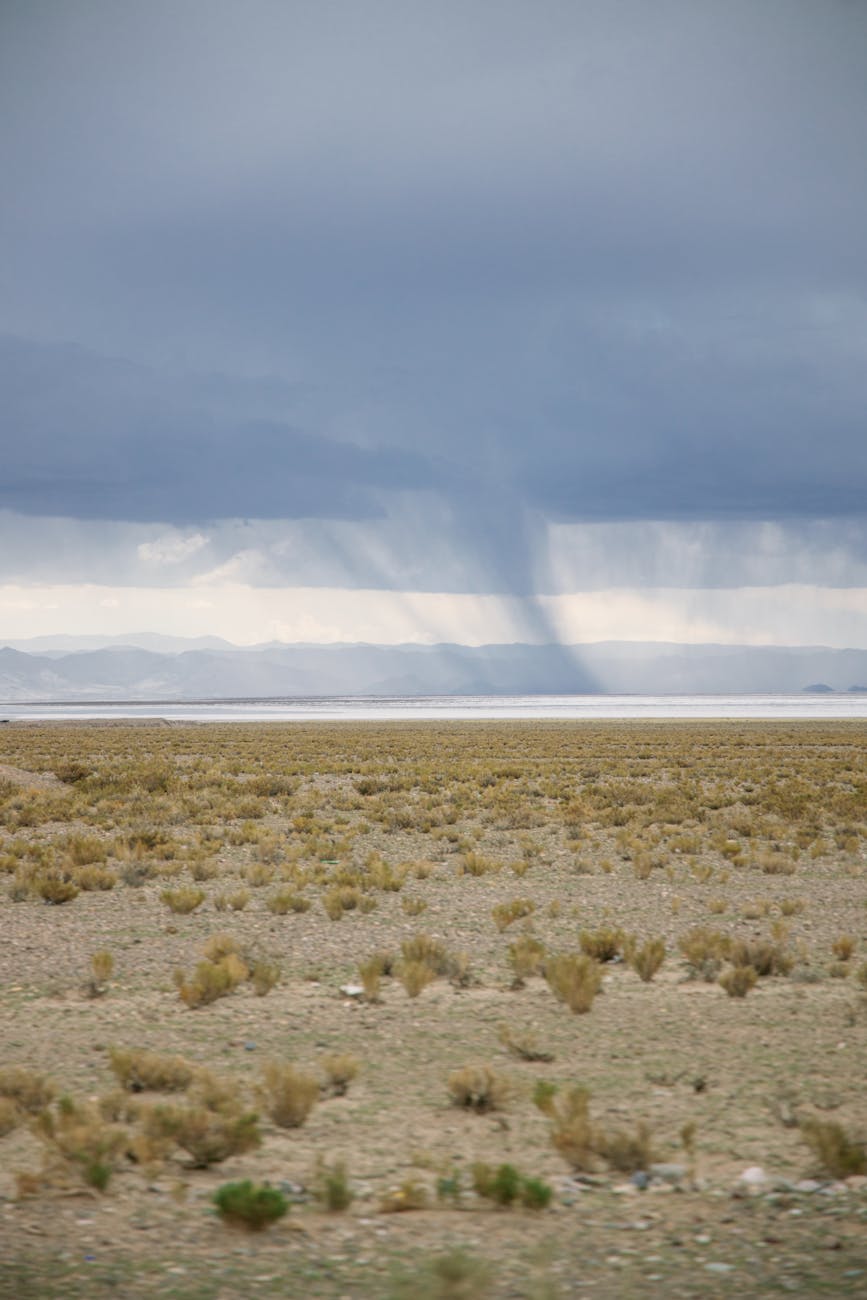
During the day, the Texas sky puts on a show, with some of the most amazing cloud shows known to man, while you can watch the storms and showers develop from afar off.

You see, the beautiful thing about Hermleigh is that you can afford to stop and give yourself time to take in the glory of God’s creation.
In Psalm 19:1-3, David writes, “The heavens declare the glory of God; and the firmament sheweth his handywork. 2 Day unto day uttereth speech, and night unto night sheweth knowledge. 3 There is no speech nor language, where their voice is not heard.”
God’s glory is shown through the heavens above. This is literally referring to the sky above us. As you gaze into the clouds, and as you take in the power and magnificence of the storms that roll through, you are seeing the power and magnificence of God on full display.
The firmament is the night sky. These are the stars, the planets visible with the unaided eye from our backyards. As you gaze into the Milky Way, seeing more stars and seeing deeper into the universe the longer you look, you are seeing the handywork of God.
When you consider how it all works together… how the weather works in a perfect harmony to provide rain, sun, wind, and varying temperatures… when you see the perfection of it all, you see the clear evidence of the existence of God.
When you consider how perfectly the universe is made, how gravity works perfectly to keep the planets and stars properly aligned to sustain life on our planet, you see evidence of God’s perfection.
This divine evidence is clearly understood by all cultures, all peoples, and all nations. There is no place on earth where the language of creation is not clearly heard.
Now, anytime I write about the existence of God, and the irrefutable evidence of His existence in creation, I receive an email or a comment from an atheist who blasts me for my “superstition” and “believing in an imaginary friend.”
Okay… so be it… you can believe what you want to believe…
But…
When you consider how the creation works so well in harmony with itself, can you think of any other instance where such order happens by chance? Can you think of any other circumstance where order happens without the intentional guidance of an engineer?
Without design, and without intention, there is chaos. So, given the order of the environment and universe in which we live, it is obvious that there is design and intention, which necessitates a creator.
And a creation of the magnitude in which we live requires a divine creator.
So, yes, when I stop and take in the creation around me, whether it’s the vastness of the South Plains, the magnificent views of the mountains, the beauty of the oceans, or the glory of the heavens, I see the glory of my God Who created Heaven and Earth.
So, my advice is… stop and smell the roses. Take some time to enjoy the creation around you. If need-be, take up the hobby of digital photography on your phone. It will help you to see things differently, to see your surroundings as you’ve never seen them before.
And as you do, be thankful to God, and admire His glory.
Refining Our Faith

In the book of Psalms, how many times does King David ask the Lord to search him, to examine him and to evaluate his heart?
That can be a frightening request to make of the Lord.
It’s frightening because the Lord is going to find flaws, and once He does, those flaws will need to be corrected, and that will probably be an unpleasant experience, even though the sinner is better off for it.
However, King David is able to make that request in faith, because he understands that the Lord will use that for his transformation.
So, in Psalm 17:3, David is able to confidently tell God, “Thou hast proved mine heart; thou hast visited me in the night; thou hast tried me, and shalt find nothing; I am purposed that my mouth shall not transgress.”
The proving of David’s heart carries with it the notion of testing and refining metal. The reason David could speak so confidently with the Lord about his own character is that he knew God would examine him, refine him, examine him, and refine him some more.
As one would take multiple steps to purify gold, or to refine steel, God took multiple steps to examine and refine David, putting David through the refining process multiple times until he became the man God intended on him being.
This is not a pleasant experience. God works through the trials of our faith to refine us into the people He intended on us being. (1 Peter 1:7)
Peter tells us that, while these trials of our faith cause us heaviness, the refining process of our souls is of greater value and importance than the refining of gold.
Not only does the suffering brought on by our trials refine our faith, but it also strengthens us, giving us endurance and hope. (Romans 5:3-5)
Through this process, we become who God wants us to be, faithful people who are grateful for the blessings He has given, who are anxiously awaiting His return.
So, if you are going through the refining process right now, take heart. I know the process has lasted longer than you thought you could endure, and I know that at times it’s excruciating and heartbreaking.
What I can tell you is that none of this is wasted, and every bit of it is creating you to be the person God designed you to be, and the person God designed you to be is far more magnificent than anything you could imagine.
I don’t know what is next for you, but I can promise you, that as you go through this refining process, the day is coming when you can stand before the Lord, confidently as King David, saying “Here I am, you searched me, tried me, and refined me, and I am here to enter your Kingdom!”
The victory is coming. Peace is coming. Rest is coming. Hang in there.
Rock On!

The funeral was officiated by three Christian ministers and one Jewish rabbi.
The deceased was a lifelong Christian who had lost her 20-year battle with a debilitating. The three Christian ministers were close members of her family and the Jewish rabbi was a friend she had made at a rehab clinic.
Despite the differences in religion, Christians and Jews often get along with each other in these situations and are often respectful toward each other’s beliefs, and in this situation, I expected no less.
What I did not expect, however, was a Gospel sermon from the Jewish rabbi.
The rabbi was not Messianic, and did not believe in Jesus the way Christians do, yet, as he discussed Psalm 18:2, I was taken by his presentation on the word, “Rock.”
“The LORD is my Rock,” he said, as he quoted the verse. “This word, ‘rock,’ comes from a Hebrew word that has a deep meaning.”
He went on to explain that the “Rock” referred to a cliff, or a steep place, often with a cleft, or a cave hewn out. It was a place to retreat to, and in King David’s case, you often find him in scripture hiding in such caves in the cliffs and up hillsides as he fled from Saul, or Absalom.
Indeed, as David fled to the cliffside caves, we can flee to the Lord. He can be our place of refuge. Psalm 18:2 goes on to discuss the Lord being our strength, our high tower, our castle, basically our defense.
The Lord is our refuge, our deliverer, and our strength. But this rabbi took it one step further.
“This word for ‘rock’ also carries with it the notion of being struck. The rock itself has been struck.”
And he began to talk about how God sacrifices for us. He didn’t go so far as to preach Jesus, but the Gospel parallel was there.
After the funeral, I visited with the rabbi, and brought up how the word “rock,” as he defined it, pointed directly to Jesus.
“Absolutely, it can be interpreted that way,” he said. “And I often speak to Christian churches to show them that.”
We discussed the theology of “rock” for a while before dispersing, and I left there with a new understanding of a verse that I had so often read, but never really considered.
So, the Lord is our Rock. Jesus Christ is our Rock. He is our refuge, our defender, and our deliverer because He was struck for our sins on our behalf.
Life gives us a million reasons to fear. And then, through our own over-thinking, we give ourselves a million more reasons to fear. But… we only need one reason to be at peace, to be courageous and have faith. And that reason is Jesus Christ, the Rock of our salvation.
May God bless you with peace and confidence today.
 Leland Acker