
Month: May 2017

The generation that saved the world

WP_20150311_044
The World War II Memorial in Washington, DC

Today is VE Day, the day we commemorate the victory in Europe in World War II. I was blessed to take part in a VE Day observance ceremony in Brownwood, Tex., where the emcee noted that Brown County lost a local resident every week for the duration of the war.

The site of today’s observance, the Central Texas Veterans Memorial, stands where the Camp Bowie headquarters once stood. During World War II, Camp Bowie was the largest military training facility in North America. It was once home to the 36th Infantry Division.

Looking beyond the speaker, between the granite monuments bearing the names of Brown County natives killed in World War II, I could see across the valley that was once Camp Bowie. The area is now occupied by manufacturing facilities, baseball fields, recreational facilities, homes, schools, and Brownwood’s iconic football stadium.

I imagined the sight of soldiers marching in formation, military vehicles zipping along the base roads, ordinance being fired in live fire exercises, and planes taking off from the base’s runways. In that moment, I thought back to what life must have been like in 1942.

We often honor “The Greatest Generation,” the generation that fought World War II. Everyone sacrificed to save our country and our freedom, from the soldier who went to the front lines, to the manufacturer who converted his factory to make military equipment, to the civilian who bought war bonds, to the wife and mother who went to work to manufacture the tools needed to fight the war, to the parents who saw their sons shipped off on trains and buses, bound for duty stations before deployment, to the kids who collected metal and glass to donate to the war effort. Everyone sacrificed. Everyone contributed. Indeed, the Greatest Generation is worthy of our honor.

What separates the Greatest Generation from current generations, though, is not so much what they did, but what they faced, and how they overcame.

When our troops go to war today, we worry about casualty rates, and further implications of the war. Today when we go to war, we generally don’t fear losing our country. Yet, in World War II, we faced an enemy that we believed to be as strong, if not stronger than we were. When the Japanese bombed Pearl Harbor, our Pacific fleet was wiped out, and many military analysts said that if Japan had landed on our West Coast, they’d have reached St. Louis before we could have stopped them.

Germany was just as formidable of a foe. In the years leading up to the war, Germany paraded their technological advancements. At the outset of the war, we had a lot of ground to make up, which we ultimately did.

When America was drawn into the war, we didn’t face the loss of overseas resources, and we weren’t merely stepping in to help our allies. We faced the loss of our country, and by extension, the loss of our freedom. We had to act.

Faced with a challenge not seen since the Civil War, Americans willingly and wholeheartedly gave everything they had to protect our country, and to defend and build our way of life. The spirit of the American soldier, worker, mother, farmer and school child propelled the nation to victory, and a new, better world was birthed.

In the years since, we’ve had our moments of fear, but we’ve never been in peril. We’ve enjoyed nearly three quarters of a century of peace and prosperity, and it’s all because a generation rose up, met the challenge that was placed in front of them, and fought for their lives, and the lives of their children.

For that, we are truly blessed, and I am truly thankful. Take a moment, and reflect on how blessed we are, and remember the sacrifices it took to bring this blessedness to us. Then, thank a veteran.

For those who remember World War II, thank you for rising up. Your generation epitomizes the old proverb, “A society grows great when old men plant trees under whose shade they will never sit.”
How the Johnson Amendment is used to target churches

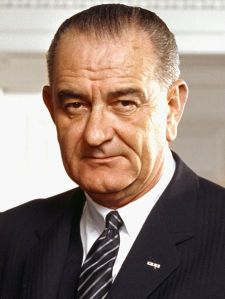
LBJ

Any pastor will tell you that unless you put the scriptures into practice, they will not change your life. As a result, pastors are responsible not only for teaching the text and meaning of scripture, but also for teaching their congregations how to apply those scriptures to life.

However, when scripture applies to the legislative process, or a political election, the pastor must step out of the pulpit before applying scripture to the situation. Otherwise, the church can lose its tax-exempt status under the Johnson Amendment.

To be clear, pastors can discuss abortion, homosexuality, benevolence and relief for the poor, drug abuse, sexual immorality and the definition of marriage from the pulpit. It’s when those issues become tied to legislation, or a political campaign that the Johnson Amendment comes into play.

Such was the case in Houston during the fall of 2014. Mayor Annise Parker and the Houston City Council passed the Houston Equal Rights Ordinance, adding sexual orientation to the list of things for which one could not be discriminated against. While this sounds like common decency on the surface, many felt that the ordinance infringed on the religious freedoms of Christian business owners, contractors, and political hopefuls. Then, there was the bathroom issue.

Pastors who preached against homosexuality could not reference the proposed ordinance, or discuss petitions to call for a public referendum on the ordinance, from the pulpit. To engage the ordinance, those pastors would have to work on their own time, apart from the churches. Such is common, and such took place in the aftermath of the passage of HERO.

The petition to call for a referendum failed, and Houston area pastors filed a lawsuit claiming that many signatures on the petition were unlawfully disqualified. During the discovery phase of that suit, attorneys for the city subpoena’ed the sermons of some of the pastors who helped promote the petition.

Time magazine reported that lawyers for the city wanted to search the sermon notes to see if any of the pastors had discussed the petition, or instructed their parishioners on how to participate in the petition during church services.

Immediately, there was an outcry from the Christian community in Houston, and Mayor Parker ordered the lawyers to drop the subpoenas for the sermon notes, telling the Texas Tribune that she had not approved those subpoenas prior to them being sent out.

The legal and political process played out, resulting in the referendum on HERO being put to the voters. It ultimately failed.

This post is not to reopen the debate on HERO, bathrooms or same-sex marriage. This post is to examine how the Johnson Amendment was used, though not cited, as a legal tool to overcome the political activities of Christian pastors.

Under the Johnson Amendment, churches are not allowed to engage in activity that would influence an election, or legislation. Churches cannot lobby the legislature, their local councils, and cannot endorse candidates. Churches cannot contribute to political candidates or political action committees. Doing so would cost them their tax-exempt status, and subject them to federal regulation.

There are good reasons for the Johnson Amendment, as no one wants to see churches become stealth super-PACs, as Roll Call fears. On the other hand, the premise of the Johnson Amendment was the basis for the City of Houston’s subpoenas for Sunday sermons. They wanted to see if any pastor had crossed the line. Had that been established, the city could have used the violation of the Johnson Amendment to put down the lawsuit, thus saving HERO. And that’s where the problem lies.

If the government has the right to examine Biblical teaching, and then ban or penalize it for becoming “too political,” then what’s next? The separation of Church and State would eventually be weathered down, and government would control religion. That has resulted in disaster every single time it has happened throughout history.

Churches are tax-exempt to preserve the separation of church and state by preventing government regulation through tax incentives or penalties. If government wants to ban financial contributions from churches to political causes to keep that separation in tact, fine.

However, the government should never have any say in what is taught from the pulpit, or the Sunday School rooms. Furthermore, churches should be able to advocate for policies that parallel their mission. Stand up, speak up, but don’t pay up.

For those reasons, President Donald Trump’s executive order for the IRS to roll back enforcement of the Johnson Amendment is a good thing, even if it doesn’t make any significant changes to the way things are.

The Texas Legislature passes the Sanctuary Cities Bill

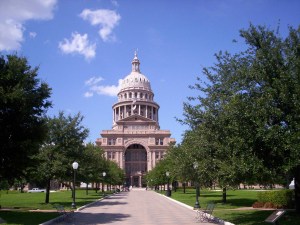
Texas_State_Capitol_Summer_2005 Public DomainThe Department of Homeland Security detained 44 illegal immigrants before transferring them to the Travis County Jail for the disposition of criminal charges, according to a report from the Washington Examiner. Once in the Travis County Jail, those inmates were released under Travis County’s “sanctuary cities” policy, a policy where the sheriff’s office denies ICE detainer requests for certain illegal immigrants, thus releasing them back into the public.

The Immigration and Customs Enforcement routinely makes requests to local sheriff’s and police departments to detain illegal immigrants until ICE can follow through on deportation proceedings. Often, local jurisdictions deny these requests, and release those immigrants for a variety of reasons. Some, to save on the cost of housing illegal immigrants in jail until ICE arrives, which can sometimes be weeks. Others, to make a political statement and to pander to liberals and immigrant communities.

The case of Travis County, Tex., home to Austin, has been at the center of this controversy as Sheriff Sally Hernandez publicly stated that she will deny ICE detainer requests, unless the suspected illegal immigrant has been charged with capital murder, first degree murder, aggravated sexual assault or human smuggling.

Travis County’s sanctuary city policy has holes, according to a report from Fox 7 in Austin. Fox 7 reports that the Travis County Sheriff’s Office denied ICE detainer requests for illegal immigrants charged with injury to a child, sexual assault, and repeated sexual assault of a child, thus releasing them on bail.

The scandalous release of criminal immigrants in Travis County led to a heated debate on sanctuary cities policies, which culminated in the passage of Senate Bill 4, which makes sheriffs, constables, police chiefs and other local leaders subject to a Class A misdemeanor if they do not honor requests from federal immigration authorities. The Texas Tribune also reports that entities that adopt sanctuary city policies can be fined $1,000 for a first offense, and as much as $25,500 for repeat offenses.

The bill also includes a provision that allows law enforcement officers to inquire about a suspect’s immigration status. That part of the bill, known as the “show me your papers” amendment, limits such questions to detainment, and does not allow police to stop residents for the purpose of checking their immigration status.

Opponents of the bill argue that it would erode public trust in law enforcement, as immigrant communities would be less inclined to report crime or cooperate with law enforcement for fear of being detained or deported. Opponents of the bill also cite compassion as a reason for their opposition, saying that America should be the land of opportunity.

While compassion and public trust are important, opponents of the bill have yet to justify the release of criminal immigrants, specifically the ones released by the Travis County Sheriff’s Office. While releasing those individuals may have been compassionate to them, it certainly did not show much compassion to their victims.

All residents of Texas deserve to live in a safe society, where criminals are held accountable, and offenders are removed from their victims. This cannot happen if those offenders are being released in the name of social justice.

Castro, Cruz, and Texas Red vs. Blue

In the debut episode of the “Leland Acker Show” podcast, I examine Joaquin Castro’s decision to stay in the House and not challenge Sen. Ted Cruz in 2018, and what that means for Texas Democrats.

I also discuss what single event could turn Texas blue, the 10 reasons millennials are leaving Christianity, and Jeb Bush’s prospects in owning the Miami Marlins. Check it out, then tell me what you think.